




Claw and Ball Chest
A claw and ball chest offers sculptural presence and traditional storage, anchored by the iconic grip of a bird's talon clutching a sphere.
Claw and Ball Chest
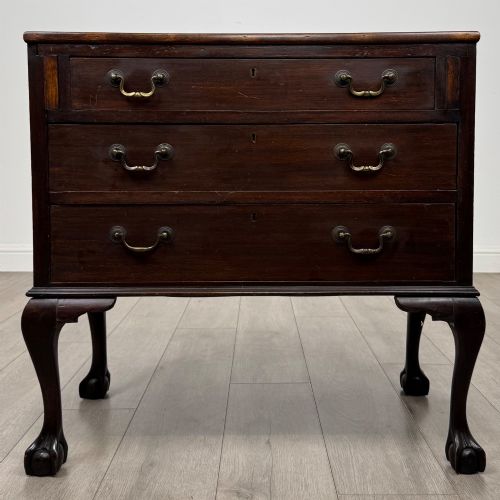
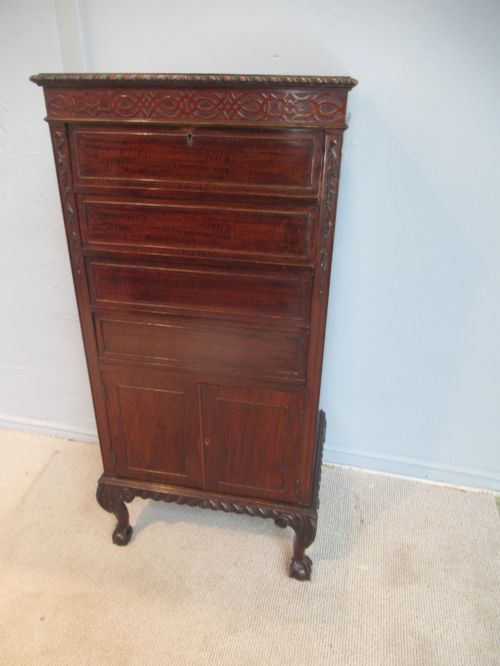
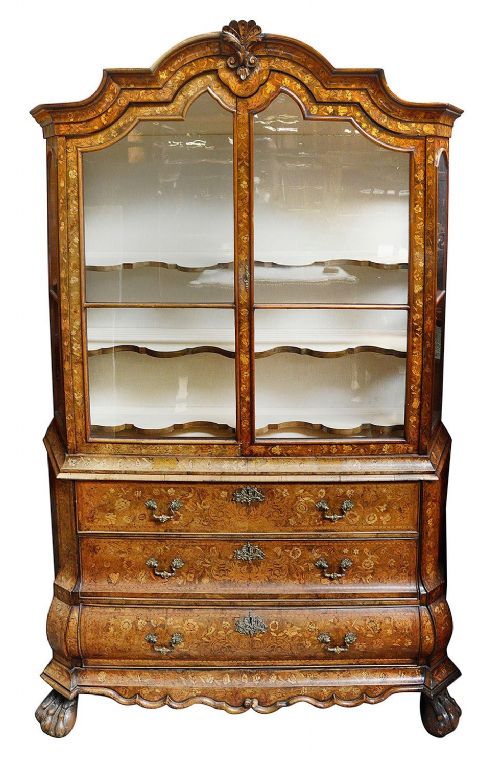
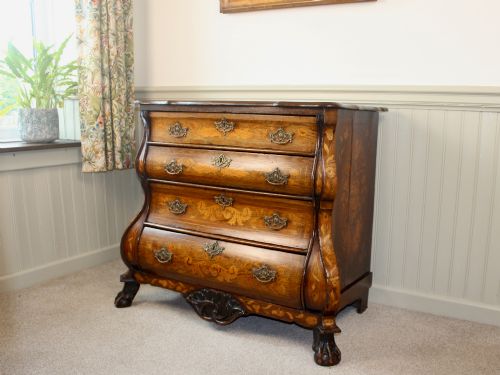
When you search for a claw and ball chest, you encounter a robust piece of antique furniture defined by distinctive feet terminating in carved talons holding a wooden or glass ball. These forms span several centuries and revivals, appearing principally as chests of drawers, chests on stand, and bombé or block front configurations.
The pieces on this page draw from 18th Century originals through to Georgian, Edwardian, and 1920s revivals. You are most likely to meet mahogany or walnut examples from the Edwardian era and the early 20th century, alongside earlier Dutch baroque and Georgian interpretations.
How they were made
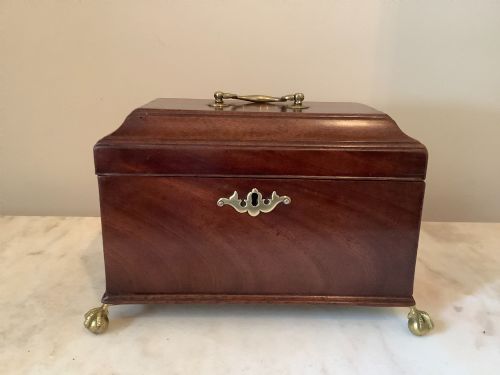
Cabinetmakers utilised solid timbers and selected veneers, predominantly mahogany and walnut, augmented by burr walnut, oak, and fruitwood inlay. Artisans shaped these materials using traditional joinery methods, incorporating brass hardware for drawer pulls and escutcheons.
Carving defines the feet, where timber is shaped into the realistic or stylised form of a bird's claw grasping a sphere. Marquetry and line inlay appear on select Dutch and English iterations, adding decorative surface patterns to the primary wood.
Claw and Ball Chest Retail Price Guide 2026
Typical asking prices for claw and ball chest among the pieces listed under this phrase on Sellingantiques today, from the lower quarter to the upper quarter. They describe what is for sale here now, not the wider market.
Listings feature woods including mahogany, walnut, burr walnut, oak, fruitwood inlay, and marquetry across multiple centuries.
What varies in quality
The crispness and depth of the carved foot separate finer examples from routine production, as master carvers achieved lifelike articulation in the talons and smooth spheres. Timber selection also drives distinction, with figured mahogany and richly patterned burr walnut indicating superior workshop output.
Structural integrity and the retention of original brass handles and mounts contribute to a piece's standing. Finer chests display harmonious proportions and careful matching of grain across drawer fronts and surfaces.
Walker & Hall, Sheffield·Muirhead Moffat & Co
The Claw and Ball Chest Glossary
- Bombé
- A swelling, convex furniture profile that curves outward toward the base. This exuberant outline is frequently seen on 18th Century Dutch pieces.
- Chest on stand
- A case piece comprising an upper chest section elevated on a separate supporting base with legs. These often feature cabriole legs terminating in ball and claw feet.
- Marquetry
- Decorative veneer work formed by fitted pieces of various woods and other materials to create pictorial or geometric designs. It is characteristic of Dutch furniture in the selection.
- Lowboy
- A small dressing or side table with drawers, standing on four legs. They share stylistic traits and foot designs with matching chests on stand.
- Crossbanding
- A narrow strip of veneer applied across the grain of the primary surface to create a decorative border. This technique frames drawer fronts and tabletops on refined examples.
Claw and Ball Chest: Frequently Asked Questions
What is a ball and claw foot?
A ball and claw foot is a furniture foot carved to resemble a bird's talon gripping a spherical object. This motif derives from Chinese designs and gained prominence in European furniture during the 18th century.
Cabinetmakers of later revival periods continued this tradition, applying the carved detail to the bottom of cabriole legs on chests and tables.
How do I date a mahogany chest?
Dating involves examining the construction methods, drawer linings, timber density, and secondary woods used inside the piece. Hardware types and dovetail hand-cutting styles offer additional clues.
Stylistic shifts between 18th Century originals and Edwardian or 1920s revivals also help establish the period of manufacture.
Where were bombé chests made?
Bombé chests with pronounced swelling fronts are strongly associated with 18th Century Dutch workshops. These pieces frequently incorporate marquetry inlay across their curved surfaces.
English and colonial makers also produced block front and shaped alternatives, though the bulging profile remains a hallmark of continental design.
How do I care for burr walnut?
Burr walnut veneer requires stable indoor humidity and protection from direct sunlight to prevent drying and fading. Regular dusting with a soft cloth preserves the polished surface.
Avoid placing these pieces near heat sources or damp areas to protect the delicate burl grain and underlying structure.