
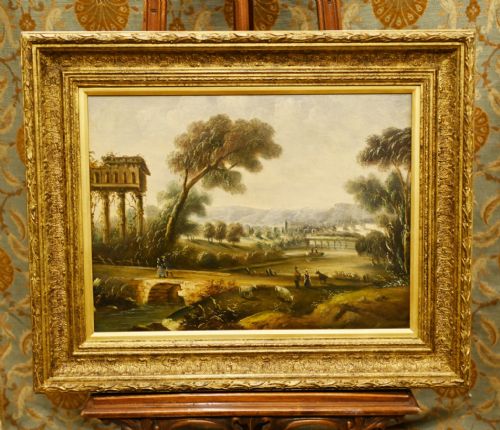


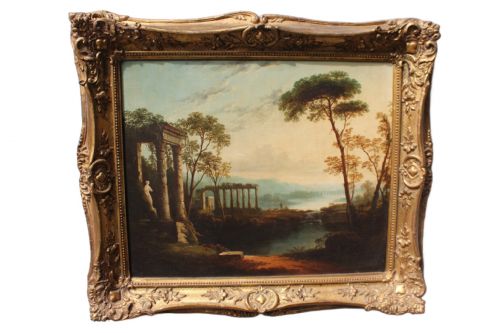


Classical Ruins Painting
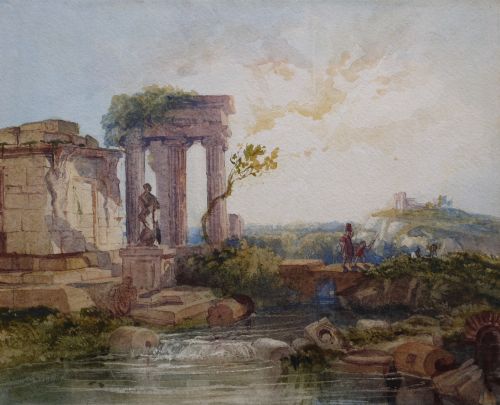
Classical ruins painting captures decayed ancient architecture in oil or watercolour, bringing Grand Tour romance and classical antiquity directly into a room.
Classical Ruins Painting
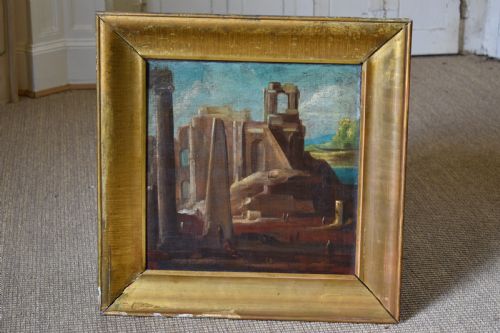
A classical ruins painting depicts remnants of ancient Roman or Greek architecture, often set within pastoral landscapes, river valleys, or Mediterranean settings. When searching for a classical ruins painting, collectors encounter both sweeping oil canvases and delicate works on paper.
The versions met most frequently on this page span the seventeenth, eighteenth, and nineteenth centuries, frequently tied to the Grand Tour movement. These pieces range from intimate watercolour sketches of Roman sites to large oil compositions executed by Italian and English schools.
Beyond traditional canvases, related objects such as decorated snuff boxes and gouache sets also appear, reflecting the broad eighteenth and nineteenth century fascination with antiquity. Each piece preserves a historical vision of crumbling temples, arches, and columns.
Materials and technique
These works rely on traditional painting mediums, predominantly oil on canvas or panel, and watercolour or gouache on paper. Artists built up transparent washes for skies and architectural stone, or applied rich oil pigments to capture the dramatic light of southern landscapes.
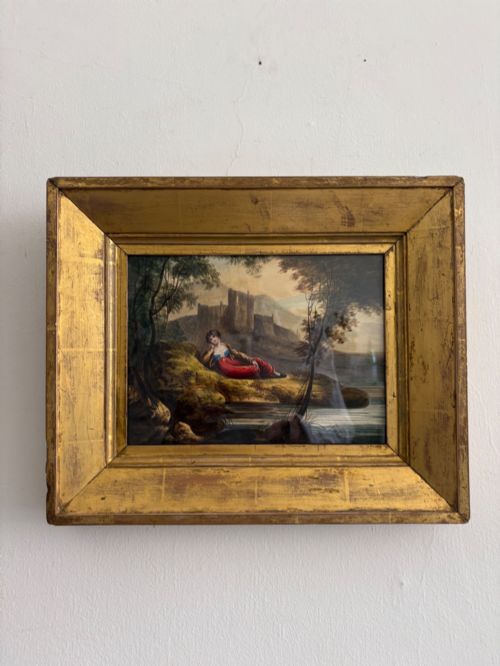
Frames play an integral role in presentation, utilising gilt, gilded wood, and gold leaf to complement the warm tones of the painted scenes. Underlying supports vary from prepared canvas and wooden panels to heavy paper sheets housed within period glass and wood surrounds.
Classical Ruins Painting Retail Price Guide 2026
Typical asking prices for classical ruins painting among the pieces listed under this phrase on Sellingantiques today, from the lower quarter to the upper quarter. They describe what is for sale here now, not the wider market.
Listings feature works executed in oil on canvas, oil on panel, watercolour, and gouache, spanning the seventeenth through to the nineteenth century.
Quality and execution
Quality rests upon the precision of architectural rendering, the atmospheric depth of the surrounding landscape, and the handling of light and shadow. Superior works display confident brushwork in the masonry and foliage, whereas lesser examples rely on repetitive formulas and stiff composition.
The presence of a documented hand or a strong attribution elevates a piece, distinguishing signed watercolours and works by recorded circles from anonymous decorative output. Original period frames further enhance the desirability and integrity of surviving works.
Angelo Maria Crivelli·Giovanni Paolo Panini·Claude Lorrain·Francesco Zuccarelli·Francesco Guardi·Richard Principal Leitch·Franz Knebel·William Crouch·Mauro Antonio Tesi
The Classical Ruins Painting Glossary
- Grand Tour
- A traditional trip through Europe, notably Italy, undertaken by upper-class young men in the eighteenth and nineteenth centuries to study arts and antiquity. Souvenirs collected along the way often included paintings and watercolours of local ruins.
- Capriccio
- An architectural fantasy placing together imagined combinations of ancient ruins, buildings, and other architectural elements in a fictional landscape. This compositional device was popular among Italian and European artists.
- Gouache
- An opaque water-based paint that produces bright, matte colour fields, frequently utilised for nineteenth-century topographical views and gouache sets depicting Mediterranean scenes.
- Gilt frame
- A wooden picture frame coated with gold leaf or metallic paint, designed to accent the artwork. Period frames often feature detailed moulding that complements nineteenth-century and earlier canvases.
Classical Ruins Painting: Frequently Asked Questions
What is a classical ruins painting?
A classical ruins painting portrays ancient Roman or Greek architectural fragments, such as temples, arches, and columns, usually placed within a romanticized landscape setting.
These works were created across several centuries, serving as artistic reflections on classical antiquity and historical travel.
How were these paintings used?
They were displayed in private homes, drawing rooms, and studies by collectors seeking to demonstrate their classical education and exposure to European travel.
Smaller watercolours and gouaches were often kept in portfolios or framed to adorn domestic interiors alongside larger oil canvases.
How do I date a painting?
Dating relies on stylistic evidence, costume details of any figures present, framing techniques, and the medium itself, such as nineteenth-century watercolour paper or seventeenth-century canvas.
Signatures, inscriptions, and artist attributions also provide specific chronological anchors for identifying the period of execution.
How should I care for watercolour ruins?
Works on paper require protection from direct sunlight to prevent fading of watercolours and gouaches over time. Maintaining stable humidity levels helps preserve the paper support and original framing materials.