


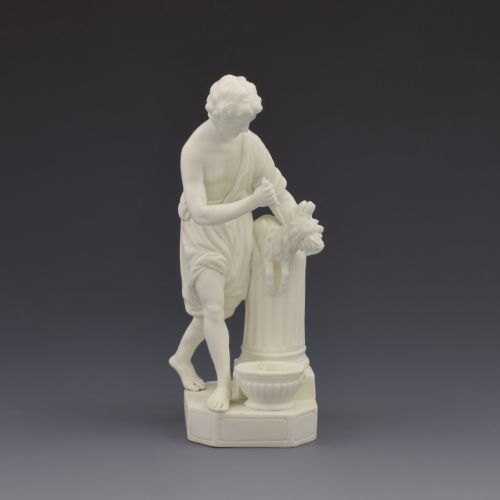


Classical Porcelain Statuette
A classical porcelain statuette brings mythological figures and allegorical subjects to life in miniature, shaped from fine ceramic bodies and finished with meticulous hand painting.
Classical Porcelain Statuette
A classical porcelain statuette represents figures from mythology, history, and allegory, including deities such as Minerva, Venus, and Diana alongside allegorical representations of seasons and elements. These sculptural objects take the form of single figures or paired groups, often standing upon scroll-moulded or rustic bases.
The selections available span from eighteenth-century soft-paste paste creations originating in factories such as Derby and Chelsea through to nineteenth-century productions in parian and bisque. Victorian examples frequently lean towards neoclassical revivals, portraying maidens and classical youths with detailed attributes.
Makers across England and continental Europe produced these figures, ranging from early English manufactories to German potteries like Volkstedt and Samson of Paris operating in historical styles. Collectors encounter both glazed polychrome pieces enriched with gilding and unglazed white ceramic biscuit figures.
Materials and Technique
Manufacture relies on specialised ceramic pastes, encompassing soft-paste porcelain, hard-paste bodies, and fine parian ware developed during the nineteenth century to imitate carved marble. Figures take shape through press-moulding sections before skilled modellers assemble the components by hand and refine facial expressions and drapery.
Firing occurs in kilns before artists apply enamel colours, gold leaf, and gilding highlights that undergo a subsequent low-temperature fixation. Biscuit and parian porcelain bypass surface glazing entirely, achieving their matte texture directly from the fired body to highlight sculptural contours.
Father Time clips Cupid's wings with surprising domestic determination in early Derby sculpture.
Assessing Quality
Early eighteenth-century soft-paste bodies and delicate biscuit porcelain demand exceptional technical control during firing, meaning successful projection of complex multi-figure groups denotes advanced artistry. The weight of the paste, the stability of the base, and the restraint shown in applying gilding separate standard commercial output from ambitious studio works.
Derby Porcelain·Chelsea Porcelain·Royal Worcester·Samson Paris·Royal Dux·Achille Mollica·Volkstedt
The Classical Porcelain Statuette Glossary
- Biscuit Porcelain
- Unbleached and unglazed ceramic body fired to a matte, porous finish that resembles white marble. This material gained widespread popularity in the eighteenth century for neoclassical figures.
- Soft-Paste Porcelain
- An artificial ceramic compound containing glass frit and white clay, fired at lower temperatures than hard-paste. It yields a warm, creamy texture typical of early English factories.
- Parian Ware
- A fine-grained, unglazed porcelain introduced in the nineteenth century specifically to imitate carved classical marble. It contains a high proportion of feldspar which melts during firing to create a smooth surface.
- Gilding
- The application of gold leaf or powdered gold to ceramic surfaces, often used to accent robes, bases, and attributes. Artisans burnish the gold to achieve a bright metallic finish.
- Allegorical Figurine
- A sculptural representation embodying an abstract idea, season, or element through human form and symbolic items. Common subjects include water, land, art, and the four seasons.
Classical Porcelain Statuette: Frequently Asked Questions
How do I identify eighteenth-century pieces?
Eighteenth-century figures typically utilise soft-paste porcelain bodies that display a warm tone under transmitted light and possess a distinctive tactile quality. They often feature polychrome enamel painting combined with gold highlights and frequently represent mythological deities.
Early examples may show unglazed undersides or distinct firing scars where supports held the piece steady in the kiln.
Why are some figures unglazed?
Unglazed pieces are known as biscuit or parian porcelain, deliberately left without a shiny glass coating to emphasise the purity of the sculptural form. This finish was favoured for neoclassical subjects because it closely mirrors ancient marble sculpture.
Without glaze, every delicate detail of the modeller's handiwork remains sharp and visible to the eye.
How should I clean these figurines?
Cleaning requires a soft, dry brush to gently remove dust from crevices and delicate extremities like fingers or foliage. Moisture should be avoided, particularly on gilt surfaces, enamel painting, and porous biscuit bodies which can absorb liquids.
Regular, careful dusting prevents grime accumulation without risking abrasion to fragile ceramic elements.