





Classical Marble Clock
A classical marble clock brings heavy stone and polished metal together to anchor a room.
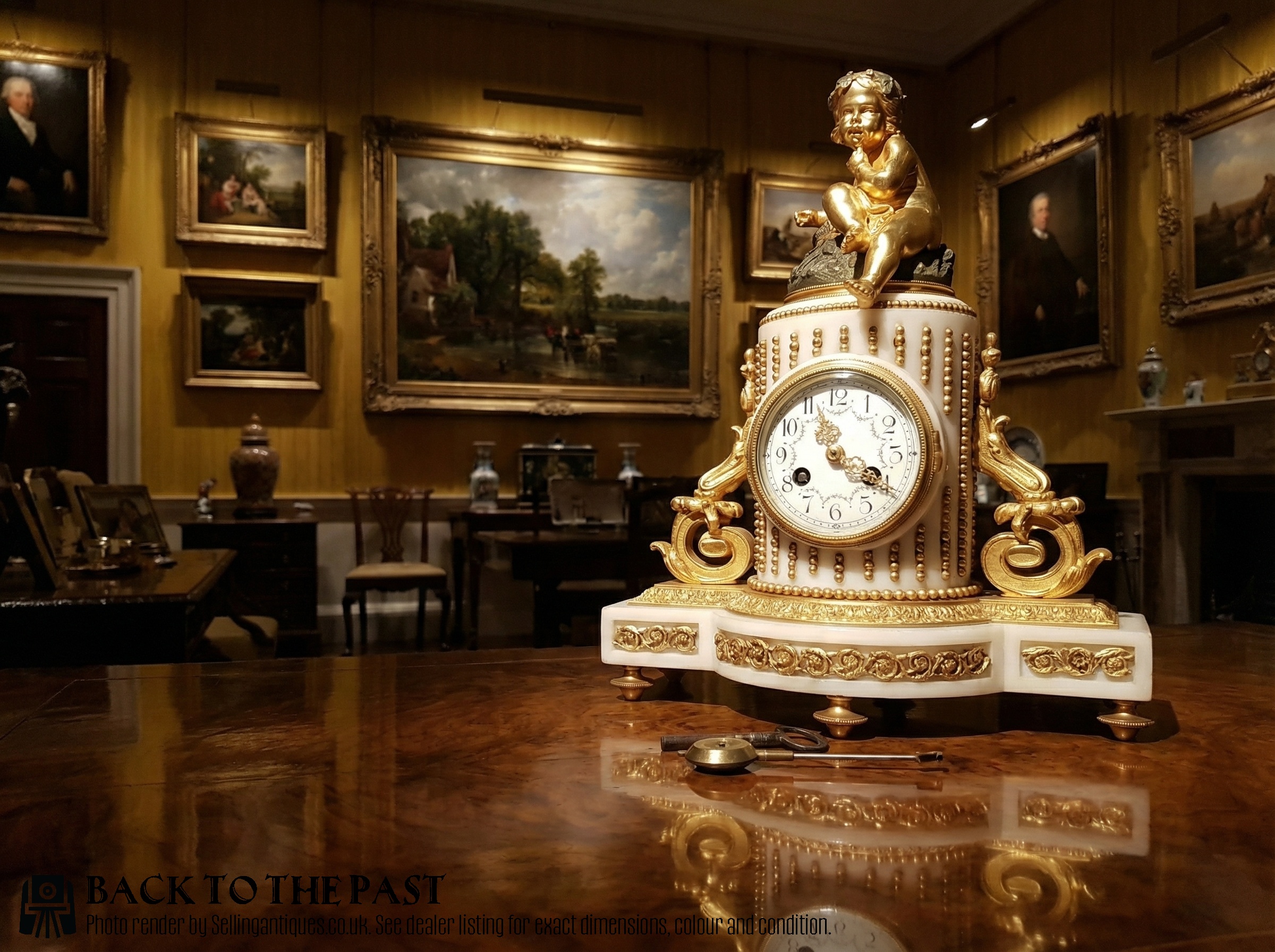
Classical Marble Clock
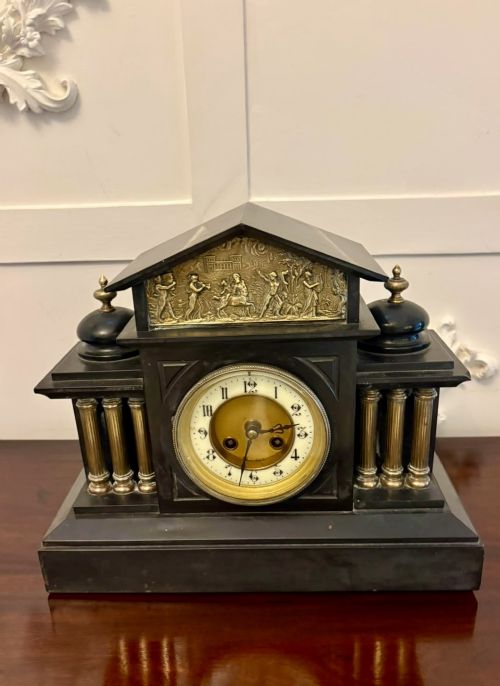
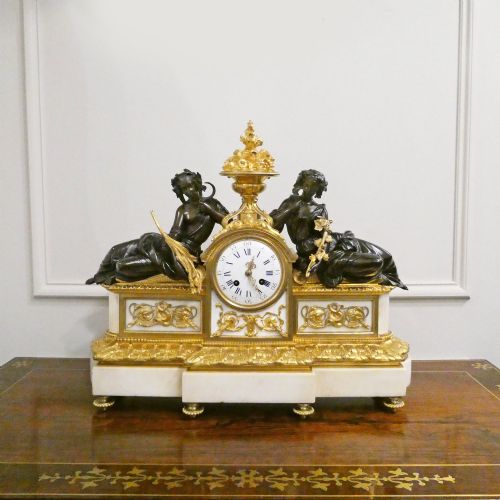
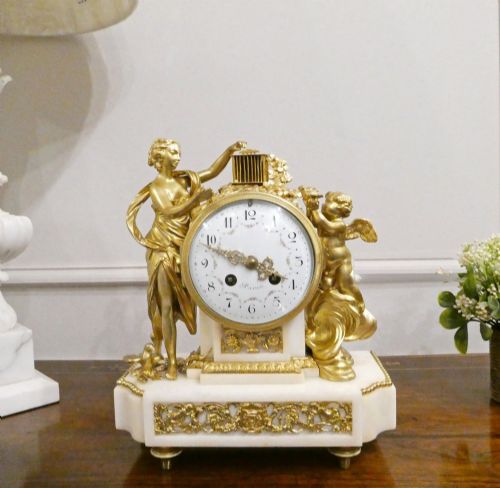
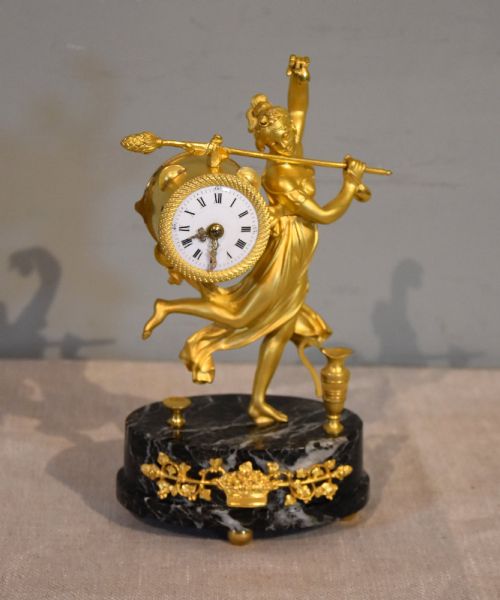
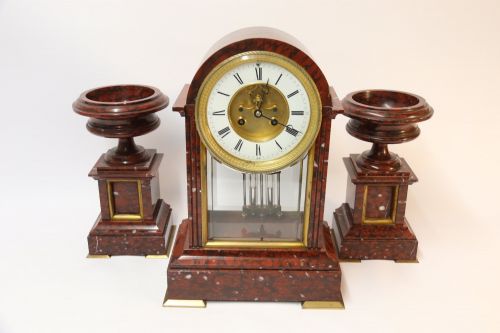
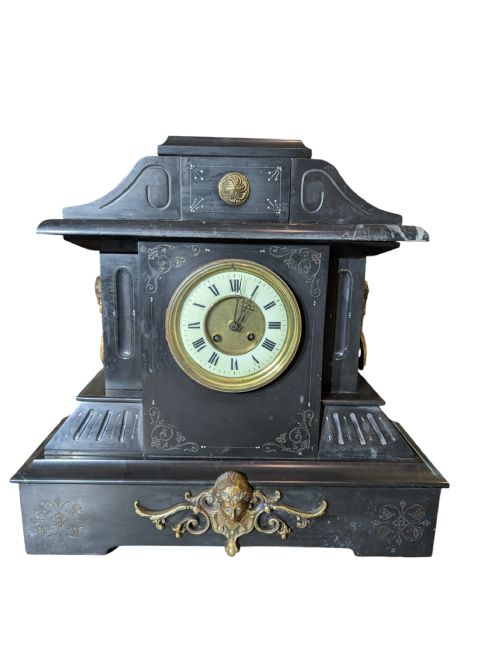
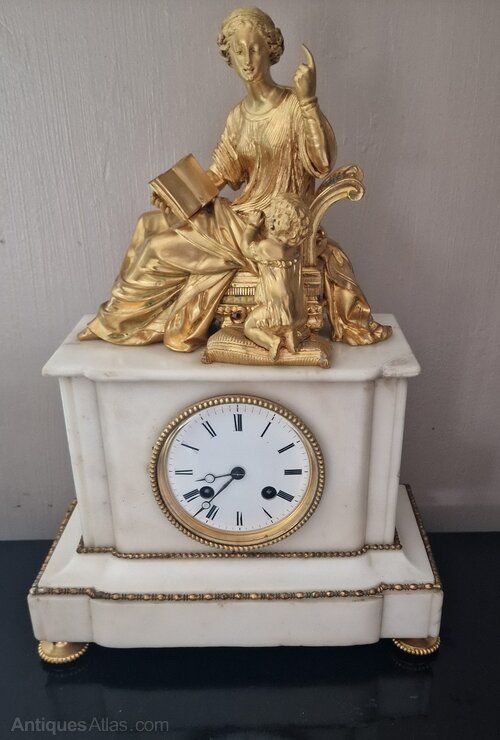
A classical marble clock combines solid stone cases with precision movements, mostly originating from nineteenth-century France and Britain. Buyers searching for a classical marble clock will encounter mantel clocks and garniture sets featuring architectural facades, figural toppieces, and matching side urns.
The materials span rouge, green, black, and sienna marble paired with bronze, ormolu, and enamel dials. Many examples adopt Louis XVI, French Empire, or Victorian classical revival styles.
Most items on this page function as mantel timepieces or strike clocks, often accompanied by candelabra or side garnitures to form a complete garniture set.
What varies in quality
Quality rests in the depth of the marble figuring, the crispness of the bronze or ormolu cast mounts, and the reputation of the movement maker. Heavy architectural cases with finely chiselled appliques and named clockmakers' movements stand apart from plain faux marble casings and unsigned mechanisms.
The integration between the stone body and the decorative metal elements dictates overall harmony, where finely fitted bezels and solid cast figures elevate a piece above standard production items.
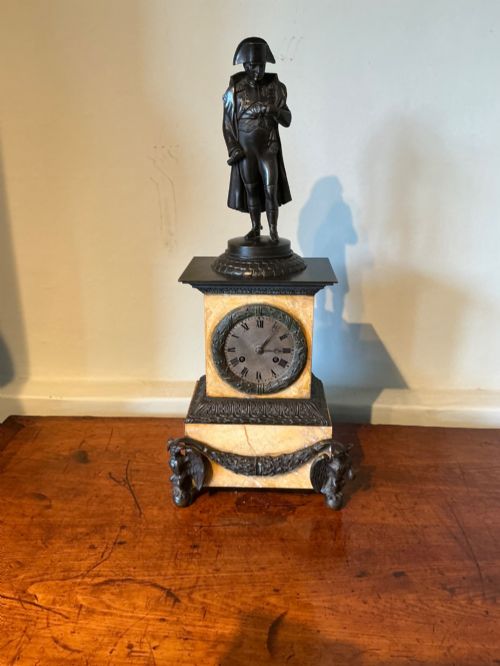
Several clocks enlist historical figures like William Shakespeare and Napoleon to keep watch over the hours.
Vincenti·Samuel Marti·Japy Freres·Philippes Paris·Berger Paris·H Luppens Paris·Auguste Moreau
The Classical Marble Clock Glossary
- Garniture
- A set of matching decorative objects, typically comprising a central clock flanked by two side urns or candelabra.
- Ormolu
- Gilt bronze produced by applying a finely ground mercury and gold amalgam to cast bronze before heating.
- Movement
- The internal mechanical gear train that drives the timekeeping and striking functions of the clock.
- Bezel
- The metal ring that holds the glass protecting the dial face in place.
- Dial
- The face of the clock where the hours and minutes are marked.
Classical Marble Clock: Frequently Asked Questions
How do I wind a marble clock?
Use the correct winding key on the arbors located on the dial face, turning gently until resistance is felt.
Avoid overwinding the mainspring to prevent mechanical damage to the movement.
What is a clock garniture set?
A garniture set includes a central mantel clock accompanied by matching side pieces such as urns or vases.
These sets were designed to sit symmetrically on a fireplace mantel or sideboard.
How do I identify the period?
Examine the style of the case, the numerals on the enamel dial, and any maker stamps on the brass movement backplate.
Nineteenth-century pieces often reflect Louis XVI revival or French Empire design motifs.
Where should I place these clocks?
Position the clock on a sturdy, level surface capable of supporting considerable stone weight.
Keep the piece away from direct sunlight and damp walls to protect the marble and gilt surfaces.