




French Pendulum Timepiece
A french pendulum timepiece brings classical proportion and precise mechanical craft into a room, spanning styles from empire grandeur to art deco restraint.
French Pendulum Timepiece
A french pendulum timepiece is a domestic clock driven by a swinging pendulum, housed in cases of marble, brass, or gilt bronze. Buyers seeking this phrase encounter mantel clocks, portico clocks, and four-glass timepieces originating from the nineteenth and early twentieth centuries.
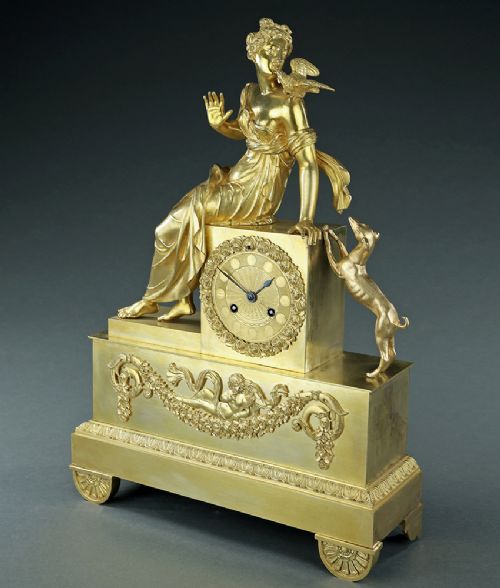
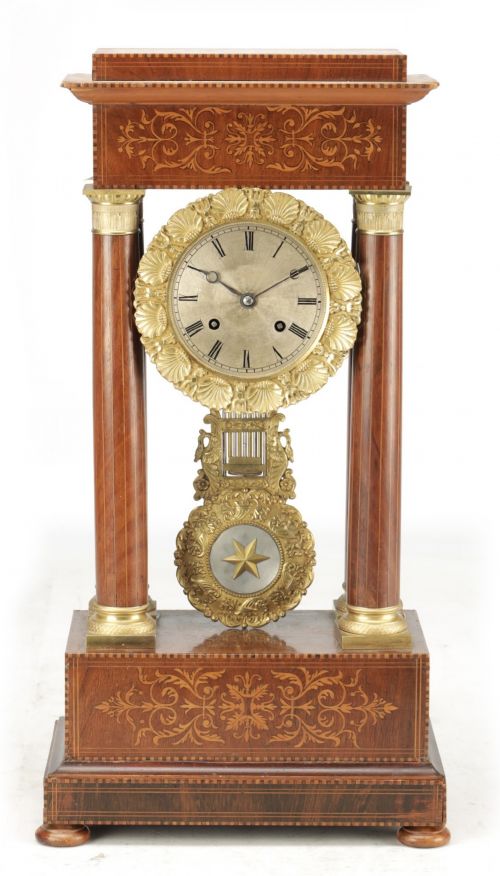
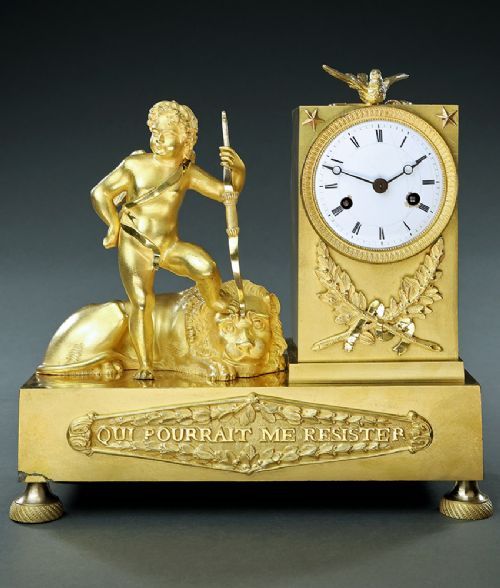
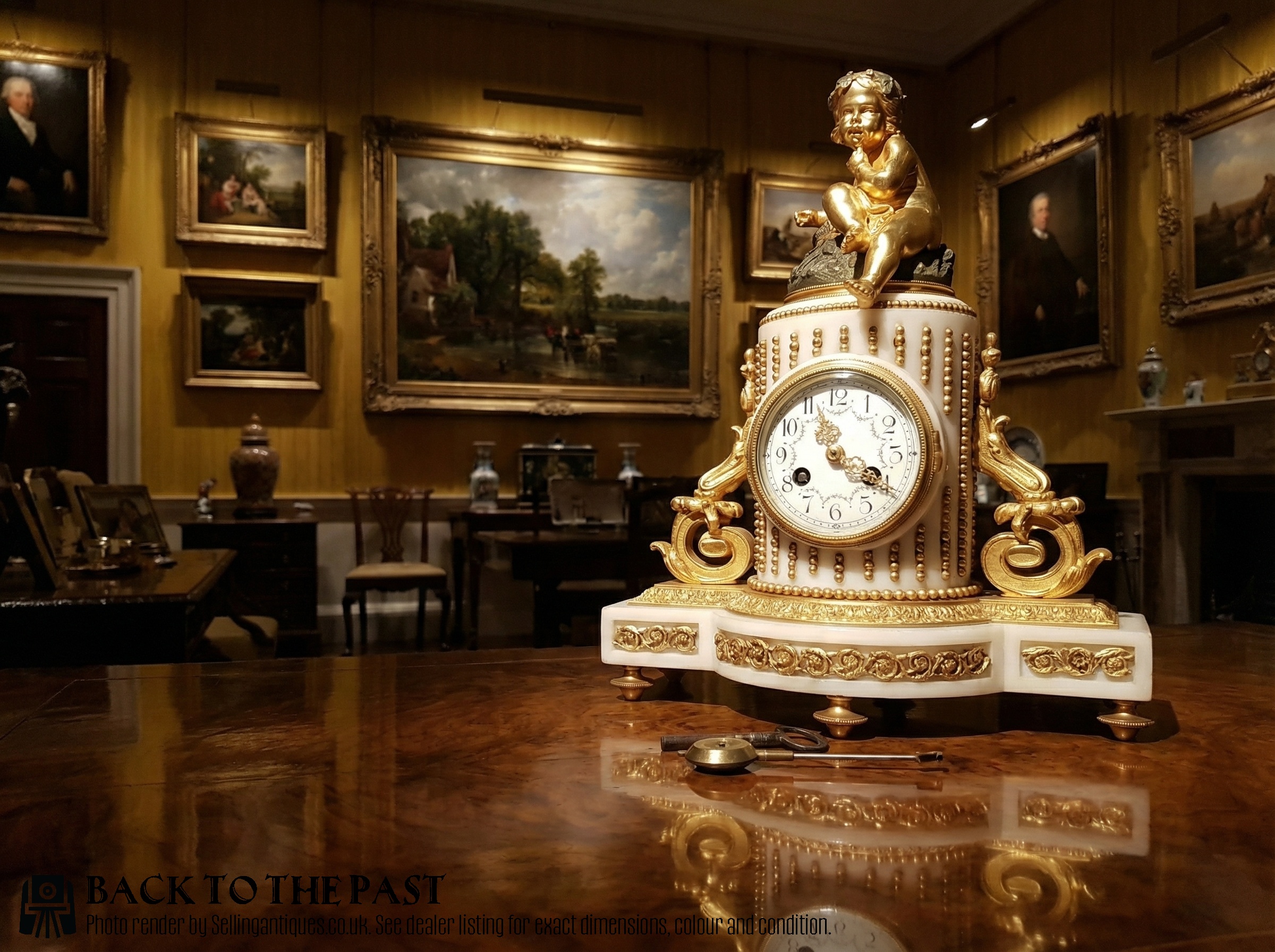
The objects take many forms, from architectural portico models to figural mantle pieces depicting classical scenes. Most pieces on this page reflect revival aesthetics like Louis XVI and French Empire alongside Victorian interpretations.
Materials and Construction
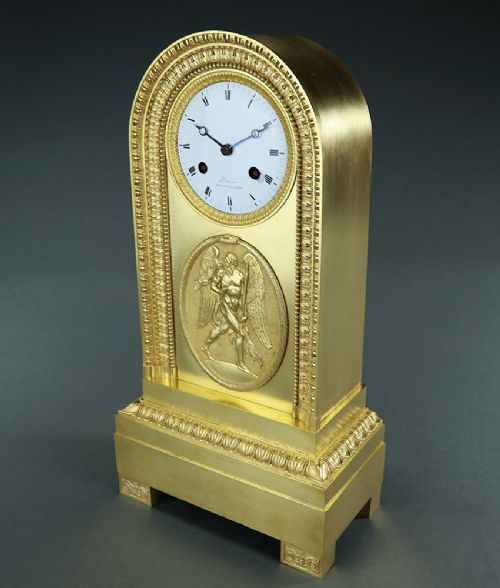
Cases combine cast metals such as ormolu and gilt bronze with polished marble, slate, or rosewood. Metal components are frequently fire-gilt, chased, or patinated to create sharp contrast against enamelled dials.
Movements utilise brass gears and escapements regulated by pendulum rods, often enclosed within glass panels or heavy stone housings. Skilled clockmakers signed their brass movement plates or paired with specialist dial painters.
Periods represented include the French Empire era, Victorian years, and Art Deco designs from the twentieth century.
Assessing Quality and Execution
The depth of chasing in ormolu mounts and the crispness of cast bronze figures distinguish superior work from standard production. Heavier marble blocks and well-proportioned architectural porticos indicate higher workshop standards.
Signed movements by known makers or retailers elevate a piece, as do complex complications such as thermometers or carillons. The integration of hand-painted enamel dials and fire-gilding dictates the upper tier of the range.
Maurice & Marcel Moulin Favre-Bulle·Le Roy, Paris·Tiffany·Wetterstrands·Samuel Marti·Pons de Paul
The French Pendulum Timepiece Glossary
- Ormolu
- Gilt bronze produced by applying a mercury and gold amalgam to cast brass or bronze, then firing the piece to drive off the mercury. This technique yields a deep, lasting golden lustre.
- Portico clock
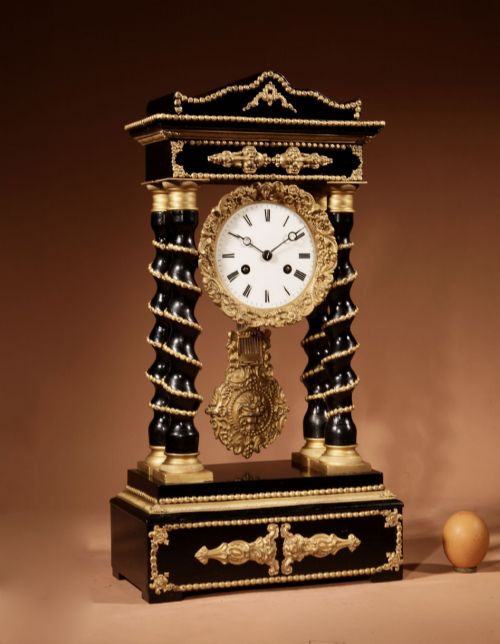
- A mantel clock design supported by four slender columns resembling a classical temple facade. These frames often incorporate a central suspended pendulum swinging freely between the pillars.
- Four-glass clock
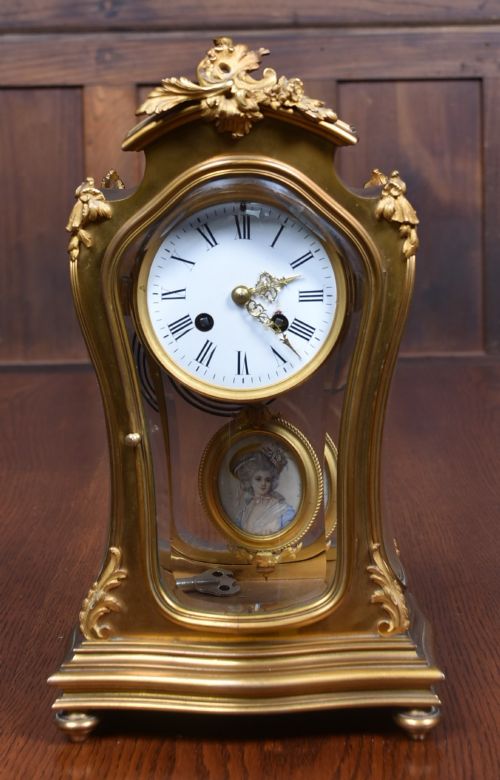
- A freestanding mantel clock enclosed by bevelled glass panels on all four sides, allowing clear visibility of the movement. Many examples house compensated mercury pendulums.
- Cartel clock
- A wall-mounted clock set within an ornate asymmetrical frame of giltwood, bronze, or brass. Originating in the baroque period, these pieces sit flush against panelling.
- Capucine
- A portable brass alarm clock with striking capabilities, originating in France during the eighteenth and nineteenth centuries. They typically feature a carrying handle and exposed bell on top.
French Pendulum Timepiece: Frequently Asked Questions
How do I wind a French clock?
Most mechanical French timepieces require a key inserted into winding holes on the dial to tension the mainsprings. Care must be taken not to over-wind the movement.
Striking clocks may have separate trains for time and chiming, requiring both sides to be wound regularly to keep the mechanism synchronised.
Where should I place a heavy marble clock?
Heavy marble and slate mantel clocks require a sturdy, level surface capable of supporting considerable weight. Mantlepieces and strong sideboards provide stable platforms.
Placing the clock away from direct heat sources and damp walls protects the internal brass movement and delicate dial enamels from deterioration.
How do four-glass clocks work?
Four-glass timepieces display the entire mechanical movement through transparent bevelled panes, often featuring a mercury-filled pendulum designed to compensate for temperature changes. The movement is usually mounted centrally within the brass framework.
Suspension springs hold the pendulum securely during transport, and these must be unlocked once the clock reaches its permanent location.
What is an empire style clock?
Empire style clocks draw upon classical Greek and Roman motifs, featuring patinated bronzes contrasted with bright ormolu mounts. Themes often reference military triumph, mythology, or classical architecture.
These nineteenth-century pieces display rigorous symmetry, heavy proportions, and precise casting standards characteristic of the Napoleonic era.