
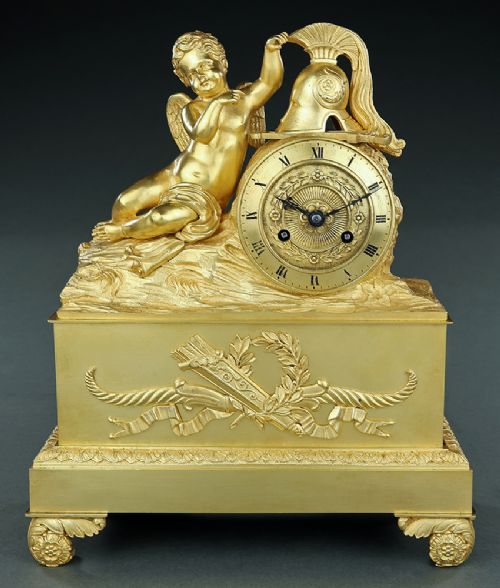
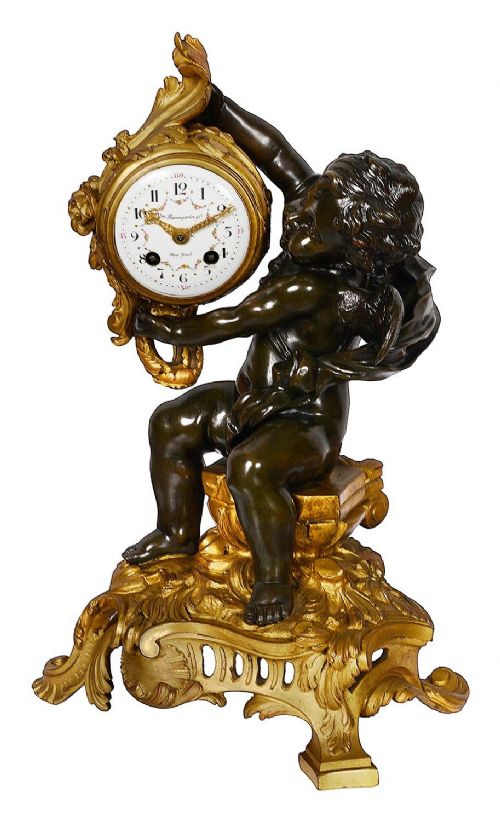




Ormolu Cherub Clock
An ormolu cherub clock brings together gilded bronze figures and precision movement, capturing nineteenth-century French decorative taste for any mantelpiece.
Ormolu Cherub Clock
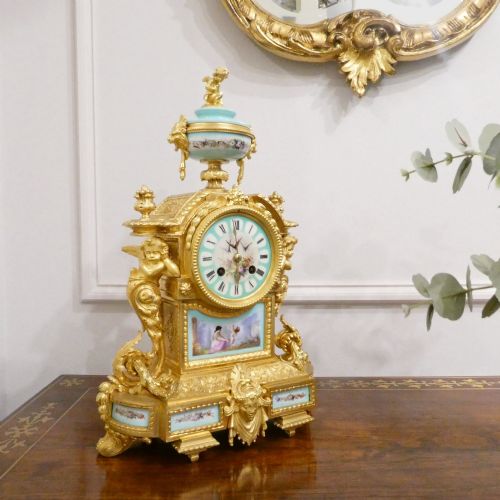
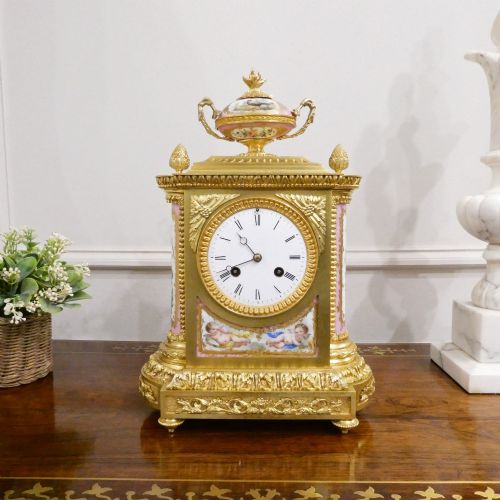
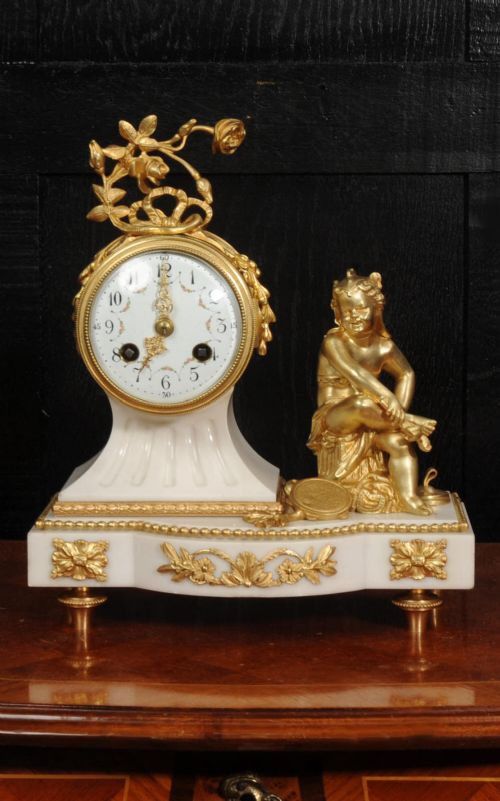
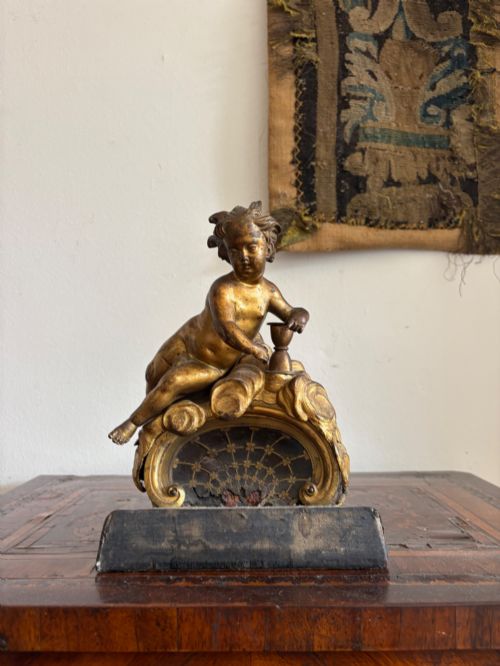
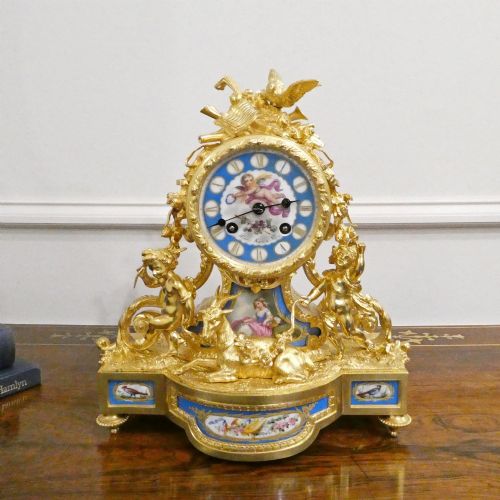
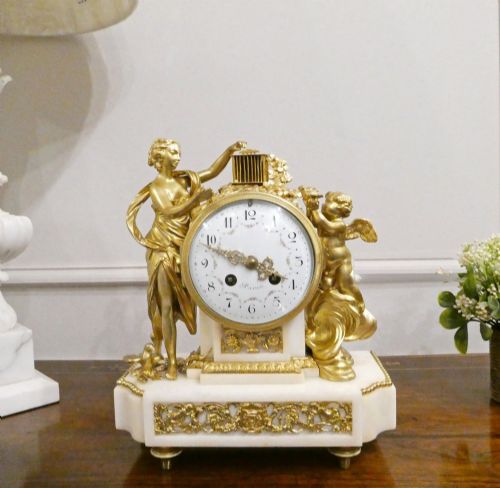
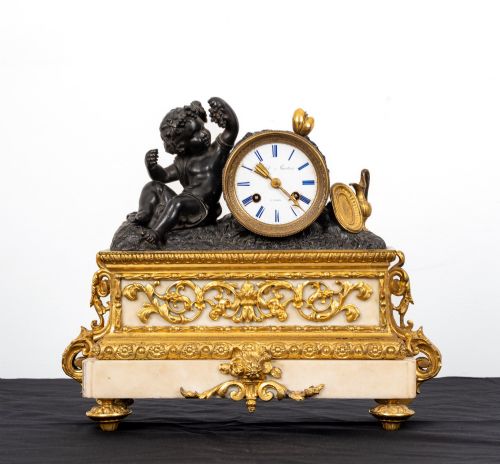
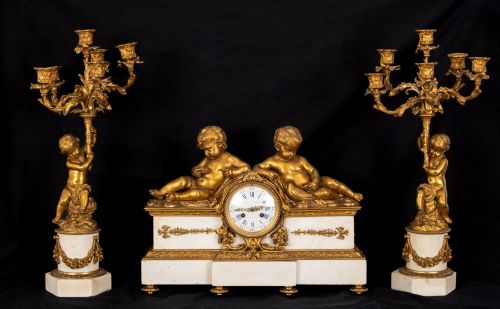
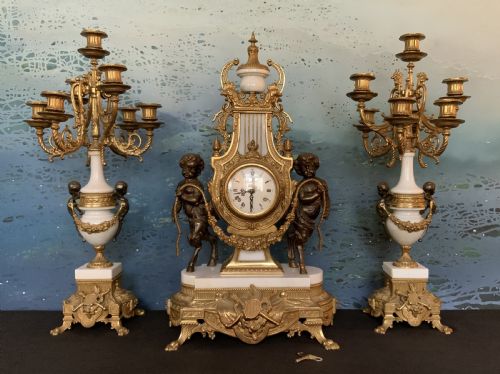
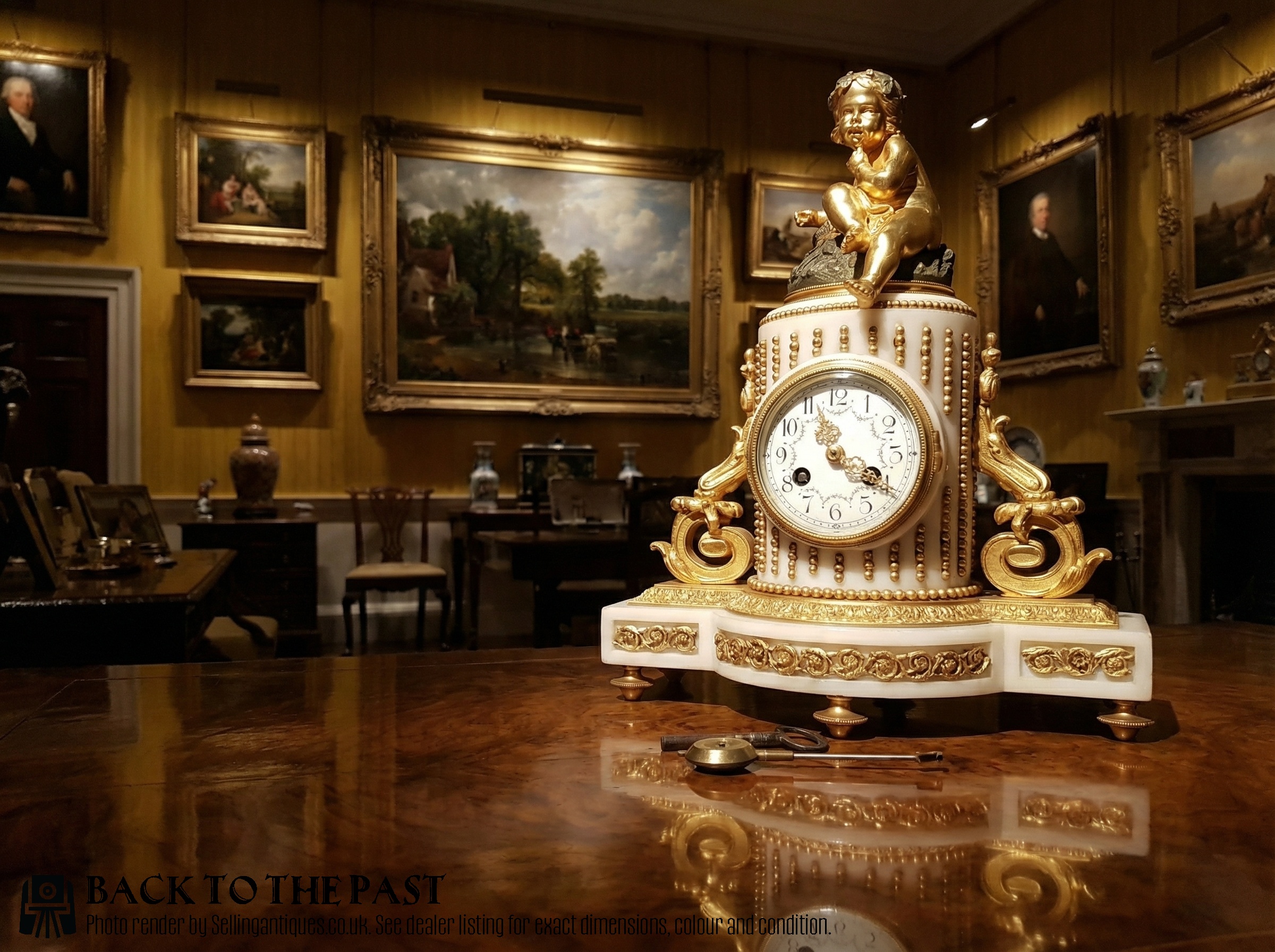
An ormolu cherub clock is a decorative timepiece featuring cast bronze mounted with gold-coloured amalgam alongside sculptural representations of putti or winged infants. These pieces often arrive as part of larger garniture sets accompanied by matching candelabras or side ornaments.
The version most commonly met on this page is the nineteenth-century French mantel clock, drawing on Rococo, Louis XVI, and Second Empire design vocabulary. Workshops in Paris produced these timepieces extensively during the Victorian era, combining classical figures with functional horology.
Buyers also encounter variations incorporating materials such as white marble, onyx, and hand-painted porcelain panels depicting pastoral scenes. Such combinations reflect the diverse stylistic revivals popular among nineteenth-century collectors and interior decorators.
How they were made
The foundation of these timepieces relies on bronze casting, shaped through sand-casting or lost-wax methods to create intricate figures and architectural cases. Artisans then applied mercury gilding or electroplating to achieve the distinctive golden ormolu surface finish.
Movements were typically sourced from specialist horological makers, integrating brass gear trains, anchor escapements, and pendulum regulation. Dial faces frequently utilised white enamel on copper discs, sometimes enhanced with hand-painted numerals or delicate subsidiary indicators.
Listings feature periods spanning the early nineteenth century through 1900, incorporating marble, bronze, porcelain, and glass materials.
What varies in quality
The refinement of the bronze chasing and the crispness of the cast ornamentation distinguish exceptional pieces from standard production. Artisans who laboriously hand-chiseled the raw metal after casting achieved depth and detail that lesser moulded examples lack.
Horological sophistication also divides the range, with signed movements from renowned Parisian makers representing superior craftsmanship. The integration of high-grade porcelain panels, unblemished marble bases, and complete matching garniture sets elevates the status of an individual clock.
Jean-Baptiste Delettrez·Henry Marc·Siffel and Cartier·Henry Dasson·Le Roy and Fils·Japy Freres·Leon Message·Jollet et Cie·Samuel Marti·Achille Brocot·H Luppens Paris·Charles Hour
The Ormolu Cherub Clock Glossary
- Ormolu
- Gilded bronze produced by applying a mercury and gold mixture to a bronze base and heating it until the mercury vaporised. This technique created a durable, rich golden sheen characteristic of luxury decorative objects.
- Putto
- A plump, winged infant figure frequently depicted in classical and Renaissance art. In these clocks, putti appear as sculptural ornaments draped across the marble base or flanking the dial.
- Garniture
- A set of matched ornamental objects designed to be displayed together on a mantelpiece. Typically, this includes a central clock flanked by a pair of matching candelabras or urns.
- Champleve
- An enamelling technique where troughs or cells are hollowed out of a metal surface and filled with vitreous enamel paste before firing. This method produced colourful geometric or floral patterns on clock cases.
- Escapement
- The mechanical linkage inside a clock movement that translates the rotary force of the gear train into regulated impulses for the pendulum. It is the heart of the timekeeping mechanism.
Ormolu Cherub Clock: Frequently Asked Questions
How do I wind an antique clock?
Most nineteenth-century mechanical clocks utilise a key inserted into winding holes on the dial face to tension the mainsprings. Care must be taken not to over-wind the mechanism, stopping as soon as resistance is felt.
Striking trains and time trains are usually wound independently. Regular servicing by a professional horologist ensures the bronze and brass components continue to function smoothly.
What is a garniture set?
A garniture set consists of a central clock accompanied by matching decorative side pieces such as candelabras or vases. These suites were designed for symmetrical display on fireplace mantels.
Matching materials and sculptural motifs across all pieces indicate a unified commission from the original workshop.
How do I distinguish Louis XVI style?
Louis XVI style is characterised by neoclassical restraint, featuring straight lines, symmetrical proportions, and architectural elements like columns and urns. Cherubs in this style often display classical drapery and formal poses.
In contrast, earlier Rococo revival pieces embrace asymmetry, scrolling foliage, and exuberant, flowing curves.
Are these clocks suitable for daily use?
These timepieces were engineered for domestic utility and continue to function reliably when properly maintained. Many feature eight-day movements requiring weekly attention.
Placing the clock on a stable, level surface protects the pendulum alignment and preserves the historical movement.