





Victorian Figural Clock
A victorian figural clock combines timekeeping with sculptural narrative, bringing character and ornate metalwork into a room.
Victorian Figural Clock
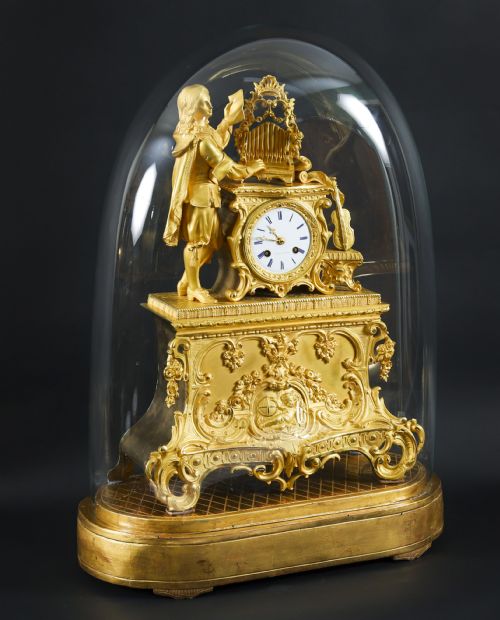
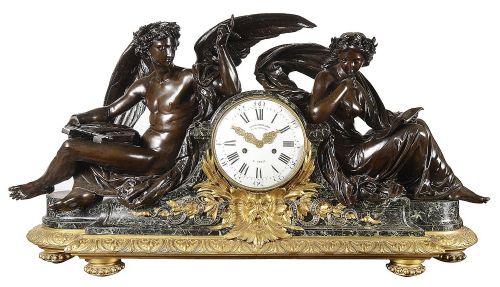
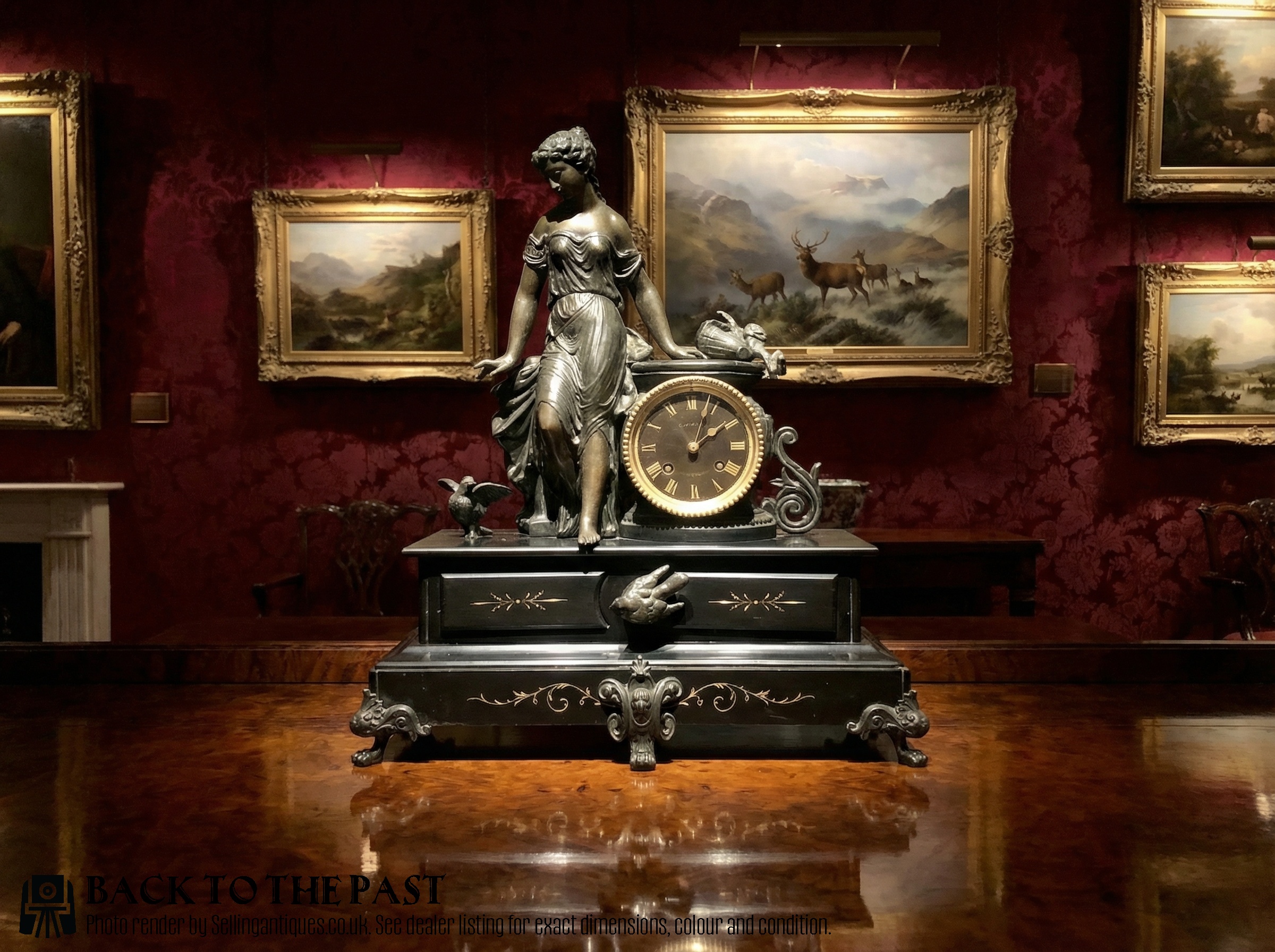
A victorian figural clock places a sculpted human, mythological or animal figure alongside the clock face, most frequently taking the form of mantel clocks and clock garnitures originating from the nineteenth century.
The pieces on this page span the mid to late nineteenth century, predominantly showcasing French and Swiss workshops alongside British examples from periods such as eighteen eighty and eighteen sixty.
Buyers will encounter table clocks and mantel pieces featuring subjects ranging from cherubs and classical deities like Amphitrite to carved wood animal studies.
Materials and construction
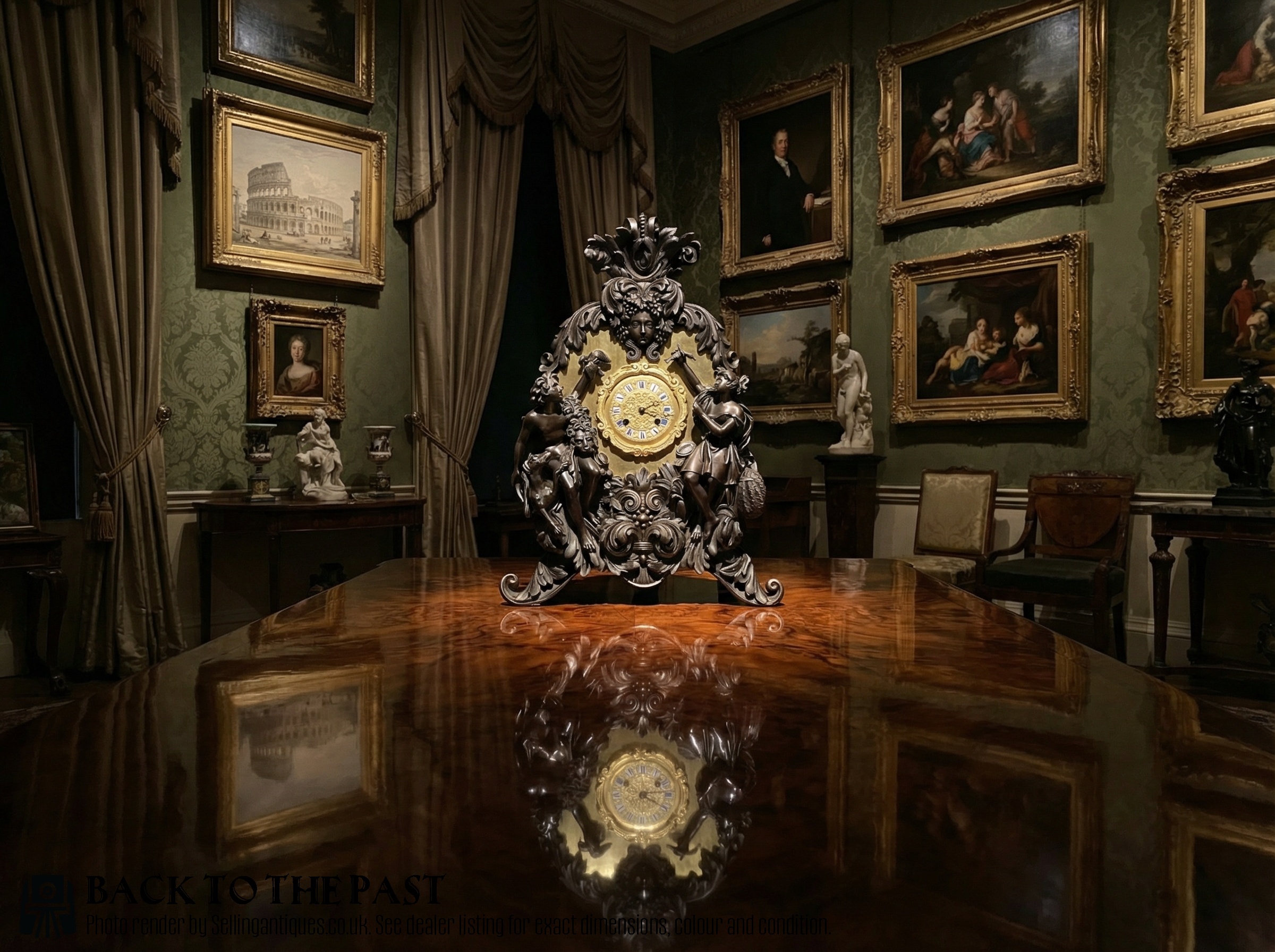
Makers utilised cast metals including gilt bronze, ormolu, brass and spelter, often combining them with marble, onyx and porcelain panels or hand-painted enamel dials.
Carved linden wood appears in Swiss Black Forest pieces, while French works employ cold painted bronze and gilt metal alongside glass domes to protect delicate components.
Movements generally rely on eight day striking mechanisms housed within elaborate architectural or sculptural housings.
Listings include mantel clocks, table clocks and clock garnitures spanning the nineteenth century in materials from marble and porcelain to bronze and brass.
Judging quality and execution
The distinction between tiers rests upon the crispness of the casting and the fidelity of the chasing in metals like bronze and ormolu, alongside the finesse of hand-painted porcelain panels.
Signed movements by known makers and bronze sculptors command greater attention than unsigned commercial equivalents due to the precision of the mechanical assembly and sculptural depth.
The integrity of the ensemble, such as matching clock garnitures and original glass domes, elevates the standing of a piece.
Leroy Paris·Bergen and Co·Auguste Moreau·Lemerle Charpentier·Victor Paillard·John Bennett Cheapside London·Louis Hottot·F Marti·P H Mourey
The Victorian Figural Clock Glossary
- Clock garniture
- A set comprising a central clock accompanied by matching side ornaments such as urns or vases. These decorative suites were designed to display together on a mantelpiece.
- Ormolu
- Gilt bronze created by applying a finely ground high-carat gold mercury amalgam to a bronze object. The process produces a rich metallic lustre.
- Spelter
- A zinc alloy utilised as a less costly alternative to bronze for sculptural figures. It accepts metallic paints and gilt finishes effectively.
- Enamel dial
- A clock face formed by fusing powdered glass to a metal substrate at high heat. Hand-painted numerals and markers are subsequently fired onto the surface.
- Eight day movement
- A mechanical clock movement requiring winding once a week. This mechanism drives both the timekeeping train and the striking train.
Victorian Figural Clock: Frequently Asked Questions
What is a clock garniture?
A clock garniture consists of a central timekeeper displayed alongside matching ornamental pieces, typically decorative urns or candelabra designed for a mantelpiece.
These matching suites created a balanced decorative scheme across nineteenth-century drawing rooms and parlours.
How do I wind an eight day clock?
An eight day movement requires a key inserted into the winding arbors on the dial to tension the springs once a week.
Care must be taken not to overwind the mechanism to ensure the longevity of the brass gears and springs.
Where should I place a figural clock?
These clocks suit prominent mantelpieces, console tables or secure surfaces where the sculptural details and painted porcelain panels remain visible.
Placement should avoid direct sunlight, damp environments and extreme temperature fluctuations that might affect the wood, marble or painted dials.
How do I identify French nineteenth-century clocks?
French clocks often feature maker signatures on the movement backplates or dials, alongside characteristic materials like ormolu, gilt bronze and Sevres style porcelain panels.
Stylistic cues draw heavily from French Rococo Revival, Louis XVI Revival and Second Empire aesthetics.