
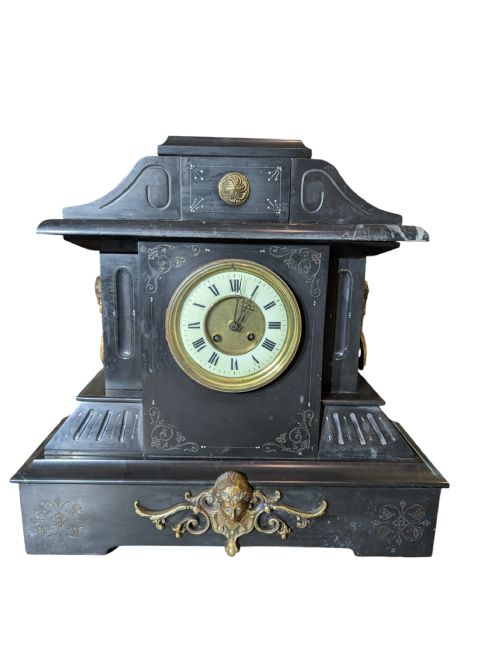


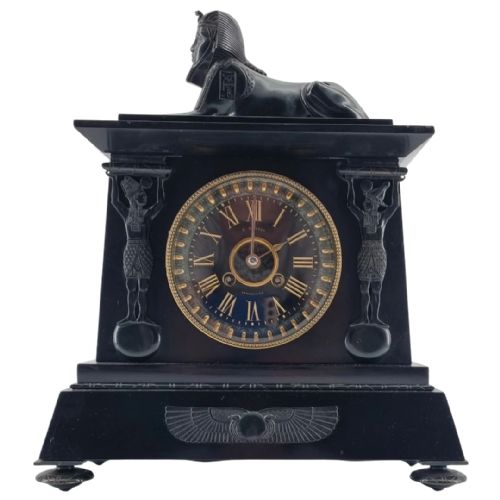


19th Century Slate Clock
A 19th century slate clock brings architectural weight and precision mechanics into a room, forged from heavy stone and polished metal.
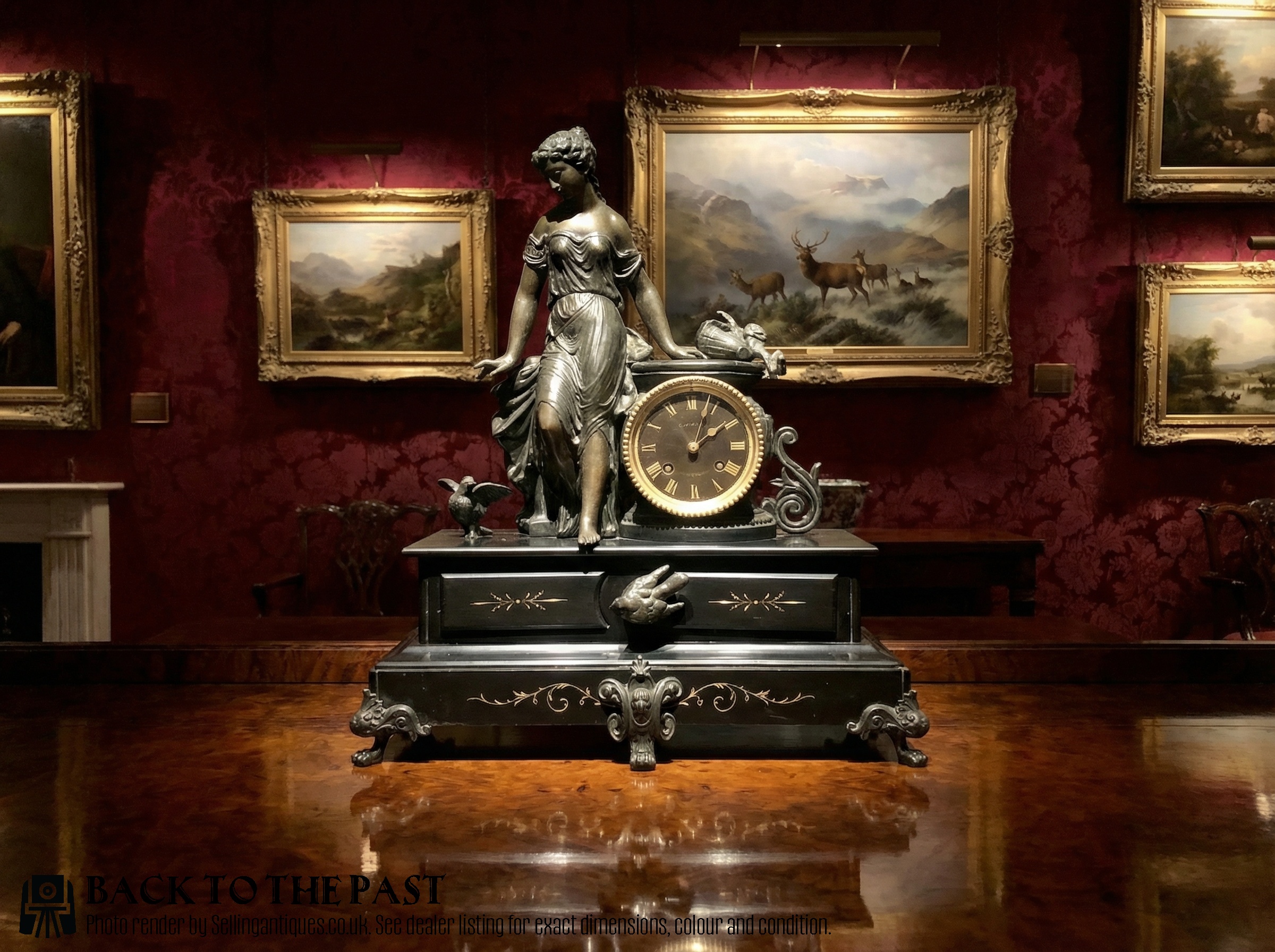
19th Century Slate Clock
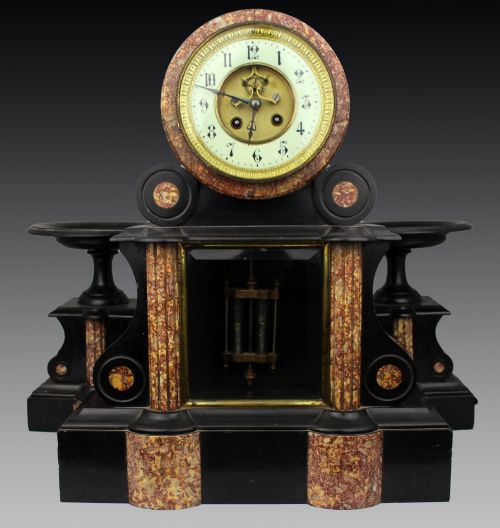
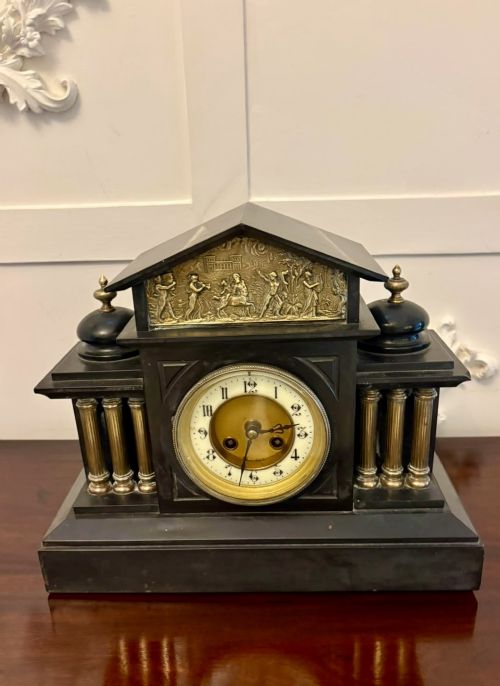
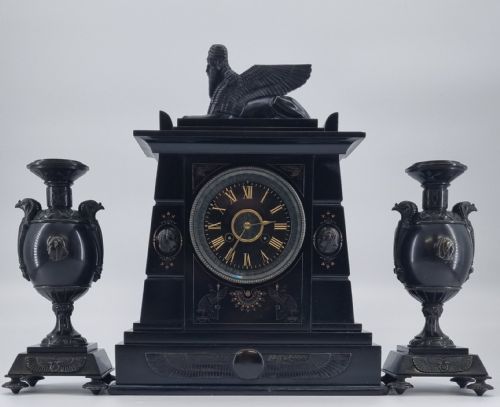
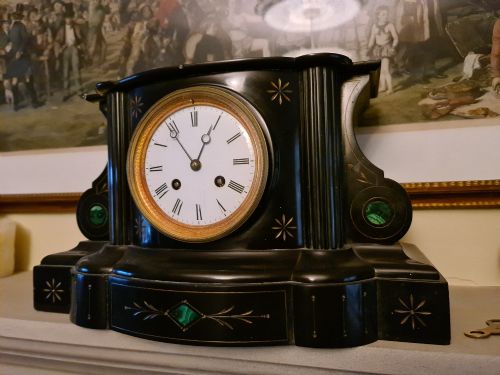
A 19th century slate clock typically takes the form of a heavy architectural mantel clock, often accompanied by matching garnitures or side pieces. These pieces draw on diverse design vocabularies, ranging from restrained Victorian models to elaborate Egyptian Revival and Neoclassical styles.
The heaviest examples emulate ancient temples and architectural facades, utilising dark stone to create monumental presence. You are most likely to encounter French and English pieces from the middle and late decades of the nineteenth century, built to sit firmly on a mantelpiece.
Beyond standard timekeepers, the selection includes specialised formats such as perpetual calendar clocks and four-glass models. The underlying material provides a dark, uniform ground that sets off contrasting mounts in marble, bronze, and ormolu.
Factors of quality and execution
Quality in these clocks rests upon the ambition of the architectural design and the crispness of the stone cutting. Finer examples display harmonious proportions, integrated garniture sets, and sophisticated movements by noted makers rather than standard commercial production.
The refinement of the decorative mounts, from cast bronze lions to intricate gilt brass bezels, separates standard mantelpieces from superior examples. Precision in the dial work and the inclusion of complications like perpetual calendars further elevate a piece.
Materials recorded across the inventory include black slate, marble, brass, bronze, ormolu, enamel, and glass.
D. Munsey of Cambridge·Achille Brocot·Japy Frères·Pinchon, Fils, Paris·Brocot
The 19th Century Slate Clock Glossary
- Garniture
- A set consisting of a central clock and matching decorative side ornaments, such as urns or vases. These matched sets were designed to create a balanced display on a mantelpiece.
- Ormolu
- Gilded bronze, produced by applying a mixture of gold and mercury to a bronze base. It provides bright metallic highlights against dark slate.
- Escapement
- The mechanism within a clock that controls the release of power from the spring or weight. Visible escapements allow the observer to watch the motion of the regulating components.
- Perpetual calendar
- A mechanism that automatically adjusts for the varying lengths of months and leap years. These complications represent a higher tier of horological achievement.
19th Century Slate Clock: Frequently Asked Questions
How do I wind a 19th century slate clock?
Most of these clocks utilise an eight-day movement driven by springs, requiring a key inserted into the dial holes to wind the arbors.
Care must be taken not to over-wind the mainspring, turning the key steadily until resistance is felt to ensure proper operation for the week.
Where should I place a heavy slate clock?
Due to the substantial weight of stone cases, these clocks require a sturdy, level surface such as a heavy mantelpiece or strong sideboard.
Placing the clock on a stable foundation prevents vibrations that can disrupt the delicate balance of the pendulum and movement.
How do I identify an Egyptian Revival slate clock?
Egyptian Revival pieces incorporate distinct architectural motifs inspired by ancient monuments, such as obelisk forms, lotus capitals, and hieroglyphic engravings.
Makers combined dark black slate with contrasting marble and bronze to emulate the dramatic temple architecture popular during the nineteenth century.
What is a clock garniture set?
A garniture set pairs a central mantel clock with matching side ornaments, traditionally designed to sit together across a fireplace mantel.
These matching side pieces often share the exact materials, such as black slate and gilt bronze, creating a unified decorative display.