




French Figural Timepiece
A french figural timepiece brings together sculptural bronze and precision horology, anchoring a room with nineteenth-century character.
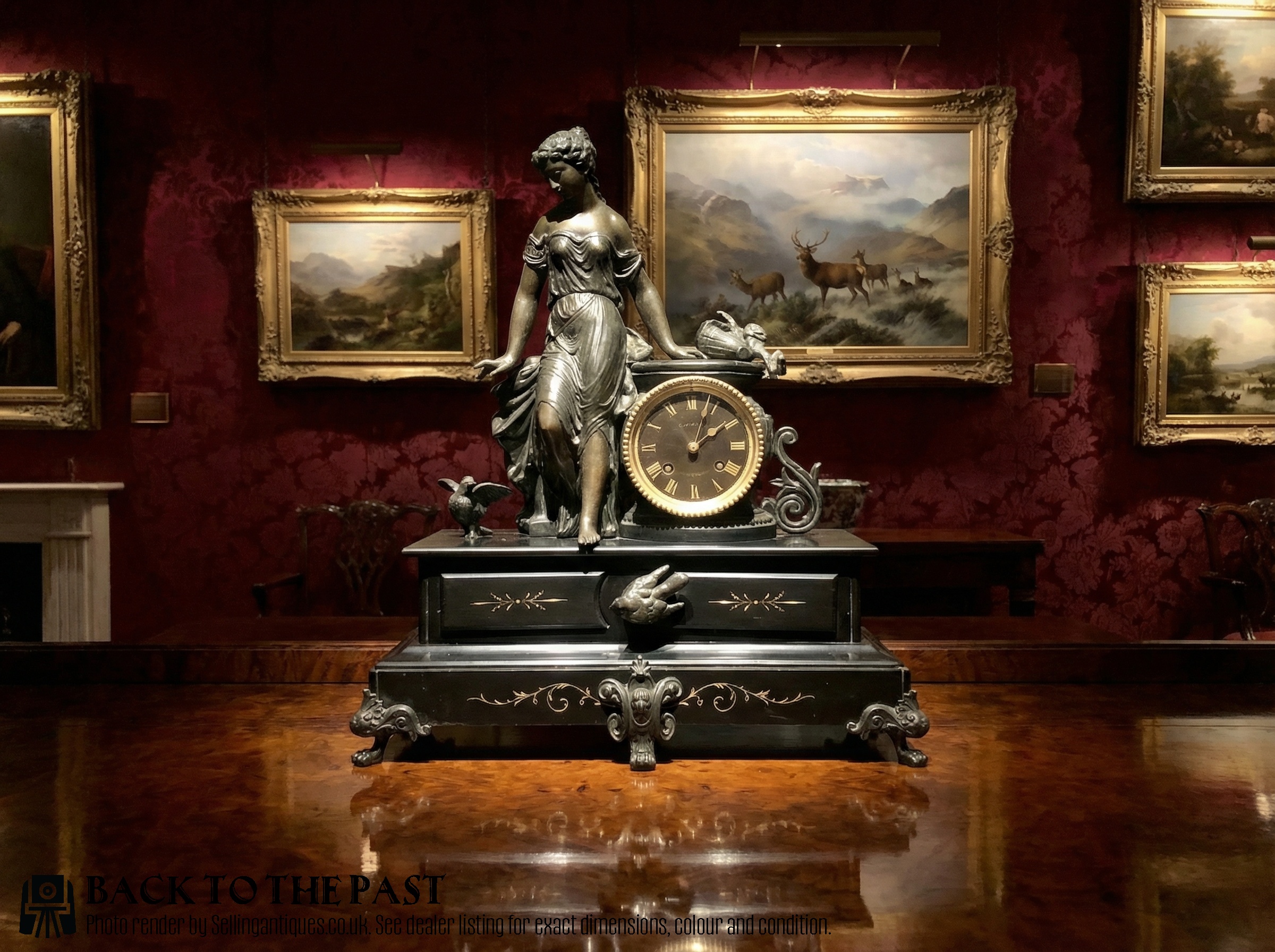
French Figural Timepiece
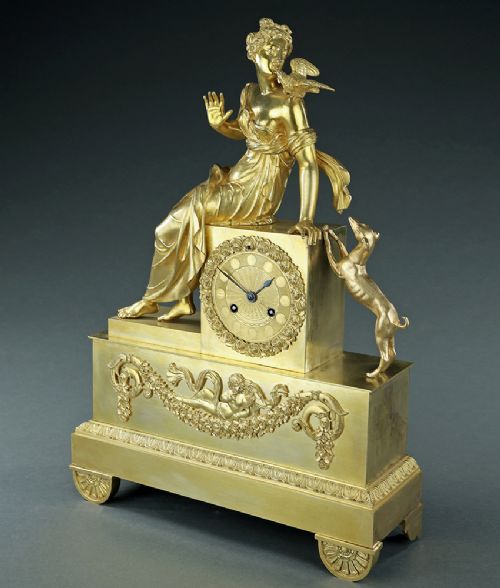
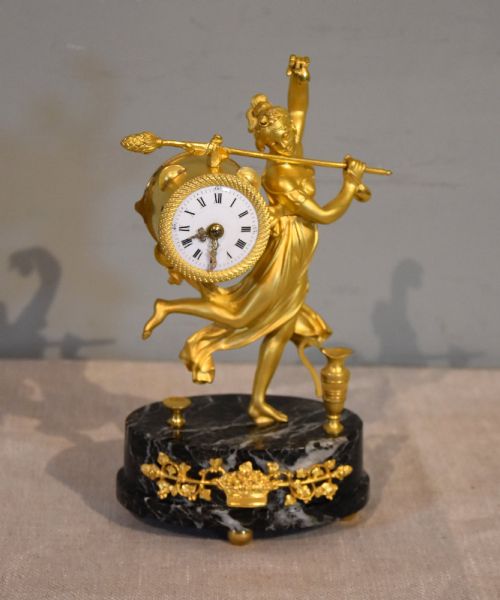
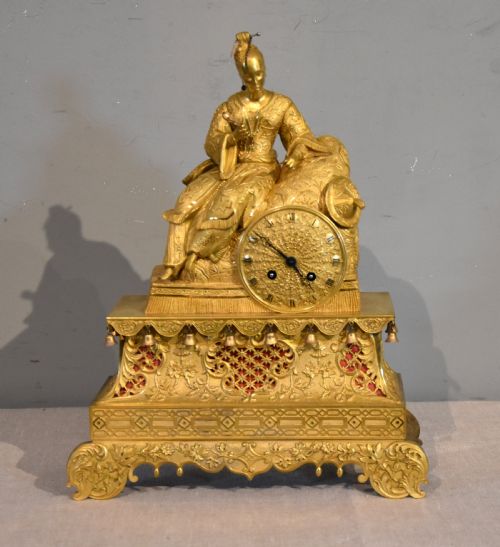
A french figural timepiece combines a mechanical clock movement with cast sculptural figures representing mythological, allegorical, or historical themes. These decorative objects emerge most frequently from nineteenth-century workshops, spanning periods from the Regency era through the late Victorian decades.
Makers housed these works in various forms including mantel clocks, table clocks, and clock garnitures accompanied by matching side ornaments. The sculptural subjects range from cherubs and animals to romantic figures and classical deities.
Buyers encounter pieces styled in French Empire, Rococo Revival, Neoclassical, and Art Nouveau aesthetics. Each style dictates the posture of the figures and the ornamentation of the metalwork plinths.
How they were made
Foundries cast these decorative sculptures in bronze, gilt bronze, or ormolu, applying patination or mercury gilding to achieve lasting metallic lustre. Artisans mounted these heavy metal figures onto bases constructed from white or green marble, occasionally incorporating carved alabaster or glass domes.
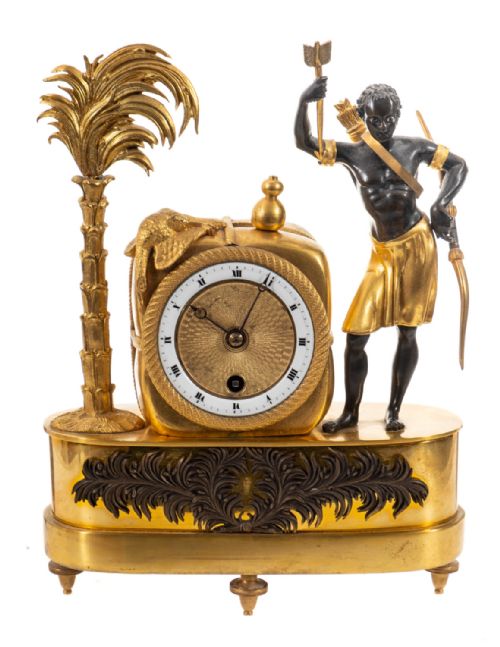
Clock dials featured hand-painted numerals and enamel finishes, driven by internal mechanisms such as fusee or silk suspension movements. Founders and horologists collaborated to integrate the dial seamlessly into the sculptural composition.
Goats, palm trees, and adventurous explorers populate nineteenth-century dials, proving time waits for no man or beast.
What varies in quality
The crispness of the bronze casting and the depth of the gilding separate standard production from superior examples. Master founders achieved sharp facial expressions and intricate drapery folds that lesser workshops failed to capture.
The reputation of the horologist and the complexity of the movement dictate the upper tier of these timepieces. Signed works by established Parisian bronze-makers and clockmakers retain superior mechanical integrity and artistic harmony.
Lemerle Charpentier·Deniere Et Fils·Victor Paillard·Francois Moreau·Japy Freres
The French Figural Timepiece Glossary
- Ormolu
- Gilded bronze produced through the application of a mercury and gold amalgam, creating a warm, durable finish. This technique was widely utilised by nineteenth-century French metalworkers.
- Garniture
- A set comprising a central clock flanked by matching decorative ornaments such as vases or candelabra. These sets were designed to sit symmetrically on a mantelpiece.
- Fusee
- A conical pulley used in clock movements to maintain even tension on the chain as the mainspring unwinds. It ensures consistent timekeeping accuracy.
- Silk suspension
- A method of hanging the pendulum from a small loop of silk thread rather than a steel spring. This delicate mechanism is typical of earlier nineteenth-century French clocks.
- Patinated bronze
- Bronze treated with chemical solutions to produce a darkened or antiqued surface colour. This finish contrasts sharply with bright ormolu highlights.
French Figural Timepiece: Frequently Asked Questions
How do I wind a french figural timepiece?
Use the provided key to turn the winding square on the dial gently until resistance is felt. Care must be taken not to overwind the mainspring.
Consult the specific movement instructions, as some models utilise distinct arbors for the timekeeping and striking trains.
Where should I place a heavy marble clock?
Position the timepiece on a sturdy, level surface capable of supporting considerable weight from the marble and bronze components. Uneven placement will cause the pendulum to beat irregularly and stop the movement.
Keep the clock away from direct sunlight and moisture to protect the enamel dial and mercury gilding.
What is a clock garniture set?
A garniture set includes a central timepiece accompanied by matching side ornaments, typically urns or candelabra designed in the same artistic style. These pieces create a balanced decorative arrangement on a mantelpiece or sideboard.
Collectors prize complete sets where the casting and patination match across all components.
How can I tell the period of a clock?
Examine the stylistic cues of the figures, the materials used in the plinth, and the signature on the dial or movement backplate. Regency and Empire pieces display classical restraint, whereas Rococo Revival and Art Nouveau works feature asymmetrical curves or organic motifs.
Movement technology also helps narrow the date, as silk suspension systems generally precede steel pendulum springs.