

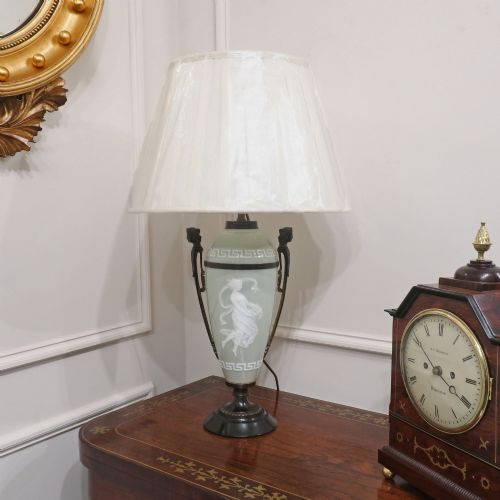

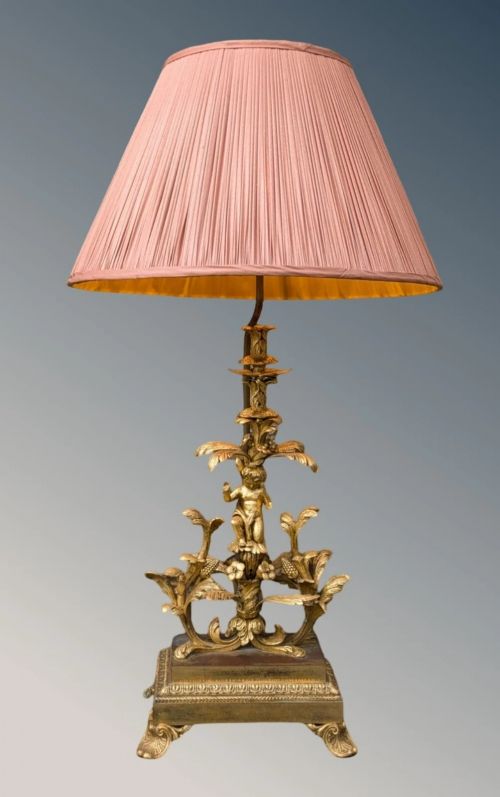
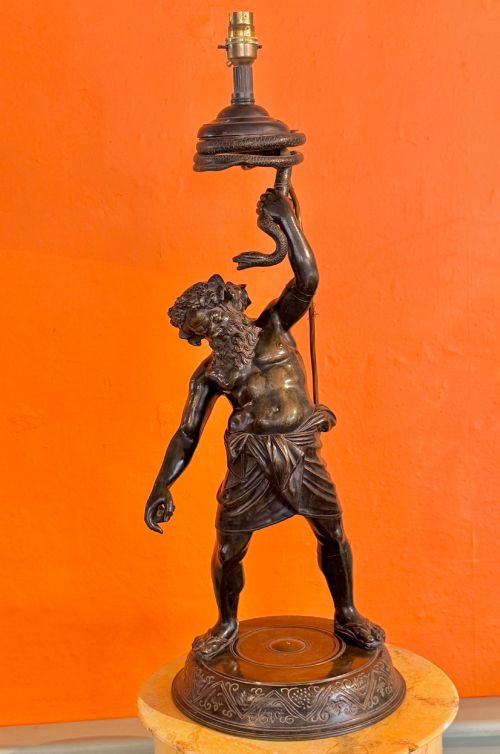
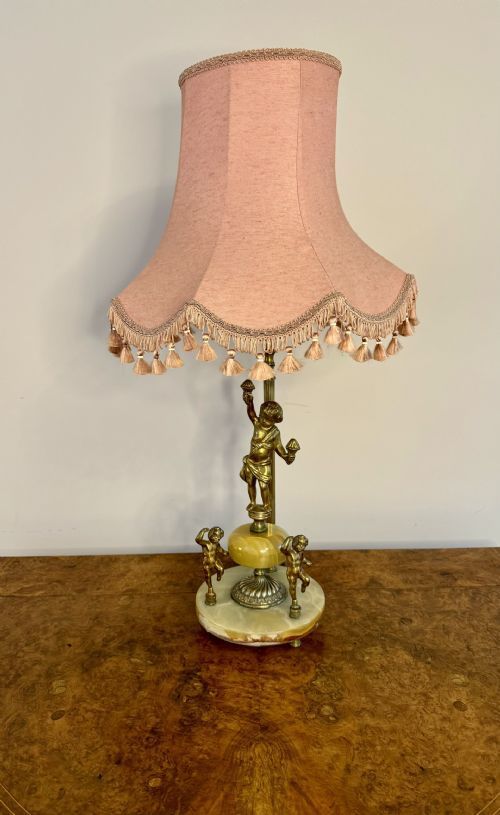
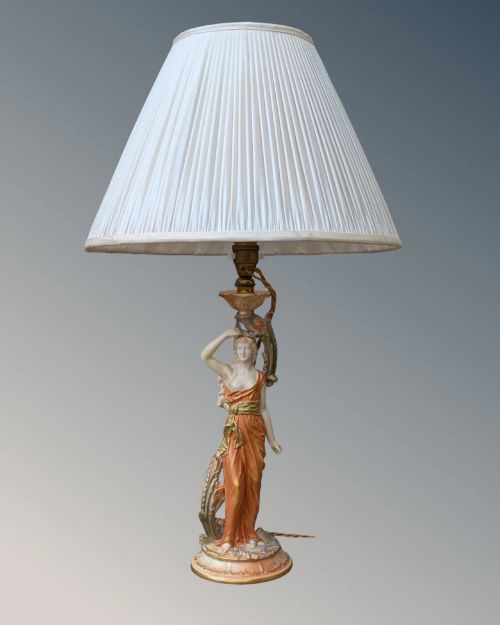


Classical Figure Desk Lamp
A classical figure desk lamp brings mythological grace and sculptural presence to a workspace through centuries of metalwork and porcelain.
Classical Figure Desk Lamp
A classical figure desk lamp combines historical figural sculpture with domestic illumination, drawing on motifs from the Victorian era down to the 1920s. These pieces range from grand bronze deities mounted on marble plinths to delicate porcelain figures and patinated spelter castings.
The most frequent examples encountered on this page stem from 19th-century French and English workshops, often interpreting mythological subjects like Atlas, Apollo, or classical mermaids. Makers utilised durable materials such as bronze, brass, and porcelain to anchor the figural columns beneath fabric or glass shades.
Buyers select these lamps to anchor a study or library with tangible antiquity, marrying the utility of a table lamp with the gravitas of Neoclassical and Art Nouveau sculpture. Each piece reflects the aesthetic priorities of its decade, whether that is Grand Tour classicism or early 20th-century figural whimsy.
Materials and construction methods
Workshops relied heavily on metal casting, employing bronze, brass, and spelter to shape figures of deities, warriors, and allegorical subjects. Gilt and cold-painted finishes were frequently applied to highlight drapery, facial expressions, and accessory details.
Parian ware, pâte-sur-pâte porcelain, and frosted or opaline glass formed the structural columns and figural bodies of many pieces. These ceramic and glass elements were often combined with marble plinths and brass fittings to ensure stability on a desk.
Conversion from oil combustion to electrical wiring occurred across many older metal and ceramic bodies during the 20th century. Original mounts, Tole Peinte shades, and fabric elements sit alongside later additions to complete the assembly.
Classical Figure Desk Lamp Retail Price Guide 2026
Typical asking prices for classical figure desk lamp among the pieces listed under this phrase on Sellingantiques today, from the lower quarter to the upper quarter. They describe what is for sale here now, not the wider market.
Listings feature 19th-century French bronze and 1920s spelter figures alongside Victorian porcelain and brass oil lamp bodies.
Judging execution and finish
The choice of base materials dictates the overall weight and balance of the object. Heavy marble plinths and solid bronze or ormolu castings represent the upper tier of production, offering stability and longevity compared to lighter spelter alternatives.
G Amodio Naples·L and F Moreau·Emile Picault·Samuel Alcock
The Classical Figure Desk Lamp Glossary
- Spelter
- A zinc alloy commonly used as a cost-effective substitute for bronze in figural lamp manufacture during the 19th and early 20th centuries. It is typically painted or bronzed to imitate heavier metals.
- Grand Tour
- A term describing souvenirs and artworks acquired by wealthy travellers in Europe during the 18th and 19th centuries, often featuring miniature bronzes of classical antiquities.
- Pâte-sur-pâte
- A ceramic decorating technique where liquid clay is applied layer upon layer in low relief onto a contrasting body. This creates a cameo-like effect seen on fine porcelain lamps.
- Ormolu
- Gilded bronze produced by applying a mercury and gold amalgam to a bronze base, resulting in a rich metallic lustre. It was widely utilised on French Neoclassical desk fittings.
Classical Figure Desk Lamp: Frequently Asked Questions
Are these lamps wired for modern use?
Many pieces have been adapted for electricity at various points in their history, moving away from original oil or candle configurations.
Buyers should inspect the current wiring and consult a qualified electrician to ensure safety for desk use.
How do I identify bronze from spelter?
Bronze is heavier, colder to the touch, and allows for much sharper chisel work and detail after casting.
Spelter is lighter and softer, often revealing a greyish metal beneath chips in the painted or bronzed surface finish.
What periods do these desk lamps cover?
The selection spans from 17th-century architectural elements repurposed as lamps through to 1920s spelter and glass creations.
Victorian and late 19th-century French Neoclassical styles form the bulk of the available figural designs.
How should I clean a patinated metal lamp?
Dust gently with a soft dry cloth to protect fragile cold-painted surfaces and historical patination on the bronze or brass.
Avoid chemical polishes and abrasive cleaners that can strip away original finishes and historical wear.