
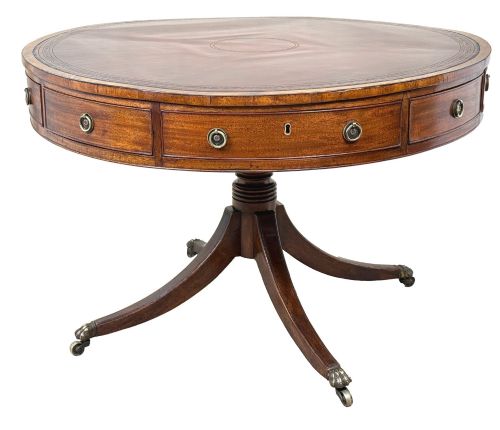
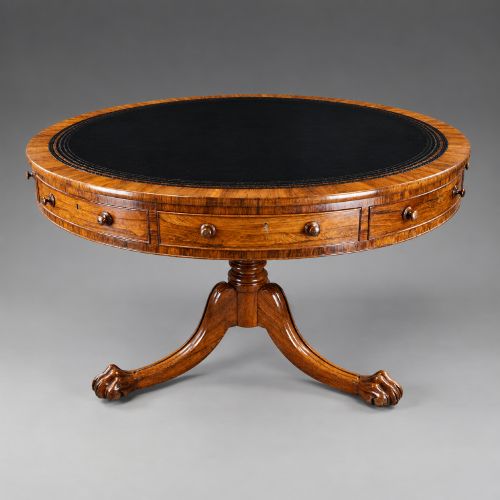
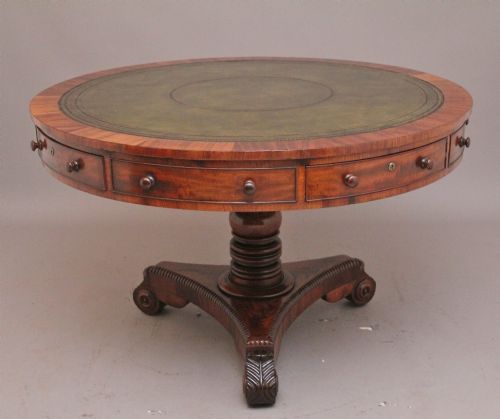
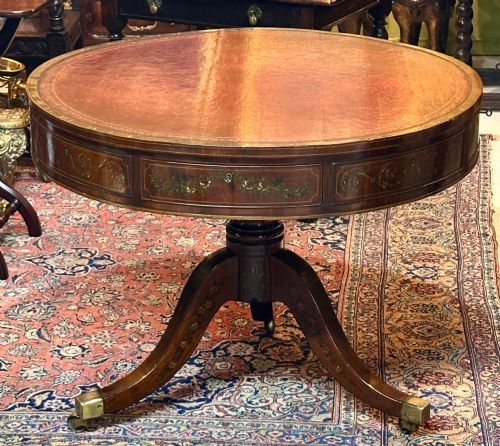
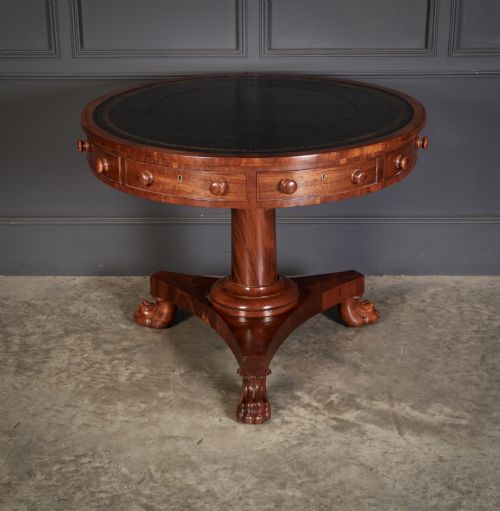

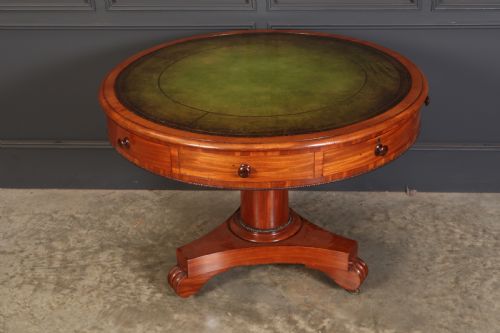


Circular Writing Desk
A circular writing desk offers a revolving top and deep drawers, bringing both symmetry and function to a room.
Circular Writing Desk
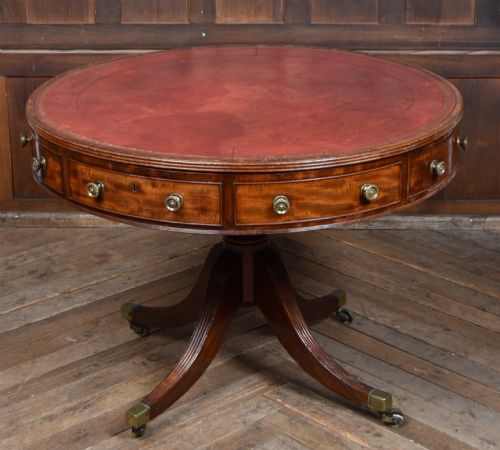
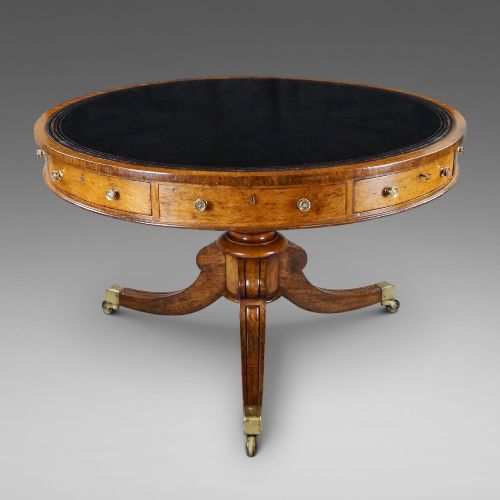
A circular writing desk, often known in the trade as a drum table or library table, provides a round writing surface supported by a central pillar. These pieces combine drawers set into the circular frieze with a central revolving top, making them suitable for use as centre tables.
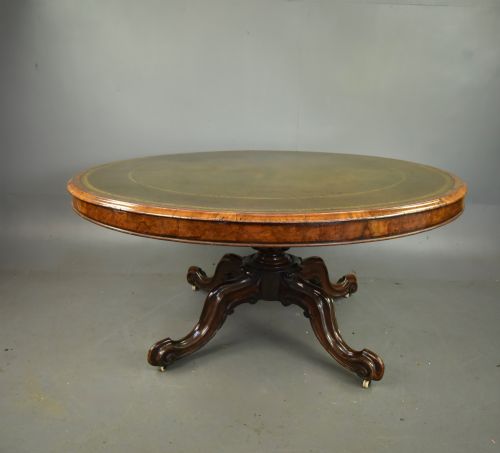
The examples found here span several distinct periods, with Regency and Georgian pieces appearing alongside Victorian, Edwardian, and later revivals. Mahogany and rosewood form the main body of these tables, frequently paired with inset leather writing surfaces and brass detailing.
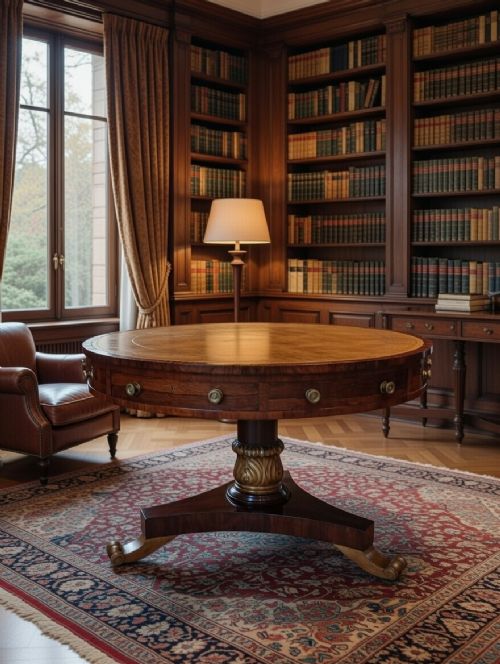
Makers designed these freestanding tables to sit in the middle of a room rather than against a wall, allowing access from all sides. Their distinctive circular format accommodates multiple drawers, providing storage whilst maintaining a compact footprint.
How they were made
Cabinet makers utilised dense timbers such as mahogany, flame mahogany, and rosewood to construct the circular carcase and the central pillar. Oak and walnut also appear in the framing and secondary woods of these tables.
Craftsmen inset panels of leather into the top surface, frequently tooling the border with blind or gilt stamp work. Brass mounts, handles, and occasional brass stringing complete the construction of the finer examples.
Listings here feature mahogany, rosewood, oak, and walnut, alongside brass and leather materials across Georgian and Victorian periods.
What varies in quality
The choice of timber creates a primary distinction, with figured flame mahogany and well-chosen rosewood grain marking out the better examples. Figured veneers require precise matching around the curved frieze of the drum.
The engineering of the revolving mechanism defines the standard of the piece, allowing the top to turn smoothly upon its pillar. Finer tables integrate secret or pivoting drawer actions alongside solid brass hardware.
The Circular Writing Desk Glossary
- Drum table
- A round library table with a deep frieze containing alternating real and dummy drawers. It usually stands on a central pillar with tripod legs.
- Frieze
- The horizontal band beneath the top edge of the table where the drawers are housed. On a round table, this band curves continuously around the carcase.
- Flame mahogany
- Timber cut from the fork of the mahogany tree to produce a distinctive flickering flame pattern. Cabinet makers used these veneers on prominent surfaces.
- Centre table
- A piece finished on all sides designed to stand away from the walls in the middle of a room. These tables are accessible from every direction.
Circular Writing Desk: Frequently Asked Questions
Where should I place a circular writing desk?
These pieces function best when placed in the middle of a room rather than against a wall. Their finished backs and revolving tops allow them to act as freestanding centre tables.
Position them where you can walk around the entire circumference to access the drawers and workspace from any angle.
How do I care for the leather top?
Keep leather writing surfaces away from direct sunlight and excessive heat to prevent the material from drying out. Clean the surface gently with a dry or barely damp cloth.
Occasional treatment with a suitable leather dressing helps maintain the suppleness of the hide and preserves the gilt tooling.
Are all the drawers functional?
Many drum tables feature a mix of working drawers and dummy drawers arranged around the circular frieze. The depth of the drum allows for substantial storage space within these compartments.
Opening the drawers reveals the secondary timbers and the traditional dovetail construction used by the cabinet maker.
What is the difference between a drum table and a library table?
The terms often describe the same form, though library table can also refer to larger rectangular writing furniture. A drum table specifically denotes the round format with a deep frieze.
Both types were designed for reading, writing, and storing papers in a study or library setting.