


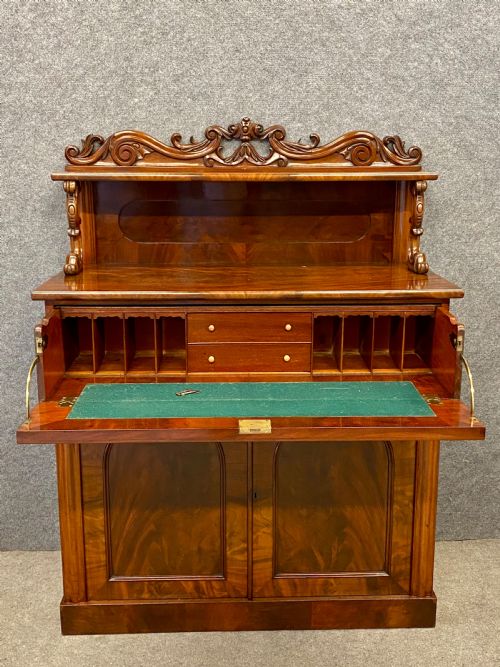


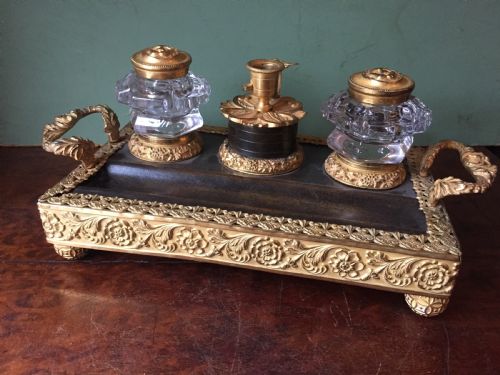
Early Nineteenth Century Desk
An early nineteenth century desk brings functional design and rich timber into a room, offering a sturdy workspace shaped by Regency, Victorian, and Biedermeier hands.
Early Nineteenth Century Desk
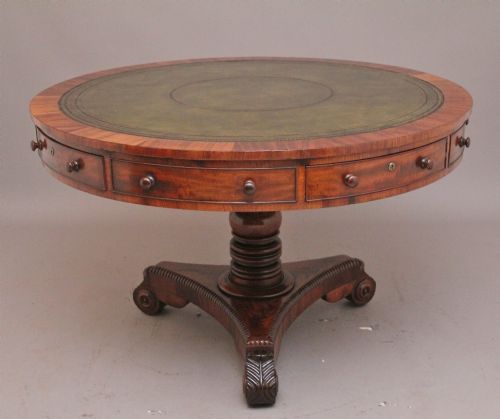
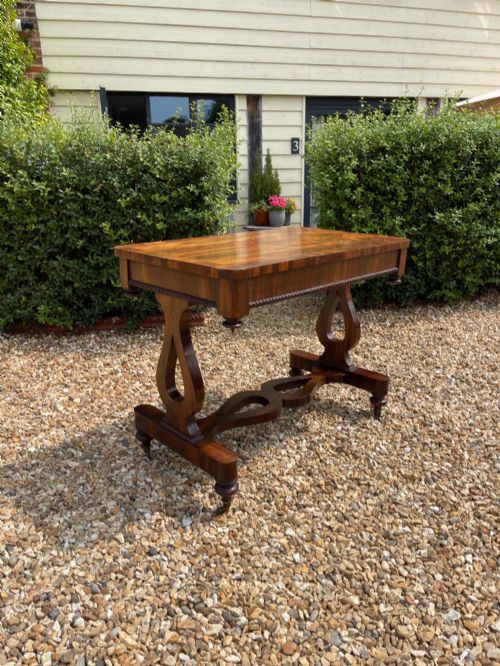
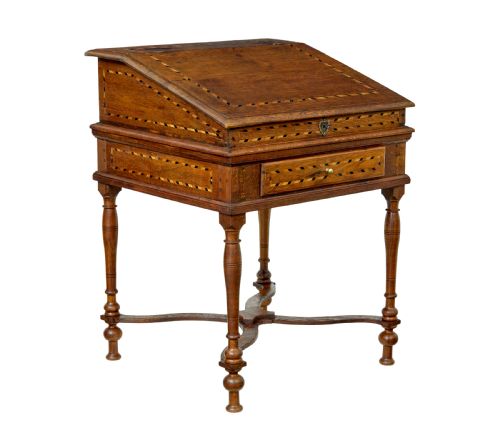
The selections available here lean heavily toward mahogany pedestal formats and oak writing slopes, alongside associated library tables and secretaire commodes. Buyers encounter regional variants including Dutch inlaid pieces and Vernacular British seating designed for the same rooms.
How they were made
Makers utilised dense timbers such as mahogany, rosewood, oak, and burr walnut, frequently pairing them with inset leather writing surfaces and cast brass hardware. These materials provided the necessary weight and durability for daily cabinetwork.
Joinery techniques relied on solid framing, precise dovetailing for drawers, and intricate marquetry or ormolu mounts depending on whether the piece followed English Regency lines or French Empire design.
An accidental naval touch appears through a bronze signal cannon resting among the writing equipment.
What varies in quality
Quality rests in the selection of timber figures, the crispness of inlaid details, and the integrity of the original structural framing. Faded mahogany tones and well-matched burr walnut veneers elevate a piece visually.
The refinement of brass mounts, the smoothness of drawer operation, and the retention of original leather writing surfaces separate standard utility items from finer cabinetwork produced by established workshops.
Gillow of Lancaster
The Early Nineteenth Century Desk Glossary
- Pedestal desk
- A large freestanding desk with two supporting banks of drawers beneath the top. It provides generous storage on both sides.
- Writing slope
- A portable or table-standing box with a slanted lid that opens to reveal compartments for ink and paper. It serves as a compact writing surface.
- Secretaire commode
- A chest of drawers containing a fitted pull-down writing drawer with small compartments. It merges storage with desk functionality.
- Ormolu
- Gilded bronze used for decorative mounts and accents on furniture. It adds metallic contrast to dark timber surfaces.
Early Nineteenth Century Desk: Frequently Asked Questions
How do I care for the leather?
Keep leather writing surfaces away from direct sunlight and excessive heat to prevent cracking. Treat the hide occasionally with a suitable neutral wax or leather conditioner.
Avoid using harsh chemical cleaners or excess water when dusting the surface. Gentle wiping preserves the original texture and colour of the material.
Can I use it daily?
These pieces were built for heavy daily administration and remain robust enough for modern laptop or writing use. Ensure that chairs fit comfortably beneath the kneehole clearance.
Use coasters for drinks and protect the timber from sharp objects. Sensible daily habits safeguard the antique finish without restricting utility.
How do I spot a Regency piece?
Regency desks typically display classical restraint, clean architectural lines, and occasional brass inlay or classical column motifs. The proportions remain balanced and formal.
Look for dark mahogany surfaces and restrained ormolu mounts rather than heavy carved ornamentation. This style reflects early nineteenth century classical revival influences.
What is a partners desk?
A partners desk is built with matching drawer arrangements on both long sides, allowing two individuals to sit face to face. They were traditionally used in libraries and offices.
These large freestanding items require ample surrounding space to be appreciated fully. They represent the grander scale of nineteenth century administrative furniture.