

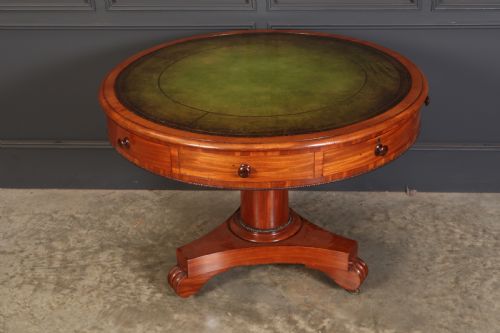


Pedestal Drum Desk
A pedestal drum desk offers a revolving circular top set above a central pillar, providing a practical writing surface with deep drawers.
Pedestal Drum Desk
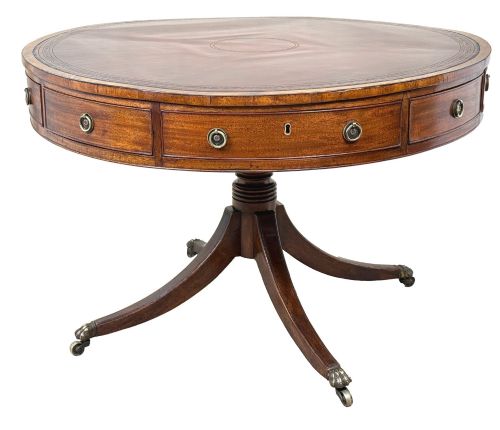
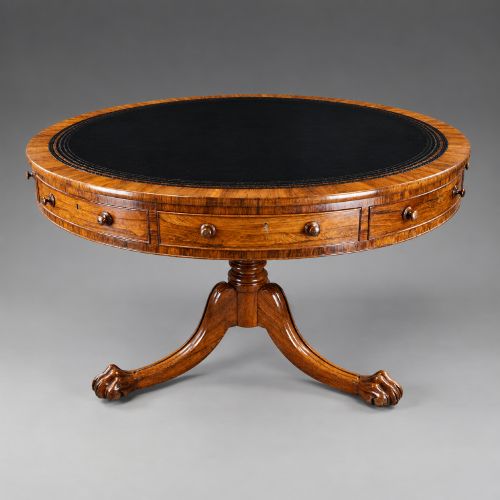
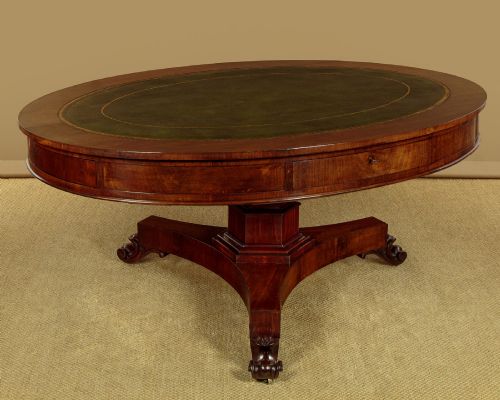
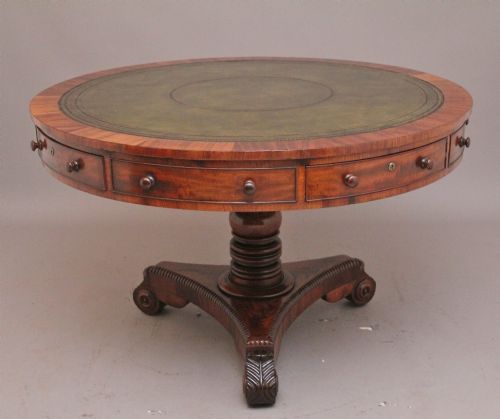
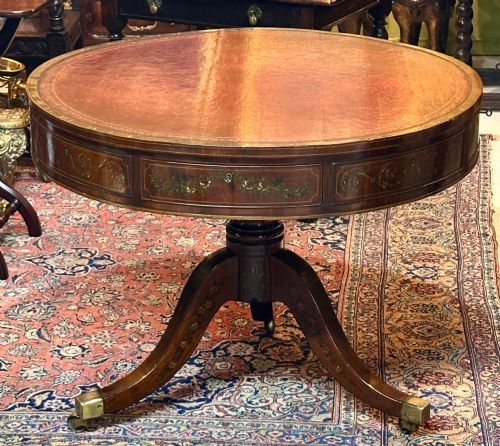
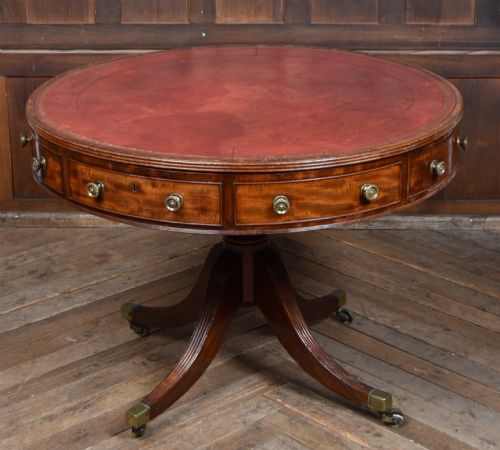
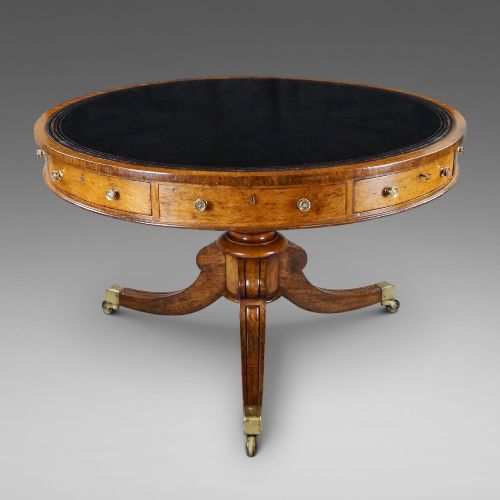
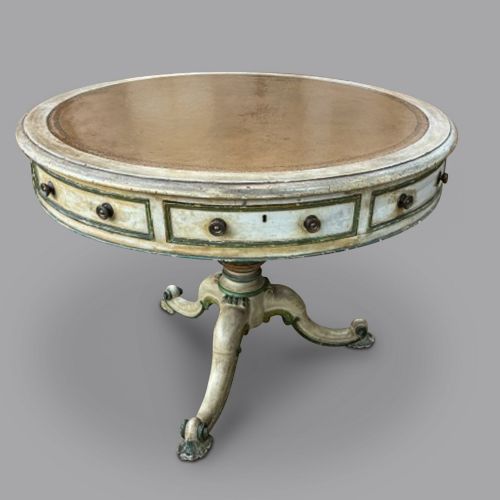
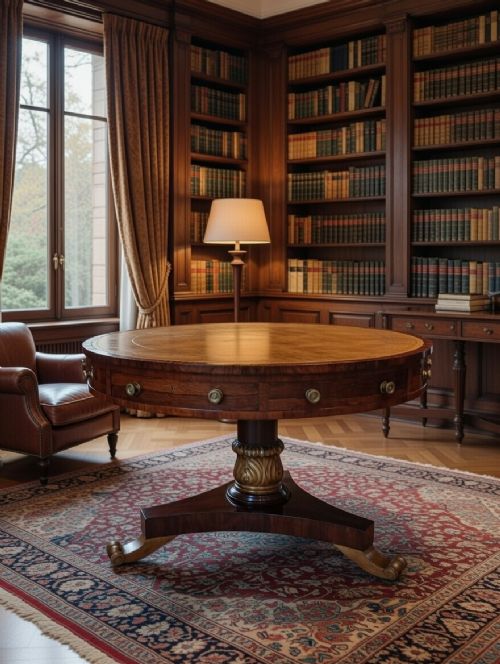
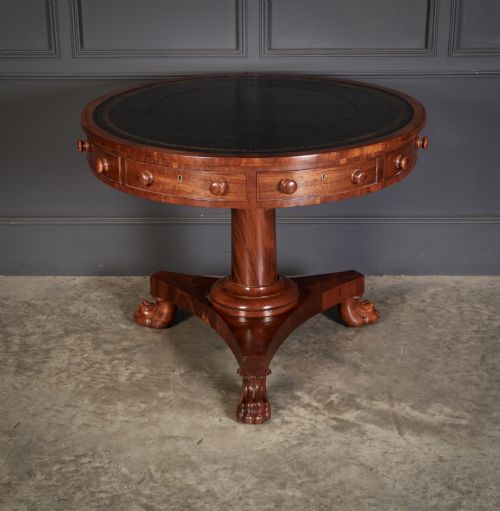
A pedestal drum desk, commonly encountered as a drum table or library table in the listings, takes a circular form supported by a central column. These pieces typically incorporate radial drawers situated around the perimeter of the drum top.
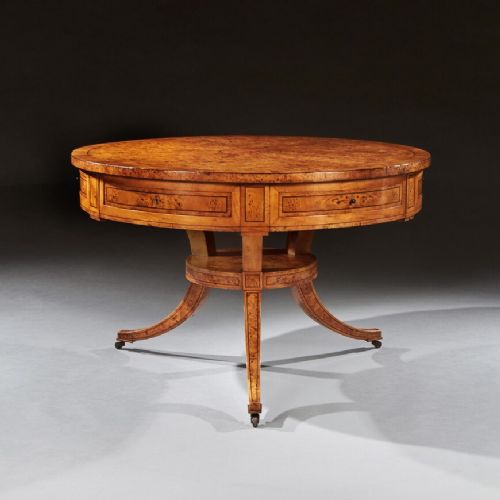
The materials recorded span mahogany, rosewood, oak, and burr maple, often paired with leather writing surfaces. Examples appear across Georgian, Regency, and Victorian periods.
Makers designed these items to stand in the centre of a room rather than against a wall, allowing the top to rotate for access to the drawers. Proportions vary from standard library dimensions down to unusually small scales.
Materials and Construction
Cabinet makers utilised dense timber stocks such as mahogany, rosewood, and oak for the primary carcase and pedestal base. Flame mahogany veneers and burr maple frequently face the circular top to create figured grain patterns.
Writing surfaces are typically inset with tooled leather, whilst brass is employed for drawer pulls, casters, and occasional stringing inlay. Structural stability relies on heavy central pillars rising from multi-legged platforms.
Some nineteenth-century makers included secret locking mechanisms disguised within the rotating drum so private papers remained undisturbed.
Distinctions in Execution and Materials
Quality separates ordinary utility pieces from those displaying superior timber selection and refined cabinet work. The choice of figured flame mahogany or choice rosewood veneer elevates the visual presence of the drum top.
Internal drawer construction, smooth rotation of the revolving mechanism, and crispness of brass or inlaid details distinguish the output of skilled workshops. Proportion and the handling of smaller scale variants further define the standing of individual pieces.
The Pedestal Drum Desk Glossary
- Drum table
- A circular library table containing a deep frieze of alternating real and dummy drawers arranged around a central pedestal. It functions as a writing desk and a centre table.
- Flame mahogany
- A figured veneer derived from the branch junctions of the mahogany tree, displaying characteristic flickering flame patterns. Cabinet makers prized this wood for prominent table tops.
- Pedestal
- A single central support column rising from a platform base or feet, characteristic of large library tables and desks. It bears the weight of the rotating drum above.
- Pollard oak
- Oak timber taken from pollarded trees, showing dense knot clusters and rich figuring. It appears in select nineteenth-century library furniture.
- Stringing
- A narrow inlay of contrasting wood or metal set into the surface of furniture to form linear decoration. It outlines drawers and table edges on Regency pieces.
Pedestal Drum Desk: Frequently Asked Questions
What is a pedestal drum desk?
A pedestal drum desk is a circular freestanding table with a revolving top and multiple radial drawers built into the frieze. It functions primarily as a library or writing table.
These pieces were designed to stand centrally in a room, allowing users to spin the top to reach different compartments without moving position.
How do I date a drum table?
Dating relies upon timber choices, hardware, and structural styling such as Regency brass inlay or Georgian proportions. Cabinet methods alter visibly from the eighteenth century into the Victorian era.
Earlier examples often feature solid mahogany and restrained lines, whilst mid-nineteenth-century pieces frequently display heavier oak or rosewood construction.
Can I use a drum table as a desk?
Many drum tables were originally built as library tables or writing desks, featuring inset leather surfaces for daily correspondence. The revolving mechanism provides convenient access to stationery stored in the drawers.
Allowance must be made for the kneehole clearance beneath the frieze when pairing the table with a standard chair.
What woods were used for drum desks?
Mahogany and rosewood dominate the listings, frequently selected for their rich grain and ability to take a fine polish. Oak and burr maple also appear in various regional and period examples.
Veneers such as flame mahogany provide decorative surfaces on the circular tops, framed by solid timber mouldings.