
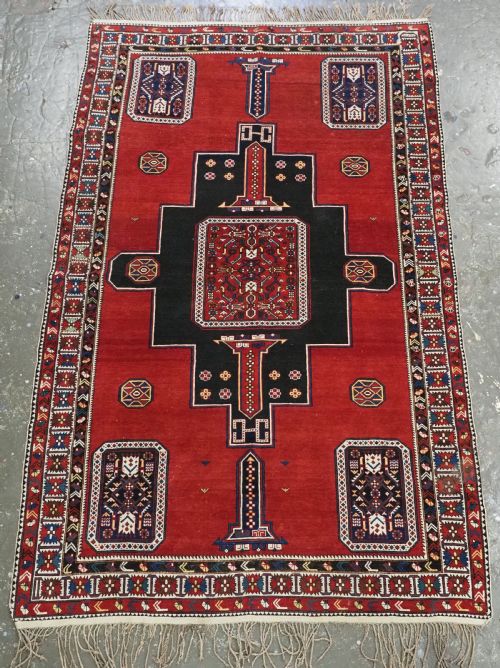
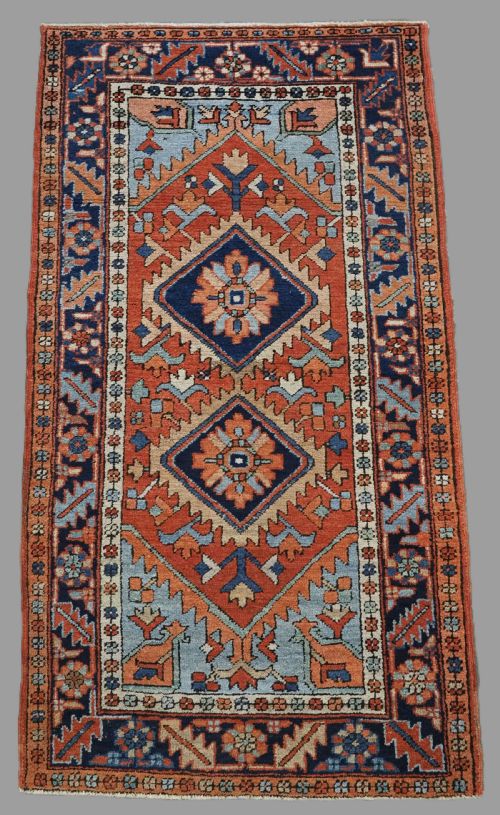


Circa 1900 Caucasian Rug
A circa 1900 caucasian rug brings bold tribal geometry and saturated natural dyes into a room, offering rich historical character for collectors.
Circa 1900 Caucasian Rug
A circa 1900 caucasian rug encompasses woven floor coverings and flatweaves originating from the Caucasus region around the turn of the twentieth century. These pieces display distinct regional identities through traditional geometric motifs, medallion layouts, and tribal patterns.
The selection includes various formats such as small rugs, long runners, square pieces, saddle bags, and flatwoven kilims. Many examples link directly to specific weaving groups including Kazak, Shirvan, Kuba, Karabagh, and Daghestan.
Buyers frequently encounter pieces featuring characteristic tribal designs like boteh, star motifs, cloud bands, and repeating geometric medallions. These textiles reflect both indigenous weaving traditions and occasional influences from neighbouring Persian styles.
How they were made
Weavers constructed these textiles primarily using wool and hand-spun wool for the pile and surface designs, supported by sturdy cotton foundations. This combination provided the structural durability necessary for everyday use while allowing intricate geometric drafting.
Artisans utilised traditional vegetable and natural dye methods to colour the wool, resulting in saturated primary tones alongside soft faded secondary shades. Hand-knotting and flatweaving techniques varied by region, producing dense pile carpets as well as lightweight kilims and mafrash panels.
Listings feature wool, cotton, and hand-spun wool across runner, rug, and kilim formats dated to 1900 and 1910.
What varies in quality
Quality differences stem from the fineness of the weave and the precision of the geometric layout. Tighter knotting and disciplined execution of complex medallion designs distinguish finer workshop pieces from simpler village work.
The vibrancy and depth of the natural colour palette significantly influence the standing of an individual piece. Retaining a full, dense pile enhances the tactile presence and long-term durability of the textile.
The Circa 1900 Caucasian Rug Glossary
- Kazak
- A type of rug traditionally woven in the western Caucasus known for bold geometric designs and bright primary colours. These pieces often feature large medallions and rectilinear motifs.
- Kilim
- A flatwoven carpet or rug produced without a pile by tightly interweaving warp and weft threads. They frequently serve as structural panels or versatile floor coverings.
- Boteh
- A stylised almond or paisley shaped motif originating from ancient Persia and frequently utilised in caucasian weaving. This symbol appears individually or arranged in sweeping repeating rows.
- Mafrash
- A large woven storage bag or panel traditionally used by nomadic tribes for bedding and household goods. Surviving panels are frequently repurposed into smaller kilims or collectible fragments.
- Soumak
- A flatweaving technique involving wrapping supplementary weft threads around the warp to create a textured braid-like surface. Carpets made this way offer greater structural weight than standard flatweaves.
Circa 1900 Caucasian Rug: Frequently Asked Questions
Where were these rugs made?
These textiles originate from the Caucasus region, situated between the Black Sea and the Caspian Sea. Specific weaving centres include Kuba, Shirvan, Karabagh, and Kazak.
Different valleys and towns developed distinct local patterns and colour combinations that help identify their geographical source.
How do I care for an antique rug?
Protect the textile by placing it in a low-traffic area away from direct sunlight to prevent fading. Regular gentle vacuuming without a beater bar removes trapped dust effectively.
Professional cleaning tailored for antique wool ensures the natural fibres and dyes remain preserved over time.
How can I tell different regional styles apart?
Regional attribution relies primarily on the specific geometry of the central medallions, border arrangements, and structural density. Kazak pieces generally display bolder, larger motifs in primary colours.
Shirvan and Kuba pieces typically feature finer, more intricate geometric lattices, star symbols, and softer secondary tones.