


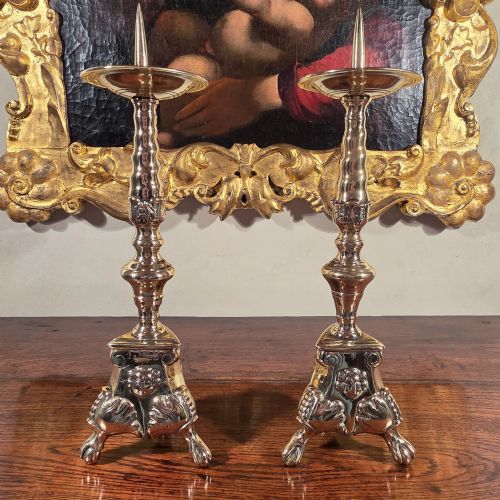


Church Pricket Candle Holders
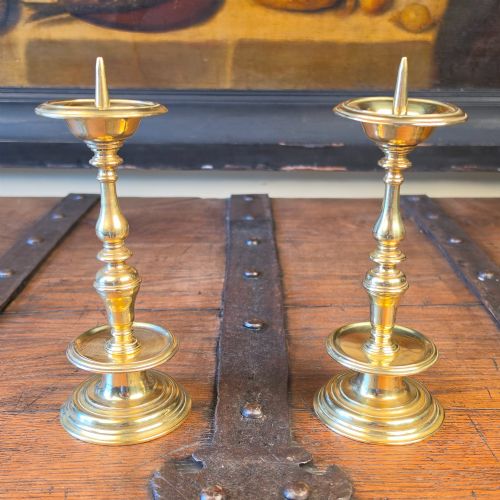
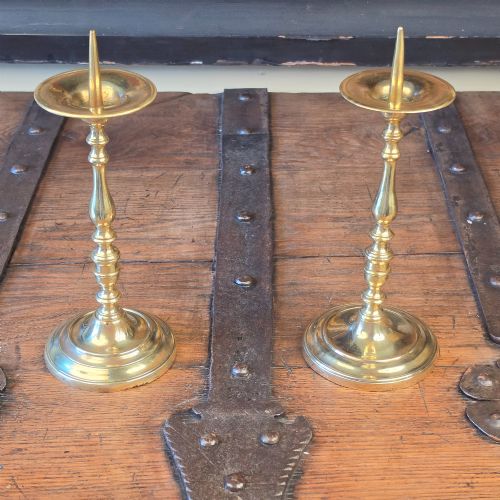
Church pricket candle holders are altar and sanctuary furnishings fitted with an upright spike to secure large candles, sought for their architectural presence and historical weight.
Church Pricket Candle Holders
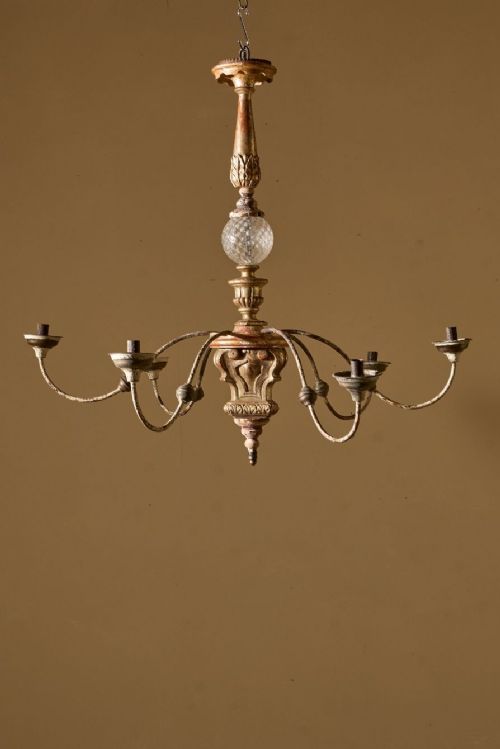
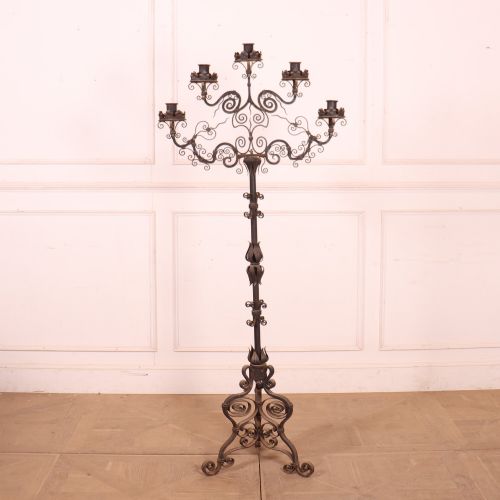
When you search for church pricket candle holders, you encounter tall ecclesiastical lighting fixtures designed for altars and sanctuaries. The items on this page span the eighteenth, nineteenth, and early twentieth centuries, encompassing table lamps, floor-standing torcheres, and hanging chandeliers.
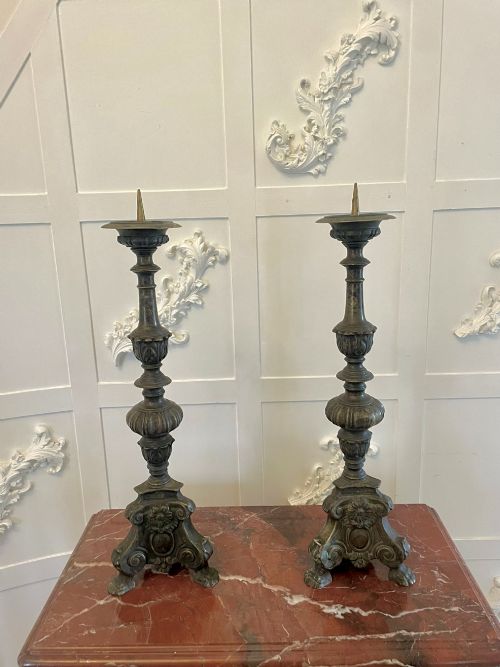
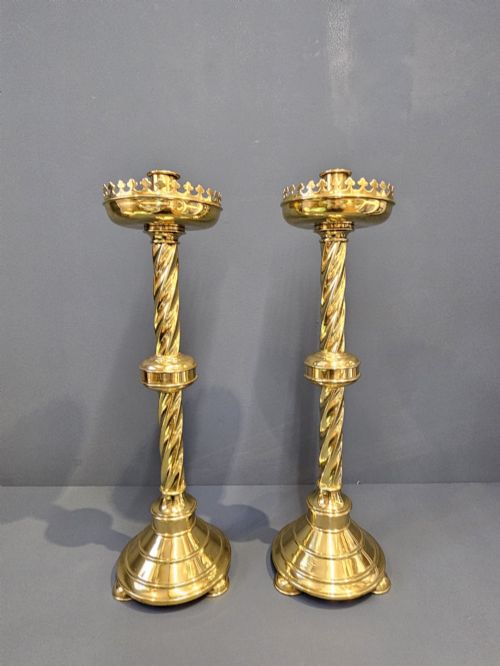
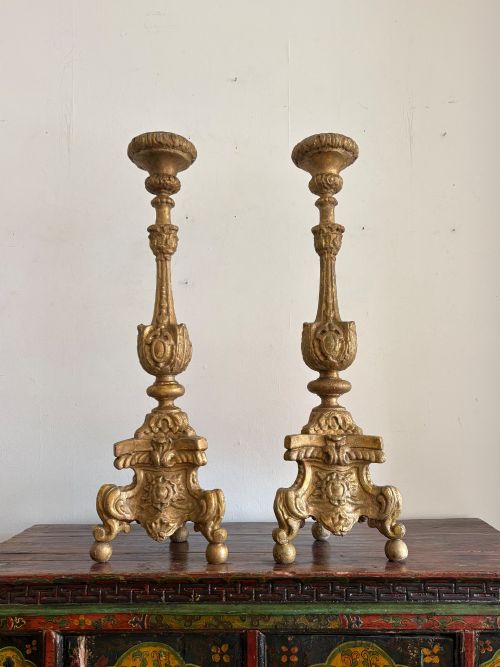
The most common forms met here are matched pairs of candlesticks standing on substantial bases. These examples range from modest domestic adaptations to monumental Italian altar pieces and Amsterdam School metalwork.
The aesthetic vocabulary leans heavily towards Gothic Revival and Continental Baroque styles. Makers from various European regions adapted ecclesiastical forms using local materials, producing items suited to both period interiors and modern spaces.
How they were made
Metal versions utilise cast brass, bronze, copper, and wrought iron formed into complex socket plates and weighted bases. Brass and bronze components often combine turned shafts with applied decorative elements, while iron pieces rely on hand-forged scrollwork and structural banding.
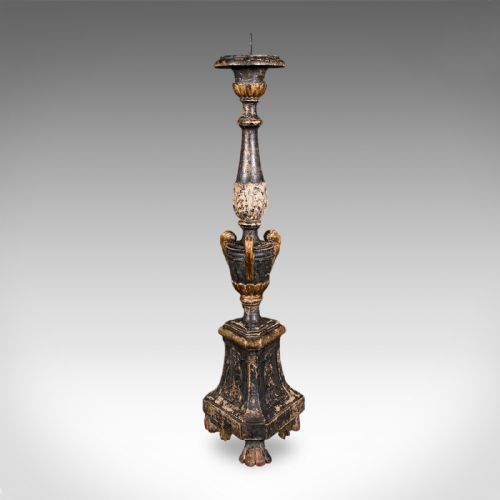
Wooden examples depend on carved pinewood, gesso, and applied surface treatments. Craftsmen shaped timber into acolyte figures and fluted columns before finishing them with gold leaf, silver leaf, ebonisation, or polychrome paint.
Listings feature items spanning the seventeenth to the twentieth centuries, with a strong concentration of nineteenth-century brass and eighteenth-century carved wood.
What varies in quality
The distinction between ordinary and exceptional pieces lies in the crispness of the casting and the depth of the hand-carving. Superior brass and bronze items exhibit sharp detailing in their drip pans and nodes, whereas lesser examples show softer, blurred contours from worn moulds.
Proportion and material integrity dictate the upper tier of the range. Heavy gauge metals, intact original gilding on carved wood, and matching pairs with minimal structural alteration represent the finest survivals.
The Church Pricket Candle Holders Glossary
- Pricket
- The metal spike on top of a candlestick designed to impale the base of a thick candle. This method predates the socket candlestick and ensures the candle remains upright during burning.
- Torchere
- A tall ornamental stand or candlestick designed to hold a light source at eye level or above. These pieces frequently stand on tripod or heavily weighted circular bases.
- Giltwood
- Timber that has been coated with a thin layer of gold leaf over a preparation of gesso and bole. It is typical of fine Continental Baroque altar furnishings.
- Amsterdam School
- An early twentieth-century architectural and design movement characterised by expressive forms, traditional craftsmanship, and unconventional use of brick, stone, and metal. Pieces from this tradition display distinct modernist reinterpretations of historical metalwork.
Church Pricket Candle Holders: Frequently Asked Questions
How do I use a pricket candle holder?
Using these holders requires candles with a pre-drilled base or soft wax that accommodates the vertical metal spike. Pushing the candle directly onto the pricket secures it safely before lighting.
For daily use in living spaces, place the holder on a stable surface away from drafts. The spike holds the candle firmly, but drip pans catch melted wax to protect furniture.
Were these made for churches?
Many examples originated in Roman Catholic or Anglican ecclesiastical settings for use on altars and in sanctuaries. They held large candles dedicated to liturgical services and ceremonial functions.
Some smaller or domestic versions were adapted for wealthy homes following church styles. The architectural scale and heavy materials reflect their original sacred environments.
How do I tell nineteenth century from eighteenth century pieces?
Eighteenth-century examples often display deep hand-carving in wood and heavier casting marks in Continental bronze or brass. The forms follow strict Baroque or rococo lines with natural wear patterns on the surfaces.
Nineteenth-century items frequently show revivalist influences, particularly Gothic Revival and Victorian interpretations. Machine-assisted turning and standardised threading can also indicate later nineteenth-century production.
Can I convert these into electric lamps?
Converting altar holders into lamps is physically possible, but many collectors prefer to keep the pricket intact. Drilling through historical metal or wood alters the original structure and removes its primary function.
Using them with real candles preserves their historical integrity and visual impact. If you choose to illuminate them electrically, ensure the fitter mounts without damaging the pricket spike.