



Vintage Brass Altar Candlesticks
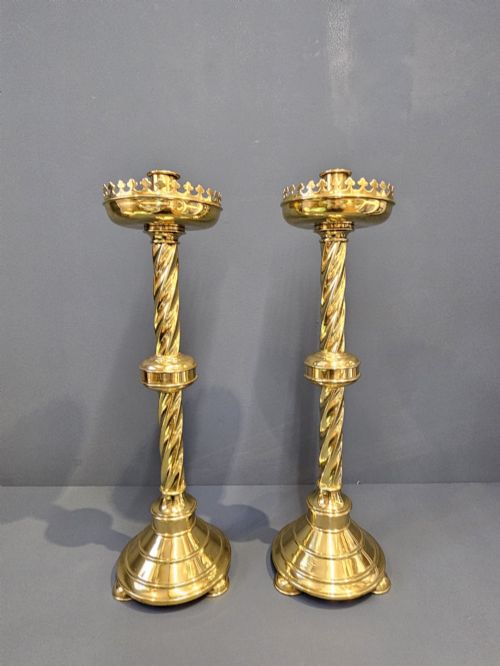
These vintage brass altar candlesticks bring heavy ecclesiastical presence and architectural form straight from the church into domestic rooms.
Vintage Brass Altar Candlesticks
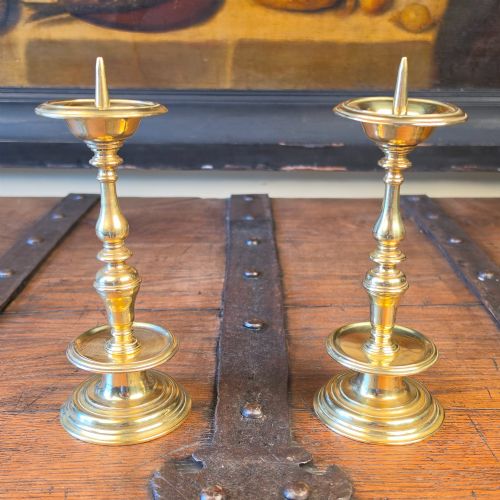
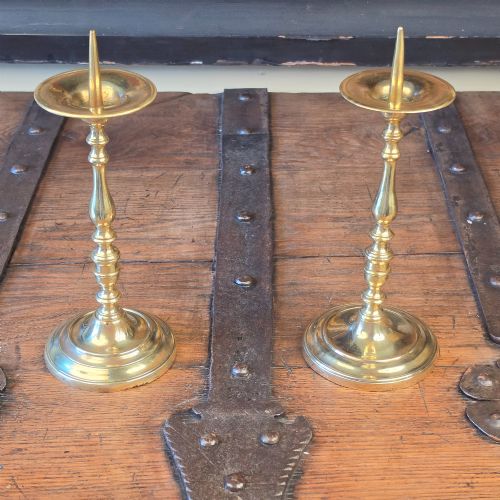
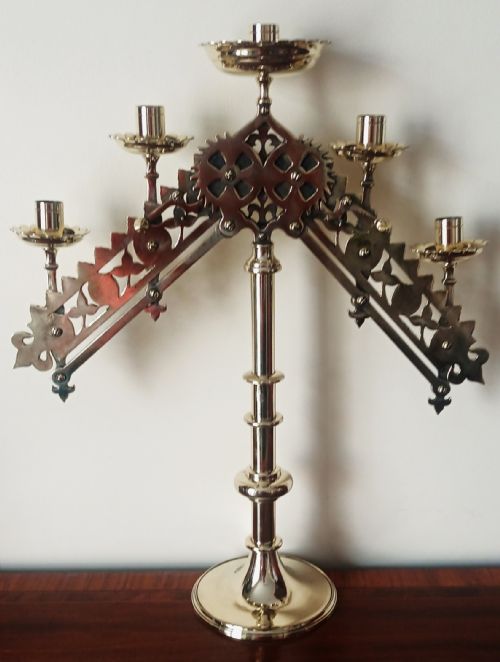
Vintage brass altar candlesticks comprise tall ecclesiastical lights, church candlesticks, and pricket stands originating primarily from the Victorian and Edwardian periods. Buyers searching for vintage brass altar candlesticks meet substantial pairs designed for altars, frequently incorporating Gothic Revival and baroque influences.
The inventory includes heavy church candlesticks, standard lamps adapted from ecclesiastical fittings, and graduated sets of Masonic columns. Most pieces date from the nineteenth century up to the early twentieth century, showing distinct liturgical forms.
Alongside standard brass pairs, variants integrate bronze, wrought iron, and wooden elements, maintaining an ecclesiastical aesthetic. These objects range from modest table heights to large floor-standing prickets.
How they were made
Constructed predominantly through casting, these heavy candlesticks utilise brass and bronze to achieve structural weight and durability. Cast components often combine with turned elements and applied decorative motifs.
Makers integrated wrought iron alongside brass in specific regional styles, while others incorporated painted details, enamel, and wooden bases. Assembly typically relies on threaded central rods securing stacked cast sections together.
Several heavy candlesticks survived decades of church sermons before finding retirement on modern sideboards.
What varies in quality
Quality rests in the crispness of the casting and the proportional harmony of the architectural details, such as Corinthian capitals and knopped stems. Heavier castings with deep relief ornament demonstrate superior production over lighter, simpler versions.
The integrity of the original construction, including matched pairs and intact pricket spikes or sockets, elevates a piece. Finer examples retain patination that reflects decades of ecclesiastical use.
T Thomason & Co
The Vintage Brass Altar Candlesticks Glossary
- Pricket candlestick
- A candlestick featuring a sharp metal spike at the top designed to impale the base of a candle, rather than a socket that holds it. These are common on church altars.
- Gothic Revival
- An architectural and decorative style drawing inspiration from medieval design, visible in pointed arches, trefoils, and heavy structural forms on nineteenth-century pieces.
- Baroque
- A flamboyant, ornate style characterised by elaborate scrolls, rich surface detail, and dramatic curves seen in seventeenth-century revival altar fittings.
- Ecclesiastical
- Design pertaining to a church or place of worship, dictating the formal, solemn character of these large metal candlesticks.
- Corinthian column
- A classical column form topped with ornate carved leaves and scrolls, frequently adapted for the shafts of tall Masonic and altar candlesticks.
Vintage Brass Altar Candlesticks: Frequently Asked Questions
What is a pricket candlestick?
A pricket candlestick uses a sharp metal spike to hold the candle upright instead of a traditional hollow socket. This design originates from ancient liturgical practices in churches.
Such spikes accommodate large wax candles securely during long services. They require candles with a small pre-drilled base or soft wax that accepts the point.
How do I date these candlesticks?
Dating relies on stylistic clues like Gothic Revival motifs, construction methods, and material combinations. Victorian and Edwardian examples often feature heavy cast brass with distinct period proportions.
Makers active in the late nineteenth century frequently employed specific column orders and patination patterns. Comparing the weight and base construction helps distinguish nineteenth-century production from later revivals.
Can I convert these into table lamps?
Many ecclesiastical candlesticks adapt well to electrical wiring because their hollow stems easily conceal internal cords. This allows them to function as striking table lamps while preserving the original metalwork.
Conversion generally involves fitting a suitable lamp holder to the top without altering the primary structure permanently. This offers a practical way to live with large church candlesticks in modern domestic settings.
Where were these candlesticks originally used?
These pieces originated on church altars, chapels, and Masonic lodges where tall, imposing lighting was required for rituals. Their height ensured visibility across large ecclesiastical interiors.
Over time, many migrated from religious spaces into domestic interiors as decorative antique furnishings. Their substantial scale makes them effective focal points on large tables or sideboards.