
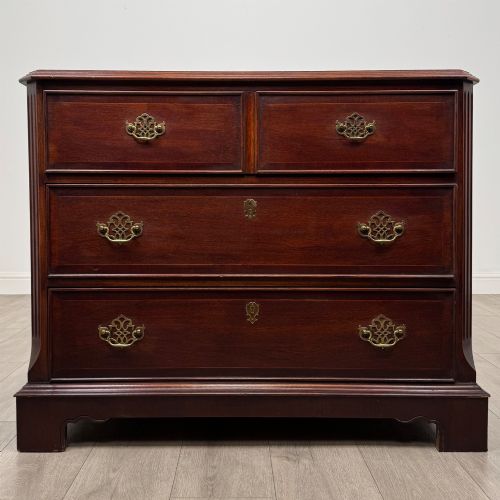
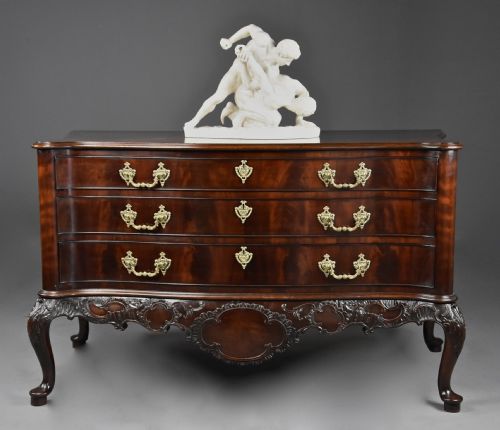


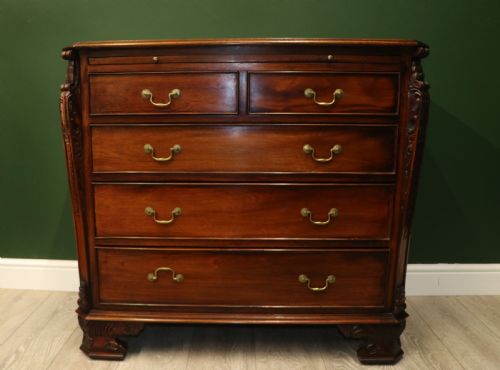

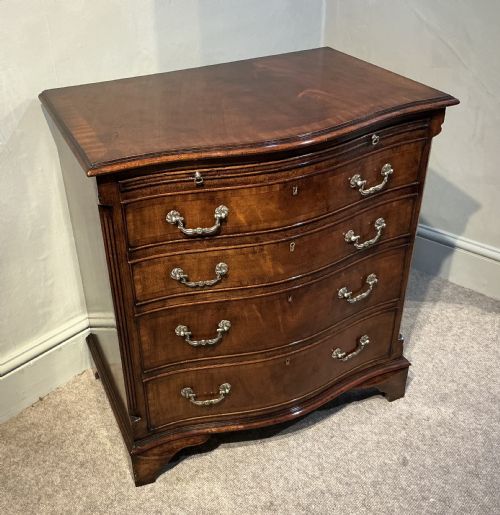


Chippendale Style Commode
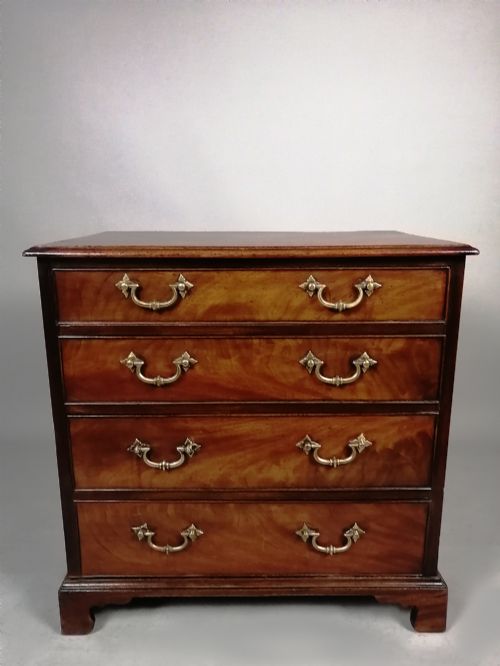
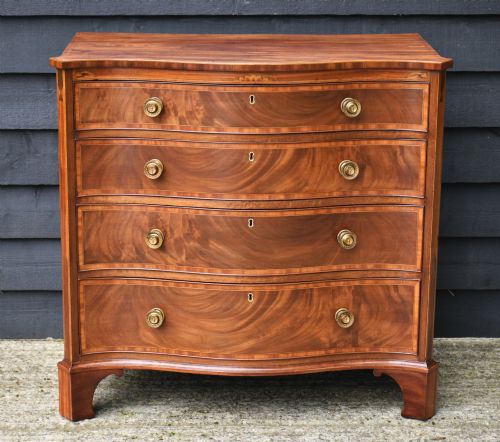
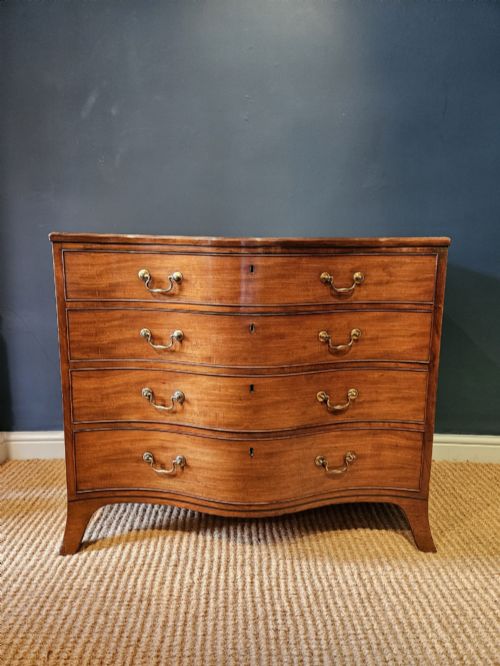
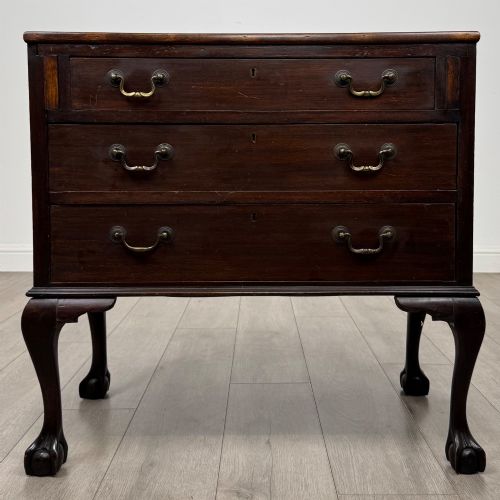
A chippendale style commode brings sculptural serpentine forms and rich mahogany timbers into a room, offering both historic presence and practical storage.
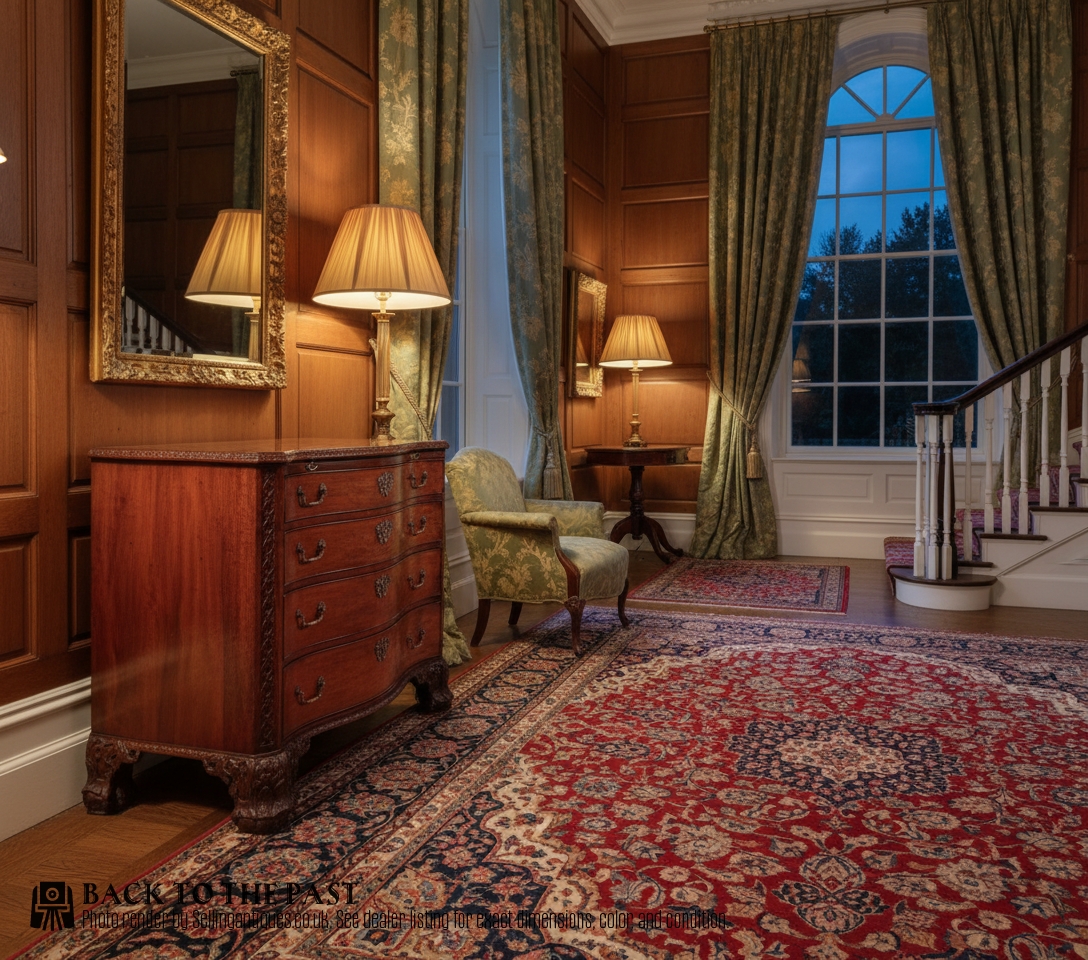
Chippendale Style Commode
A chippendale style commode presents a substantial chest of drawers, frequently featuring a serpentine front profile that curves outwards at the centre and inwards at the edges. Buyers searching for a chippendale style commode will encounter both authentic 18th-century Georgian originals and later revival pieces from the late 19th and early 20th centuries.
The primary forms include serpentine chests, bachelors' chests equipped with sliding writing surfaces, and dressing chests dating from the Georgian period through to the Edwardian era. These pieces frequently employ solid mahogany, Cuban mahogany or oak, sometimes enhanced with decorative boxwood inlay and brass hardware.
While many examples follow traditional English cabinet-making traditions, variations such as Chinese Chippendale japanned finishes or colonial revival adaptations also appear. The physical scale ranges from small compact chests to large proportions with multiple graduated drawers.
Materials and construction methods
Cabinet-makers relied heavily on dense hardwoods, predominantly mahogany and Cuban mahogany, selected for their stability and deep natural grain. Oak and boxwood served frequently for internal framing, secondary linings and fine stringing or inlay work.
Shaping the characteristic serpentine fronts required skilled timber bending and precise hand-carving from thick solid planks rather than thin veneers. Brass handles, escutcheons and baize-lined surfaces completed the construction, paired with traditional dovetail joints securing the drawer boxes.
Chippendale Style Commode Retail Price Guide 2026
Typical asking prices for chippendale style commode among the pieces listed under this phrase on Sellingantiques today, from the lower quarter to the upper quarter. They describe what is for sale here now, not the wider market.
Distinguishing quality across examples
The standard of execution in the carved mouldings and the symmetry of the serpentine curves define the upper tier of pieces. Master craftsmen achieved fluid, continuous lines along the drawer fronts and applied crisp carving to the bracket feet or apron.
The choice and figuring of the mahogany timber dictate much of the visual depth, with highly grained Cuban mahogany commanding greater appreciation. Internal construction details, such as hand-cut dovetails and original brass hardware, separate workshop-produced furniture from mass-manufactured revival pieces.
William Gomm·Gill and Reigate·Waring and Gillow
The Chippendale Style Commode Glossary
- Serpentine front
- A furniture front characterised by a wavy outline featuring a convex centre flanked by concave sides. This shape requires advanced woodworking skill to construct accurately.
- Bachelors chest
- A small, low chest of drawers equipped with a pull-out brushing slide or folding top used for writing or dressing. They date predominantly from the 18th century.
- Caddy top
- A raised furniture top with a moulded edge resembling the lid of a tea caddy. It sits upon the upper surface of a chest of drawers.
- Brushing slide
- A pull-out wooden board fitted above the top drawer of a chest. It served as a temporary shelf for sorting clothes or writing notes.
- Japanned
- A European imitation of East Asian lacquerwork using resin varnishes and metallic dust. It appears on decorative revival commodes.
Chippendale Style Commode: Frequently Asked Questions
How do I spot a reproduction?
Examine the timber inside the drawer linings and the backboards for tool marks, wood shrinkage, and hand-cut dovetail joints. Modern machine-cut joints and uniform modern screws generally point towards 19th or 20th-century revival pieces.
Check the uniformity of the polish and the wear patterns on the brass hardware. Antique pieces show natural patination accumulated over centuries of use rather than artificial distressing.
What is a brushing slide?
A brushing slide is a pull-out wooden shelf located directly beneath the top moulding of a chest of drawers. Wealthy owners used it for brushing garments or writing brief notes without needing a separate desk.
In period pieces, the slide operates smoothly on wooden runners. Its presence often signals a higher-status cabinet made for a bedroom or dressing room.
Are these pieces suitable for daily use?
Solid mahogany construction and sturdy drawer boxes make these chests robust enough for contemporary storage needs. The deep drawers accommodate modern clothing while the top surface functions well as a sideboard or media console.
Care should be taken to maintain stable humidity levels to prevent timber movement. Using coasters on the top surface protects the polished finish from moisture rings.
What defines the Chippendale style?
Named after cabinet-maker Thomas Chippendale, the style blends elements of Gothic, Rococo and Chinese design. It is characterised by serpentine curves, carved bracket feet, and robust proportions.
Revival pieces from the Edwardian and late 19th centuries adopted these same aesthetic vocabulary points. They replicate the sweeping drawer fronts and rich mahogany surfaces of the original 18th-century workshops.