

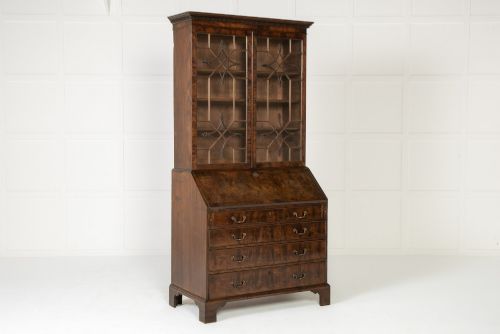


Chippendale Secretaire Desk
A chippendale secretaire desk combines substantial architectural presence with a fitted writing drawer, offering period storage and a functional writing surface.
Chippendale Secretaire Desk
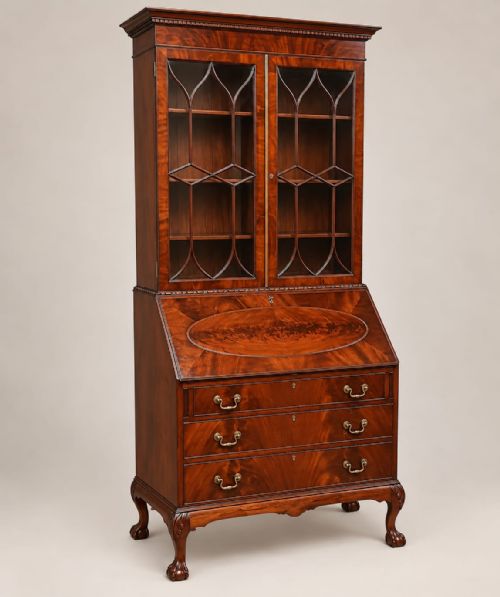
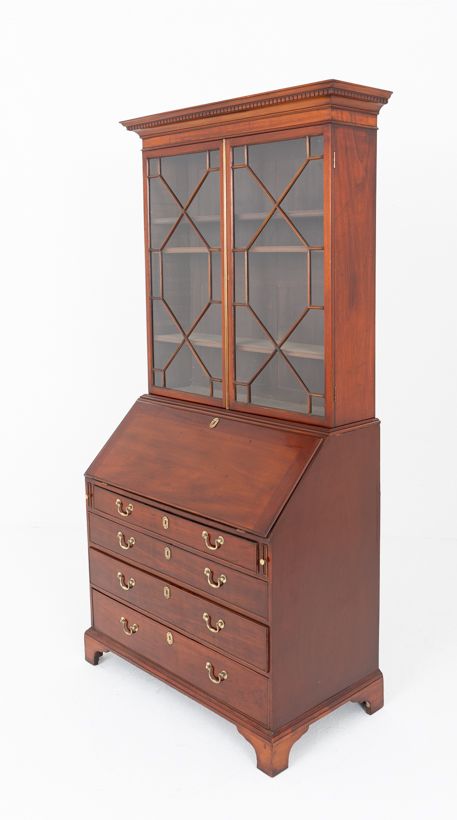
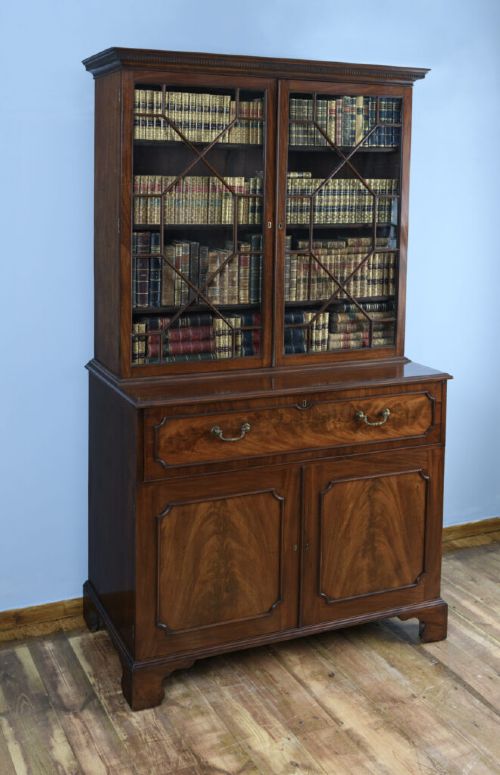
A chippendale secretaire desk is a form of antique case furniture primarily originating in the eighteenth century and the Georgian period. These pieces frequently appear on this page as bureau bookcases, tallboys, chest on chest forms, and kneehole desks.
The most common examples encountered here are constructed in rich timber with fitted fall-front writing compartments. They span styles from George III to Georgian Chippendale, reflecting the cabinet-making traditions of their eras.
Makers of these items utilised distinct stylistic vocabulary, incorporating elements such as swan neck pediments and breakfront configurations. They serve both as prominent display furniture and practical writing stations.
What varies in quality
The choice of timber and grain selection dictates much of the visual merit, with deeply figured mahogany or exotic padauk wood setting the higher tier apart from plain secondary woods. Figured veneers and solid timber selection show the maker's intent.
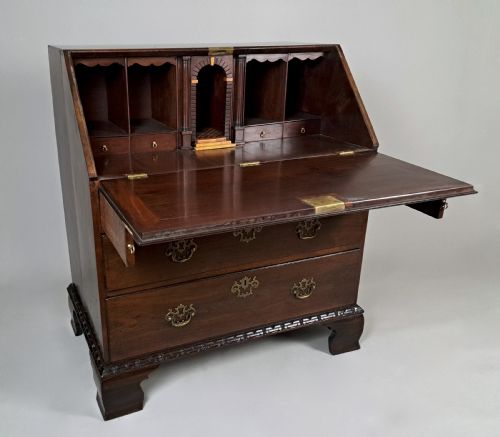
Architectural ambition separates standard examples from exceptional ones, particularly the presence of carved swan neck pediments, breakfront proportions, and complex internal pigeonhole arrangements. Structural integration of secondary woods like oak and pine also influences the overall integrity.
Some secretaire drawers conceal tiny secret compartments behind miniature pigeonholes, intended for letters and hidden valuables.
The Chippendale Secretaire Desk Glossary
- Secretaire
- A desk or cabinet with a drawer that pulls down to reveal a writing surface and small drawers. This drop-front mechanism conceals pigeonholes and compartments for stationery.
- Tallboy
- A tall chest of drawers consisting of one chest stacked upon another. This form often incorporates a secretaire drawer within the upper section.
- Padauk wood
- A dense tropical timber used in high-end eighteenth-century cabinet-making. It yields a rich reddish-brown tone that deepens with age.
- Breakfront
- A cabinet design where the central section projects forward from the flanking wings. This configuration adds architectural depth to large bookcase forms.
- Swan neck pediment
- A broken pediment top featuring opposing curved scrolls ending in rosettes. It commonly surmounts the cornice of tall bookcases and tallboys.
Chippendale Secretaire Desk: Frequently Asked Questions
How do I use a secretaire drawer?
The front of the secretaire drawer pulls down on hinges to create a flat desk surface, supported by internal brass or wooden struts.
Inside, you will find a collection of small drawers and pigeonholes designed for correspondence and paperwork.
How do I tell a Georgian piece apart?
Georgian furniture is identified by its proportion, timber selection, and period construction methods using solid hardwoods and hand-cut dovetails.
Stylistic cues such as George III lines, brass hardware, and swan neck pediments help confirm the eighteenth-century origin.
Where do I place a tallboy in a room?
Tallboys require a wall with adequate vertical clearance and sufficient floor space to accommodate their substantial depth and height.
Because they combine storage and writing facilities, they suit studies, drawing rooms, or master bedrooms where their architectural scale can be appreciated.