
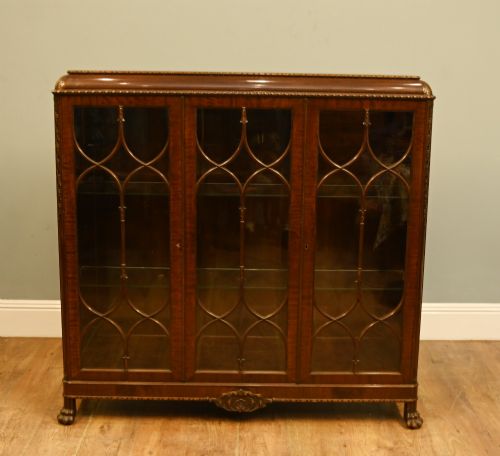
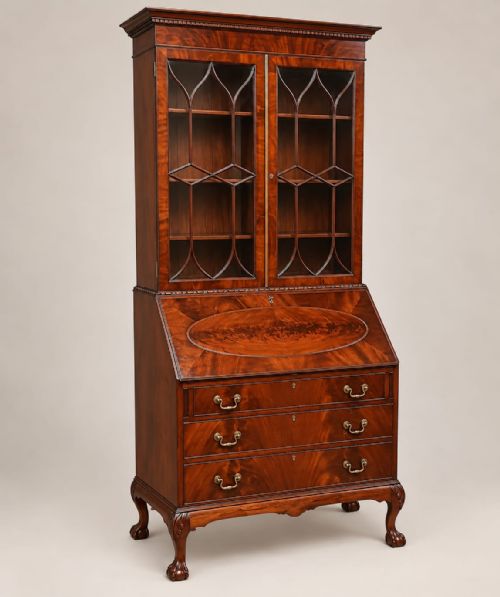
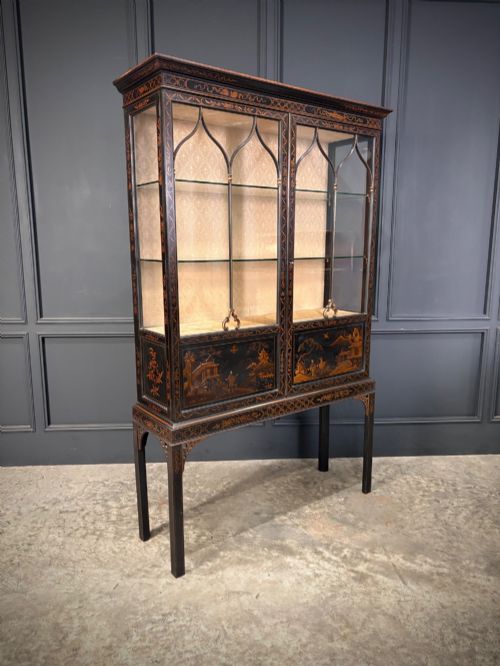
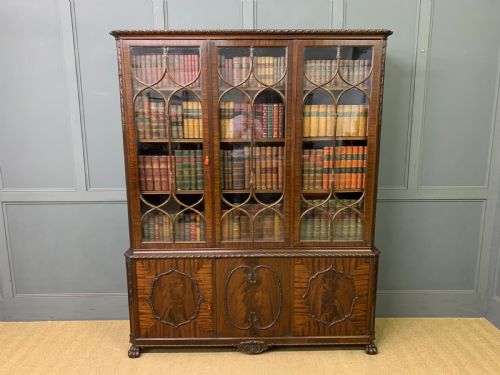
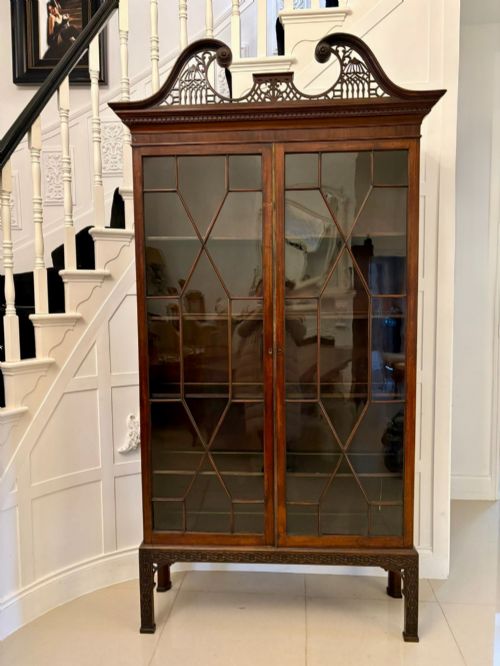
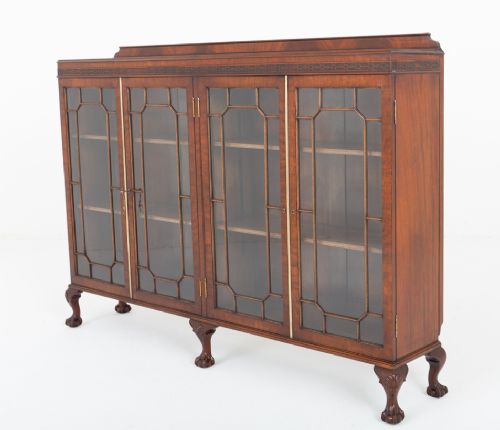
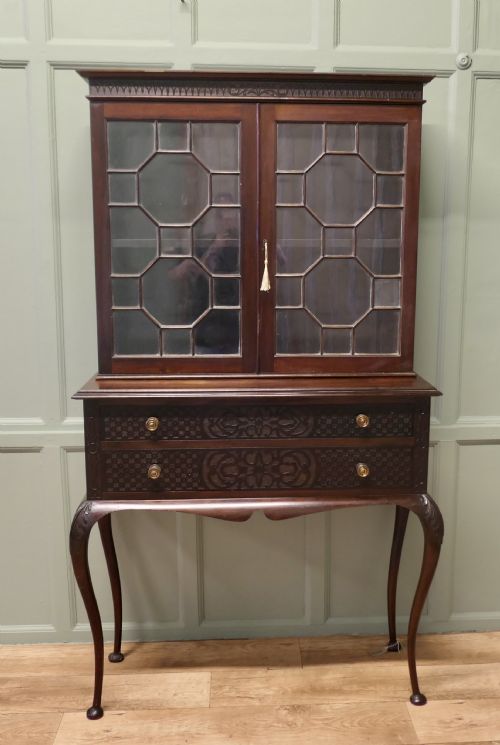
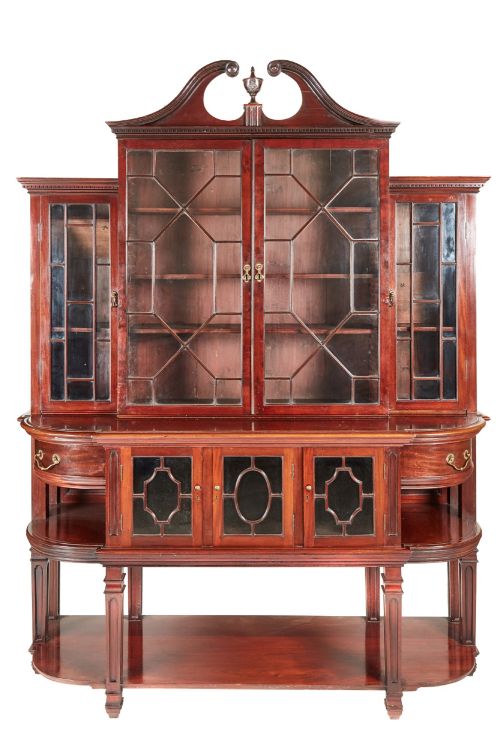

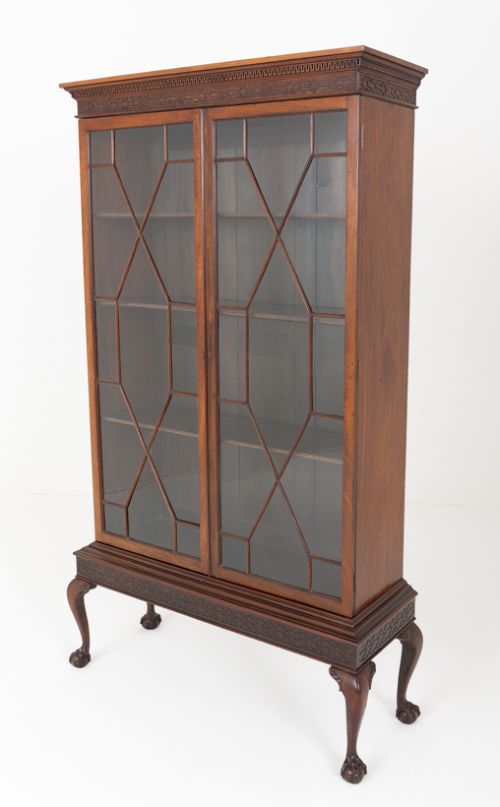
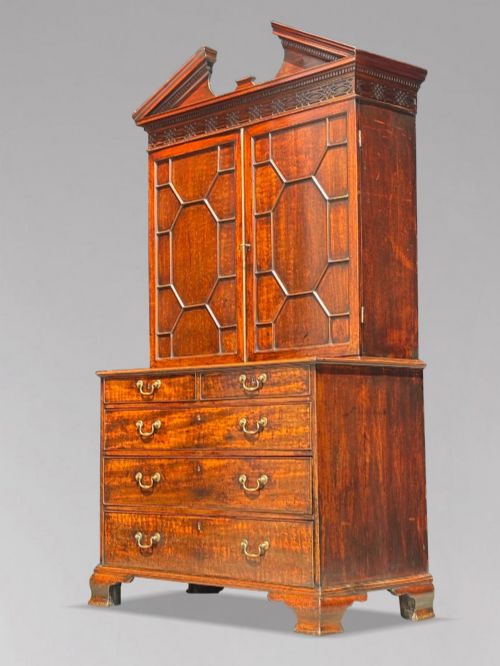
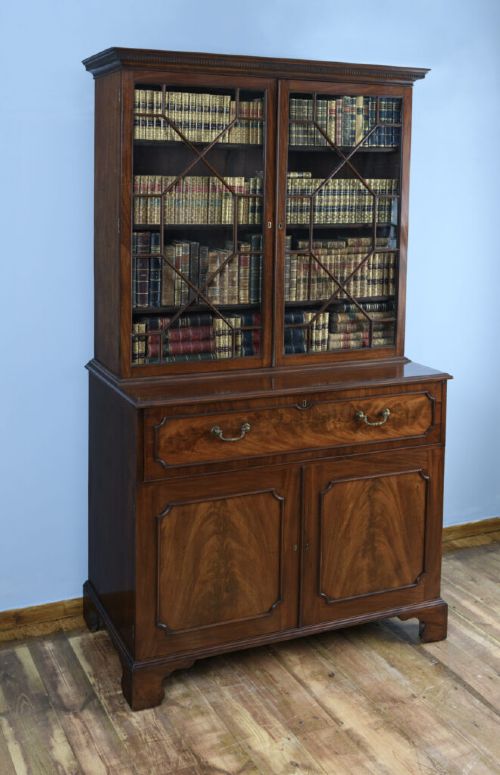
Chippendale Glazed Bookcase
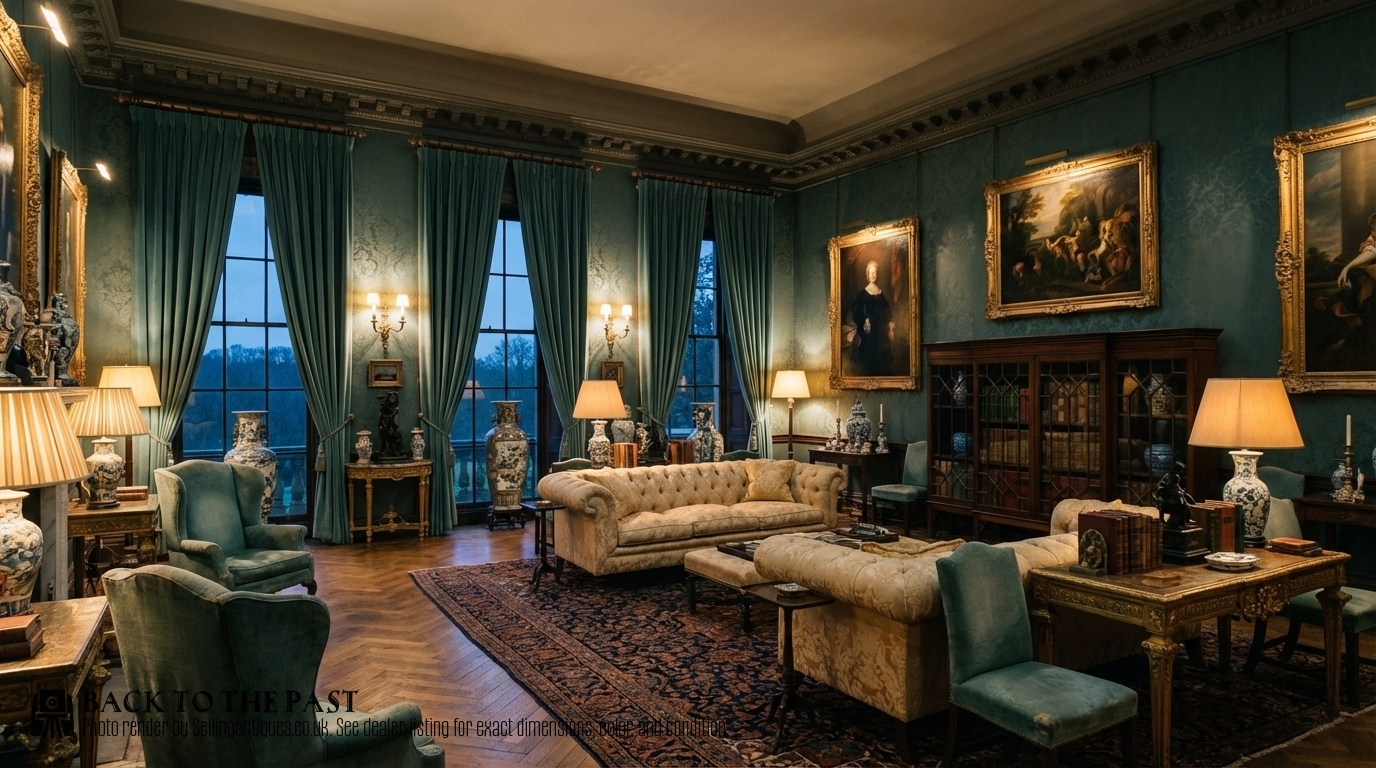
A chippendale glazed bookcase brings architectural refinement to a room through crisp astragal bars and rich timber tones.
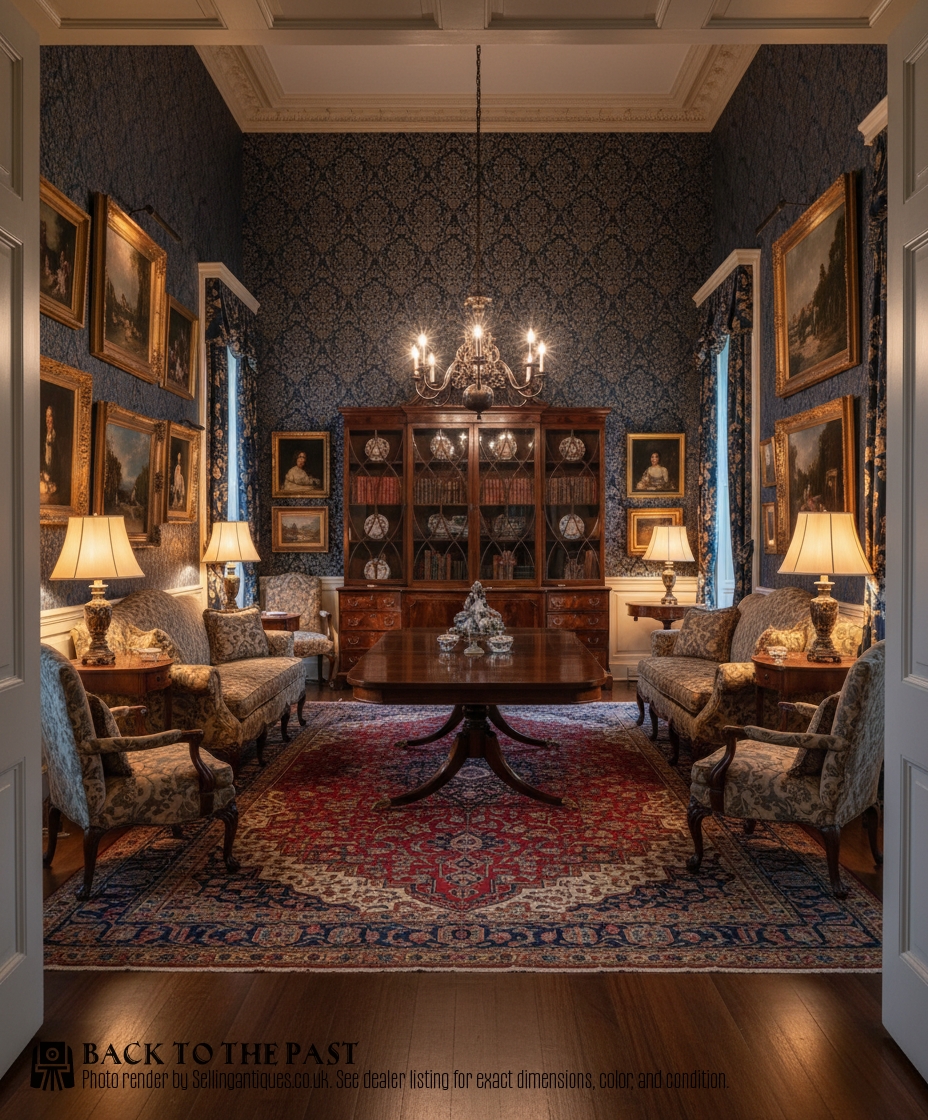
Chippendale Glazed Bookcase
A chippendale glazed bookcase is a tall timber storage piece designed with glass-fronted upper doors to display books or collections while protecting them from dust. Buyers search this phrase to find both eighteenth-century originals and later revival pieces that share the same classical proportions and cabinetwork.
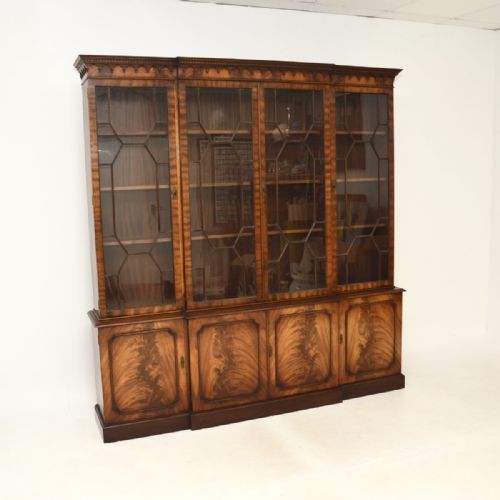
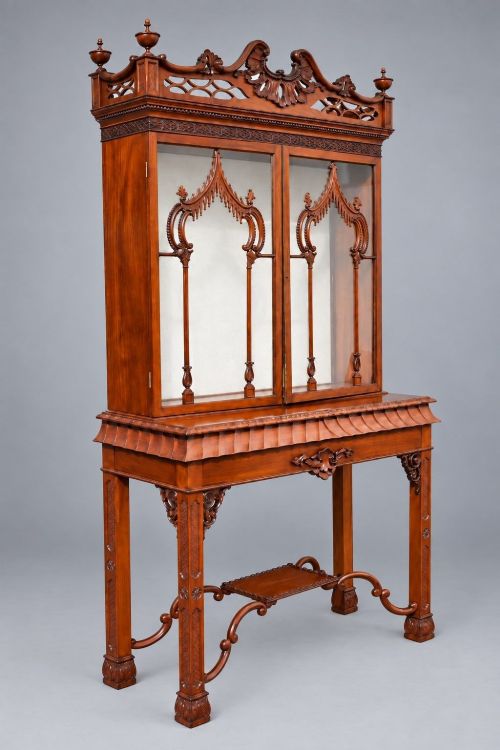
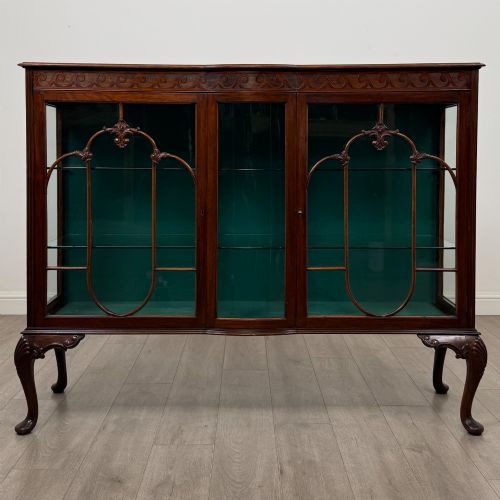
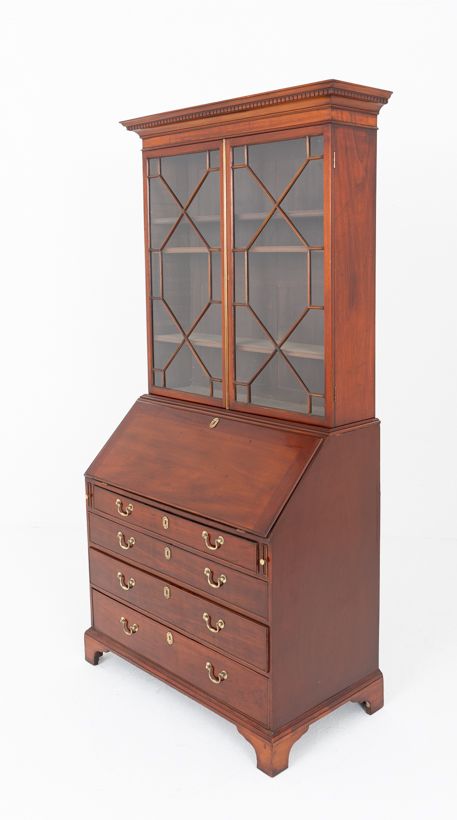
The versions most commonly met on this page date from the Edwardian period and the late nineteenth century, built in the Chippendale revival style alongside authentic Georgian examples. These pieces range from grand breakfront cabinets and bureau bookcases down to compact display cabinets on stands and miniature forms.
Timber and construction methods
Makers built these bookcases primarily using solid mahogany and mahogany veneers, occasionally incorporating satinwood or marquetry inlay for decorative contrast. Structural framing utilised oak for internal carcases and drawer linings, while brass hardware secured doors and interior fittings.
Glazing relied on individual glass panes held within wooden astragal bars forming geometric or Gothic-inspired lattices. Carved detailing such as blind frets, astragal moulding, and bracket feet completed the construction.
Listings span the Georgian period, the nineteenth century, and the Edwardian era, predominantly utilising mahogany, glass, and brass.
Distinctions in construction and material quality
Quality separates in the selection of timber figures and the precision of the joinery in the astragal bars. Finer examples show thoughtful grain matching across large surfaces and hand-carved ornamentation rather than applied mouldings.
The integrity of the original glass panes and the smoothness of operation in secretaire drawers or cabinet doors indicate the original workshop standard. Maker attribution, such as work by documented firms, further distinguishes exceptional pieces from standard production.
James Winter And Sons·Edwards And Roberts·Hille
The Chippendale Glazed Bookcase Glossary
- Astragal glazed
- A method of framing glass doors with narrow wooden bars that divide the window into smaller panes. This technique creates geometric patterns typical of Georgian and revival cabinetwork.
- Breakfront
- A cabinet design where the central section projects forward from the flanking wings. This configuration adds architectural depth to large bookcases.
- Secretaire bookcase
- A tall storage piece containing a pull-down writing drawer fitted with small pigeonholes and drawers. It combines a desk workspace with upper display shelving.
- Chippendale revival
- A stylistic movement spanning the late nineteenth and early twentieth centuries that reproduced eighteenth-century furniture designs. Makers reinterpreted classic Chinese and Gothic fretwork motifs for Edwardian interiors.
- Marquetry inlay
- The art of applying decorative veneer pieces onto a timber surface to form intricate pictures or patterns. It appears on selected revival and Georgian panels.
Chippendale Glazed Bookcase: Frequently Asked Questions
What is a chippendale glazed bookcase?
A chippendale glazed bookcase is a wooden display and storage unit featuring glass doors with timber lattice work. These pieces draw on eighteenth-century design traditions.
They serve to house library collections and decorative objects while displaying them behind protective glass panels.
How do I date a Chippendale revival piece?
Dating relies on examining secondary timbers, construction marks, and hardware styles. Edwardian revival pieces often feature machine-cut elements alongside hand-finished details.
Comparing the timber patination and internal drawer construction against known period examples helps clarify the manufacturing decade.
Where should I place a breakfront bookcase?
A breakfront bookcase requires a substantial wall space due to its projecting central section and wide footprint. Placing it away from direct sunlight protects the mahogany timber from fading.
Allowing adequate clearance around the doors ensures they can open fully without obstruction.
How do I maintain the mahogany timber?
Maintaining mahogany involves dusting with a soft, dry cloth and avoiding silicone-based polishes. Applying occasional quality wax preserves the natural sheen of the wood.
Keeping the bookcase away from extreme temperature fluctuations prevents the timber and veneer from warping.