


Chinoiserie Transferware Platter
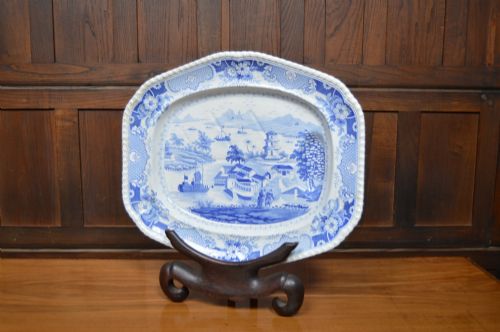
A chinoiserie transferware platter brings bold blue and white oriental scenes onto sturdy ceramic bodies for your dining table.
Chinoiserie Transferware Platter
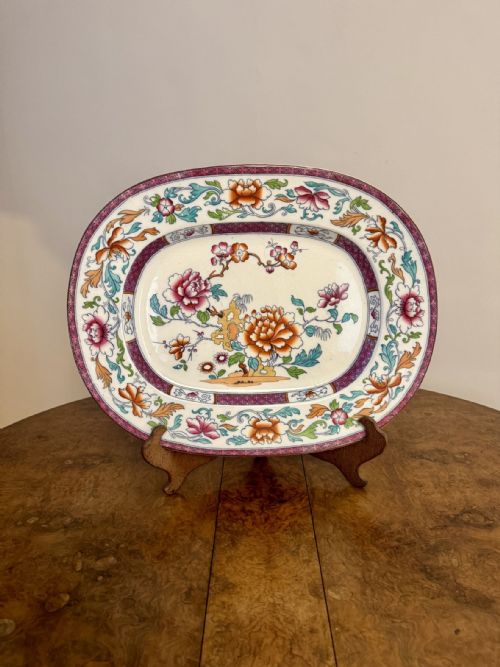
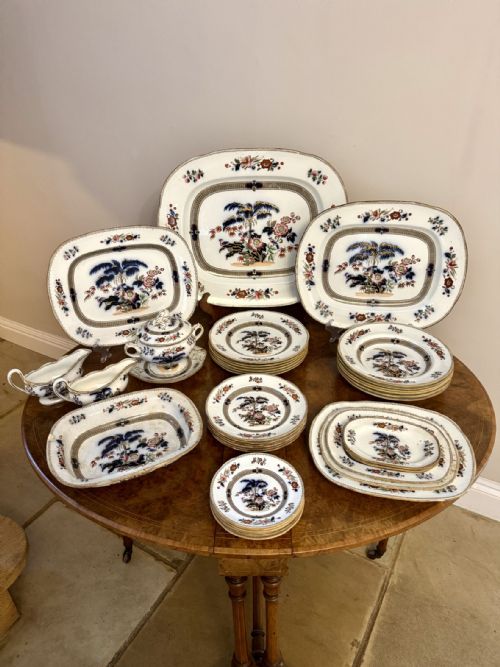
When you search for a chinoiserie transferware platter, you encounter large serving dishes decorated with printed oriental landscapes. These pieces emerge from periods spanning the Georgian, Regency, and Victorian eras.
You meet earthenware, pearlware, and ironstone forms shaped as large meat platters, chargers, bread stands, and serving dishes. The patterns display fanciful temples, pagodas, bridges, and gardens printed in deep blue and white.
The items range from early nineteenth century pearlware chargers to robust Victorian ironstone meat dishes. Each piece serves as a functional table vessel carrying romanticized depictions of eastern scenery.
Materials and Technique
Potters formed these serving vessels from ceramic bodies including earthenware, pearlware, and ironstone, before applying cobalt pigment transfers. Artisans pressed copperplate engravings onto paper to transfer the blue designs onto the raw glaze.
Kiln firing fused the cobalt pigment into the glaze to create durable surfaces resistant to daily wear. Stoneware and ironstone variations offered heavier, denser bodies suitable for large meat platters and heavy joint service.
Listings feature earthenware, pearlware, and ironstone bodies decorated with cobalt pigment underglaze transfers.
Judging Quality
Quality rests upon the clarity of the blue transfer print and the crispness of the engraved detail across the ceramic surface. Sharp lines in complex patterns like temples or figures separate superior pieces from blurred prints.
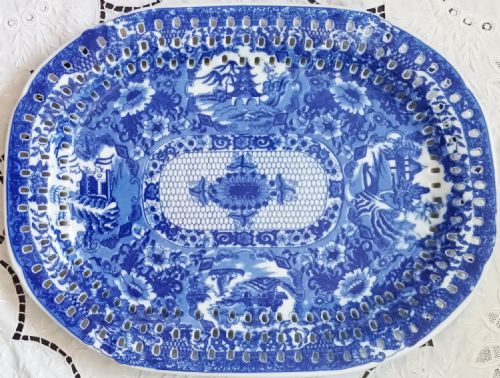
The weight, glaze smoothness, and presence of pierced work or matched drainer inserts distinguish standard serving dishes from high-status chargers and meat platters.
John Ridgway·Caughley·Copeland and Garrett·Minton·John Rogers and Son·Spode·Elkin Knight and Bridgwood·Mason and Son·Wedgwood
The Chinoiserie Transferware Platter Glossary
- Transferware
- Ceramic pottery decorated by printing a design from an engraved copper plate onto paper, which is then transferred onto the clay body. This technique allowed intricate blue and white patterns to be produced in large quantities.
- Pearlware
- A refined earthenware developed in the late eighteenth century featuring a subtle bluish glaze that pooled in crevices. It bridged the gap between creamware and later white ironstone.
- Ironstone
- A dense, heavy ceramic patented for its exceptional strength and durability. It became the favoured material for nineteenth century meat platters and large dinner services.
- Charger
- A large decorative plate or platter used traditionally for ceremonial service or placed beneath other courses. In blue and white ceramics, these display expansive landscape scenes.
- Meat Drainer
- A ceramic insert pierced with holes or slots that sits inside a larger platter to keep roasted meat elevated from its juices. These often match the surrounding transfer pattern.
Chinoiserie Transferware Platter: Frequently Asked Questions
What were chinoiserie transferware platters used for?
These large ceramic vessels served roast meats, game, and large joints at the dining table. Meat drainers often sat inside them to catch juices during carving.
Beyond formal dining, large chargers functioned as display pieces on sideboards or dresser shelves to showcase exotic blue and white scenery.
How do I date a transferware platter?
Pottery bodies offer the primary clues for dating, as pearlware dominates the late eighteenth and early nineteenth centuries while ironstone belongs to the Victorian era. Backstamps, pattern names, and registry marks stamped into the ceramic paste provide further chronological evidence.
Stylistic shifts in the border designs and the depth of the blue pigment also help distinguish Georgian pieces from later Victorian production.
How do I care for antique ceramic platters?
Wash these pieces gently by hand using warm water and mild soap to protect the historic glaze and ceramic body. Avoid abrasive scourers and dishwashers, which can dull the surface gloss and damage the transfer print over time.
Store them upright in plate racks or stacked with protective felt dividers between each piece to prevent rim chipping.