


Chinoiserie Painted Mirrors
Chinoiserie painted mirrors bring hand-painted narrative scenes and lacquered timberwork into a room.
Chinoiserie Painted Mirrors
Chinoiserie painted mirrors encompass wall mirrors, cheval mirrors, and pier mirrors decorated with motifs drawn from East Asian art. The examples found here date from the eighteenth century through to the mid-twentieth century, capturing enduring revivals in British interior design.
Buyers will encounter wall mirrors finished in black, cream, and red lacquer alongside gilt frames. Many pieces reflect earlier periods such as the Queen Anne and George I eras, or utilise Chinese export techniques including reverse painting on glass.
How they were made
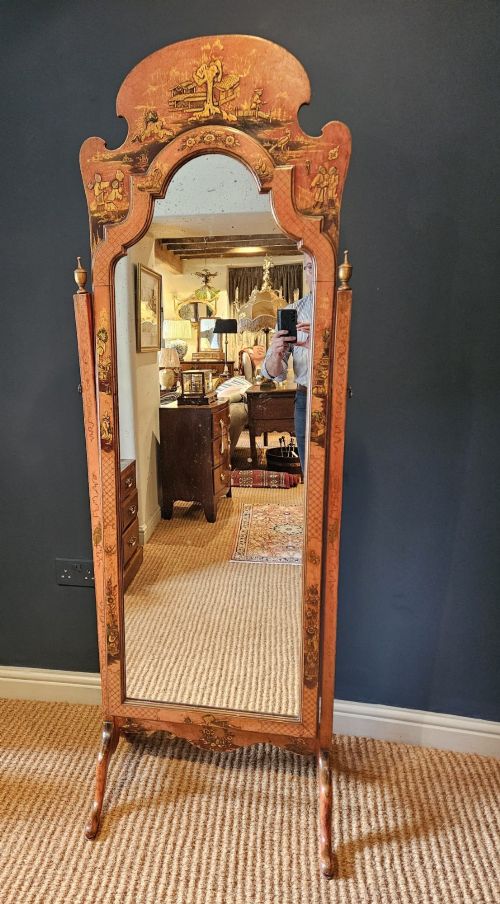
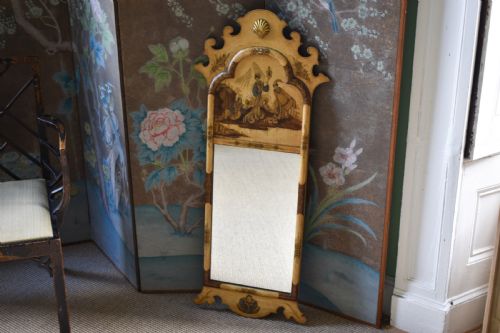
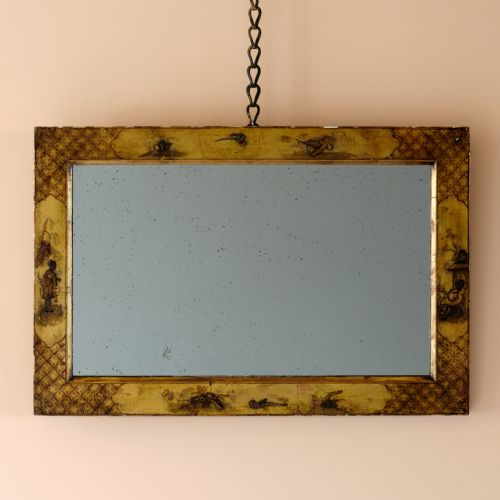
Craftsmen built the frames using wood, applying layers of lacquer in black, red, or cream to form a smooth base for painted decoration. Gilt work and brass fittings often accent these timber structures.
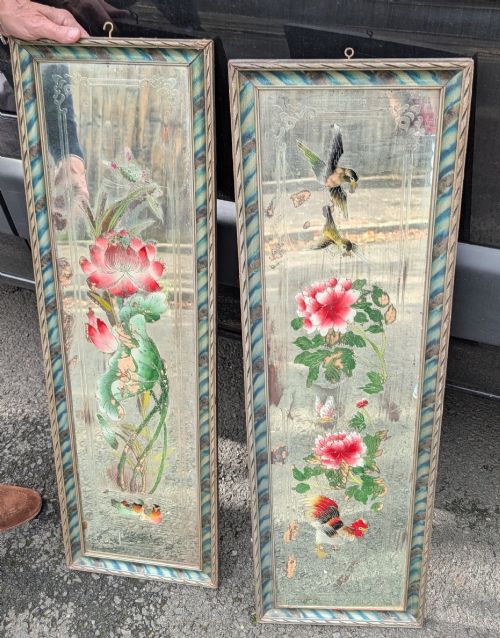
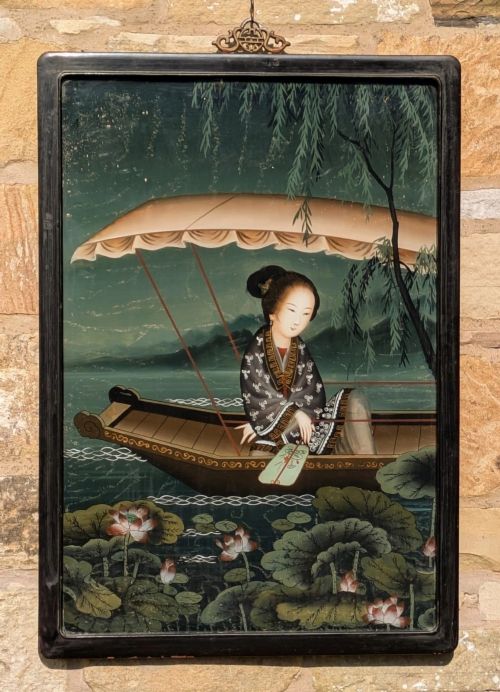
Reverse painting on glass required artists to paint intricate figures and landscapes directly onto the rear of the glass plate, creating a luminous finished surface when viewed from the front.
Listings feature items incorporating wood, glass, brass, and lacquer across nineteenth-century and early twentieth-century periods.
What varies in quality
The finesse of the hand-painted figures and landscapes dictates the upper tiers of quality, showing delicate brushwork and composed perspective rather than hurried execution. The depth and richness of the lacquering also separate standard examples from finer works.
The integrity of the original mirror glass and the preservation of the painted surface influence the standing of a piece. Period frames that retain their original gilt and lacquer finishes without heavy modern restoration hold greater decorative authority.
The Chinoiserie Painted Mirrors Glossary
- Lacquer
- A durable resin finish applied in multiple layers to wood and polished to a hard sheen. This technique provides the signature smooth background for painted Chinoiserie scenes.
- Japanned
- European-made lacquerwork imitating East Asian designs. It typically employs raised metallic decoration on a dark background.
- Reverse painting on glass
- An artistic technique where the image is painted directly onto the back of the glass panel. When viewed from the front, the glass protects the paint and adds a glossy depth.
- Cheval mirror
- A freestanding full-length mirror hung in a frame that allows it to tilt. These pieces often feature substantial decorated side supports.
- Pier mirror
- A tall mirror designed to hang on the wall between two windows, frequently positioned above a matching console table or pier table.
Chinoiserie Painted Mirrors: Frequently Asked Questions
Where should I hang a chinoiserie mirror?
These mirrors suit hallways, living rooms, and bedrooms where their decorative frames can act as a focal point. Placing them opposite a window helps reflect natural light into the space.
Ensure the wall fixings can support the weight of the timber frame, particularly on larger cheval or wall-hanging formats.
How do I care for lacquered mirror frames?
Dust the frame regularly with a soft, dry cloth to prevent dirt accumulation on the painted and lacquered surfaces. Avoid chemical cleaners and moisture, which can damage historic finishes.
Keep the mirrors away from direct sunlight and damp environments to protect the wood and glass over time.
What is the difference between antique and revival pieces?
Period pieces date from the eighteenth and early nineteenth centuries, displaying the craftsmanship and materials of their original era. Revival pieces, such as those from the early twentieth century, deliberately recreate earlier styles like Queen Anne.
Both categories utilise traditional hand-finishing techniques, though distinguishing the age relies on examining the timber construction and the mirror glass.
Are reverse painted mirrors fragile?
The painted layer sits safely on the reverse side of the glass plate, protected from physical contact during routine cleaning. However, the glass itself requires careful handling during any relocation.
Inspect the edges of the glass panel and the surrounding frame joinery to ensure the panel remains securely seated.