



Chinese Wall Mirrors
Chinese wall mirrors bring distinct carved frames and painted glass into a room, offering both decorative depth and historical character.
Chinese Wall Mirrors
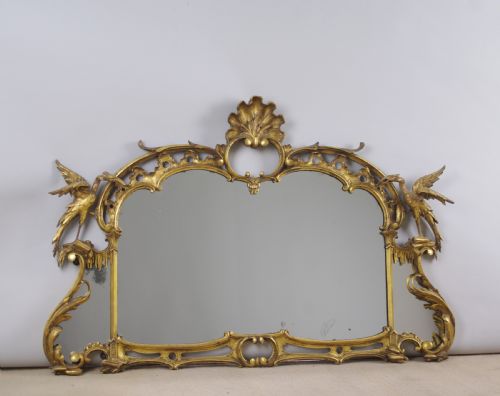
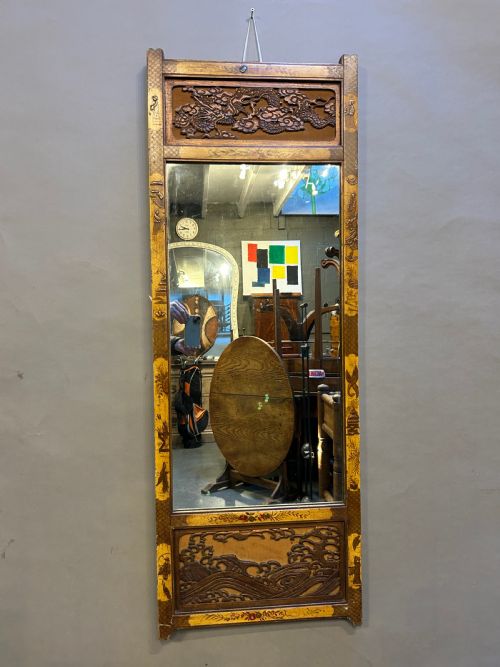
When you search for chinese wall mirrors, you encounter an array of wall mirrors, overmantel mirrors, and reverse glass paintings spanning the nineteenth century through the early twentieth century. These pieces encompass styles such as Chinese Chippendale, Chinoiserie, and Qing Dynasty, reflecting diverse aesthetic traditions from different eras.
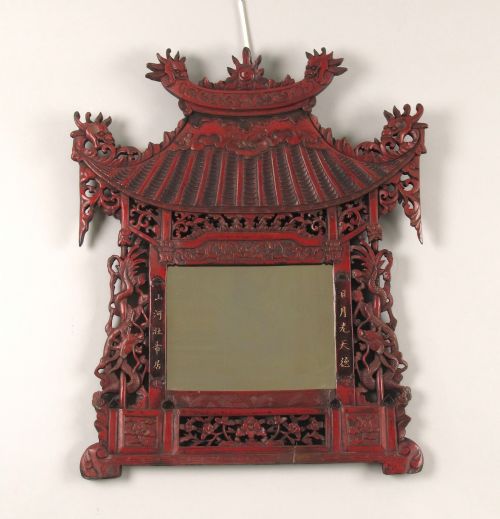
The objects appearing on this page range from carved giltwood frames to red lacquer pagoda designs and black chinoiserie oval wall mirrors. Buyers frequently encounter nineteenth-century pieces alongside early twentieth-century interpretations, including console tables paired with mirrors and decorative wall hanging pairs.
How they were made
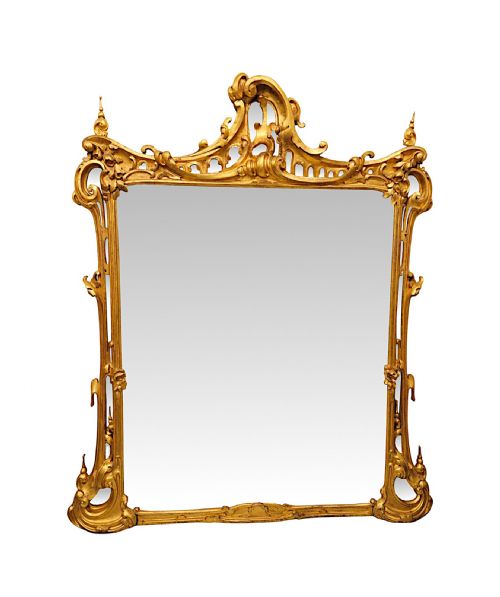
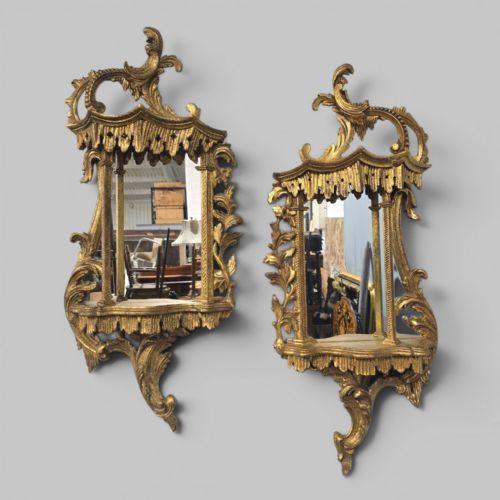
The construction of these mirrors relies heavily on wood, carved wood, and giltwood, often finished with gold leaf, paint, or red lacquer. Artisans shaped these materials into intricate frames featuring pagoda motifs and traditional Chinese Chippendale decorative elements.
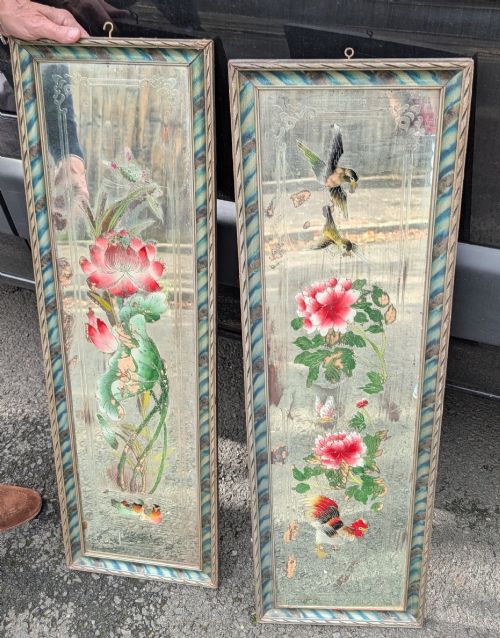
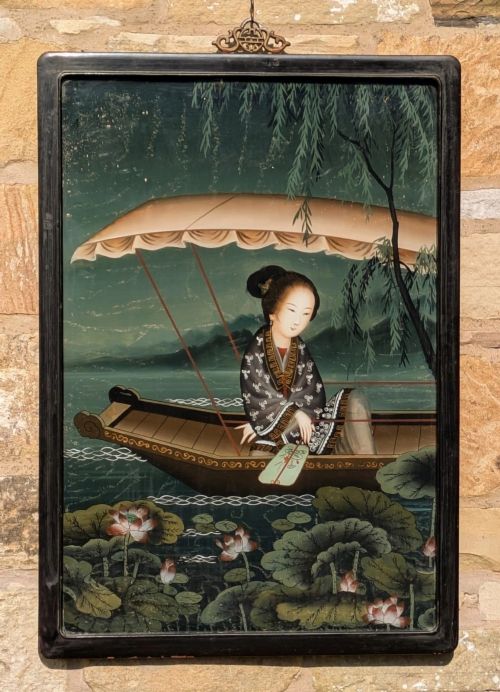
Another distinct technique involves reverse painting on glass, where artists applied detailed imagery directly to the back of the glass panel. These mirror glass and glass elements were then fitted securely into carved wooden structures to create cohesive wall art and functional mirrors.
Listings here feature materials including glass, wood, giltwood, paint, brass, mirror glass, carved wood, and gold leaf.
What varies in quality
Quality in these pieces is evident in the depth and precision of the carved wood and the application of gold leaf or paint upon the frame. Finer examples display crisp detailing in the Chinese Chippendale style and well-preserved red lacquer surfaces.
The execution of reverse glass paintings also dictates the tier of the piece, with superior artistry showing greater clarity and expression in figures such as dignitaries. The integrity of the original mirror glass and the stability of the overall wooden construction further distinguish the standard of the object.
The Chinese Wall Mirrors Glossary
- Giltwood
- Wood that has been coated with gold leaf or a gold-coloured finish. This material is frequently found on ornate nineteenth-century frames.
- Chinoiserie
- A European decorative style that reflects Chinese artistic influences. It often appears on mirrors and furniture through painted motifs and lacquerwork.
- Chinese Chippendale
- A distinct rococo style incorporating Chinese architectural motifs such as pagodas and fretwork. This style defines many of the carved wooden mirrors from the period.
- Reverse Glass Painting
- A technique where an artist paints directly onto the rear side of a glass panel so the image is viewed through the front. Such works serve as standalone wall art or integrated mirror panels.
- Overmantel Mirror
- A large mirror designed to hang specifically above a fireplace mantelpiece. These pieces often feature wide frames and substantial proportions.
Chinese Wall Mirrors: Frequently Asked Questions
Where should I hang a chinese wall mirror?
These mirrors suit spaces where their carved frames and reflective glass can enhance light and focal points. Overmantel versions fit naturally above fireplaces, while smaller wall mirrors suit hallways or living areas.
Placement depends on the scale of the piece and the surrounding room architecture. Pairing them with console tables creates a balanced arrangement reminiscent of period interiors.
How do I identify a chinese chippendale mirror?
Identification rests upon characteristic decorative elements such as fretwork, pagoda motifs, and asymmetrical carved wooden frames. These frames are frequently finished in giltwood or paint.
Examining the construction methods and the age of the wood helps confirm the period. The integration of Chinese stylistic motifs with European furniture forms is the primary indicator.
What is reverse glass painting on a mirror?
This technique involves applying paint directly to the reverse side of a glass plate so the finished image is viewed through the smooth front surface. It appears on antique mirrors and dedicated wall art.
The method protects the pigment behind the glass while producing a glossy finish. Artisans utilised this technique to depict figures, landscapes, and decorative scenes.
How do I care for antique giltwood frames?
Giltwood surfaces require gentle dusting with a soft, dry cloth to prevent accumulation without disturbing the gold leaf. Avoid moisture and chemical cleaning agents entirely.
Maintaining stable room humidity protects the underlying wood and prevents the gesso and gold leaf from cracking. Proper placement away from direct heat sources ensures the longevity of the finish.