
Painted Glass Wall Mirror
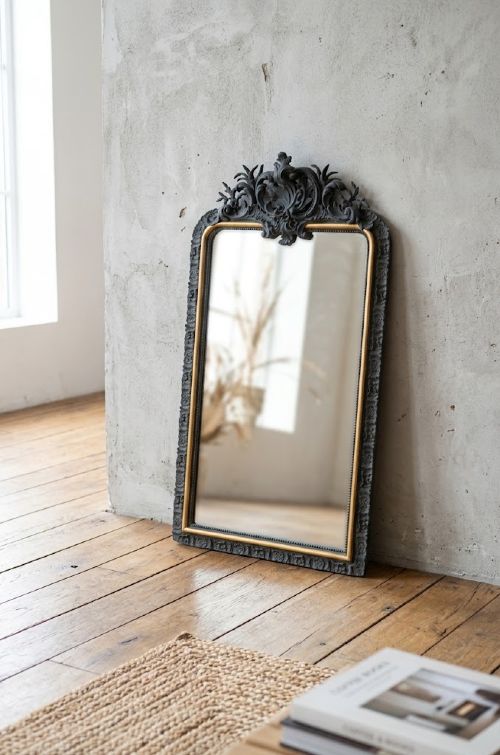
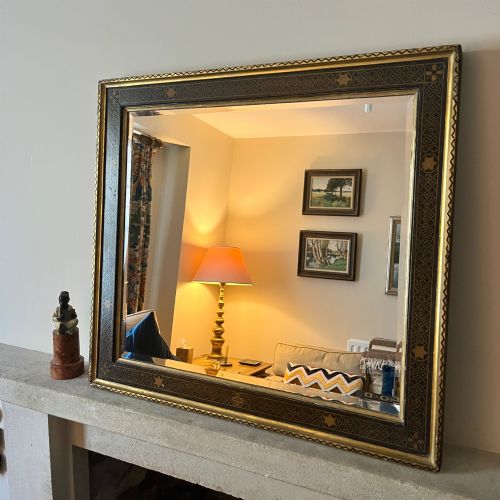
A painted glass wall mirror brings light and decorative harmony to a room, drawing the eye with surface artistry and reflective depth.
Painted Glass Wall Mirror
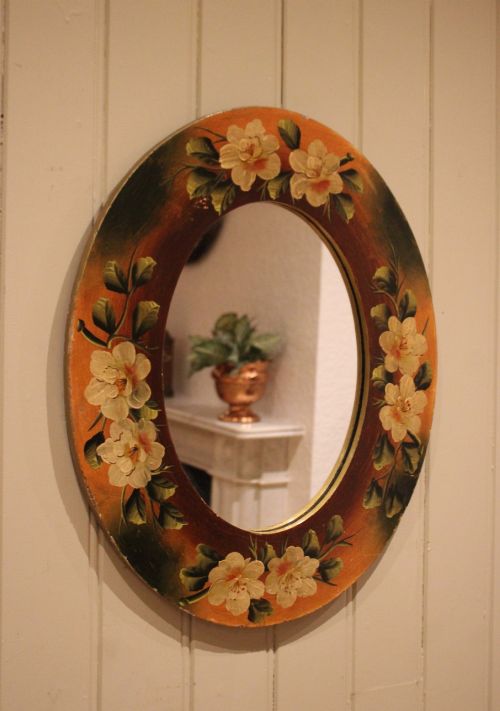
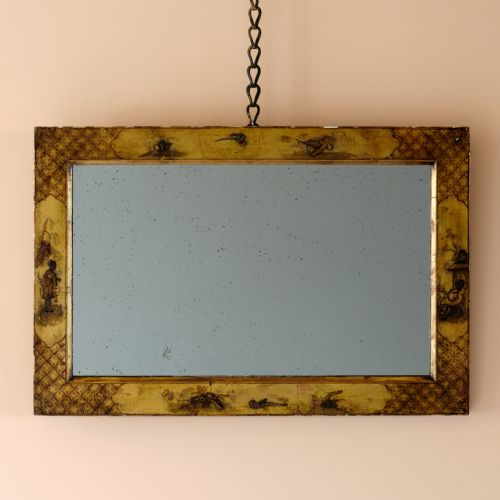
A painted glass wall mirror combines functional reflection with decorative artistry, often incorporating oil paintings, reverse glass panels, or painted frames. When searching for a painted glass wall mirror, buyers encounter a rich mix of forms from the nineteenth century onward.
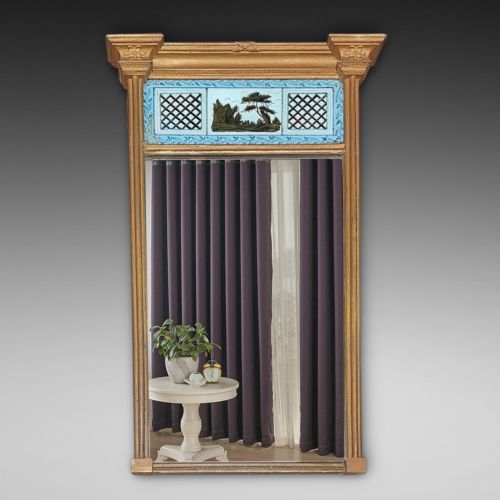
The selection on this page centres heavily on French trumeau mirrors, Regency pier glasses, and overmantel pieces. Many examples feature integrated pastoral scenes, maritime prints, or floral motifs set above or within the glass.
Origins stretch across English, French, and Chinese workshops, spanning periods from the Regency era through the Victorian epoch and into the early twentieth century. These pieces function as architectural focal points, traditionally hung above mantelpieces or between windows.
How they were made
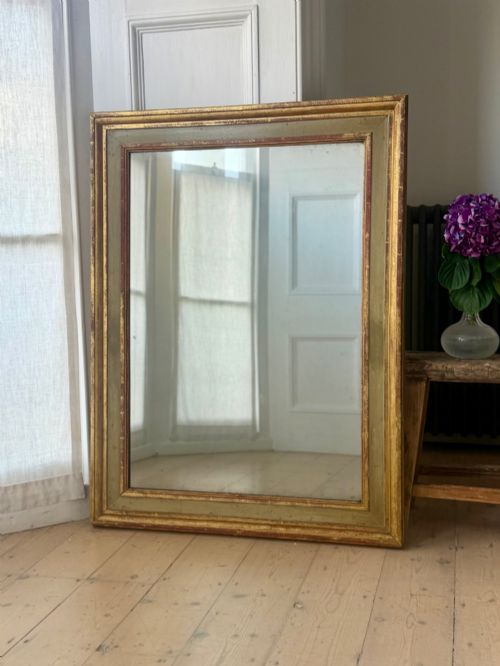
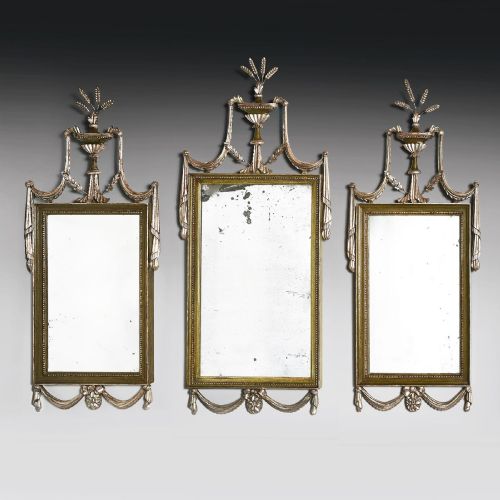
Craftsmen built the underlying structures using wood, gesso, and carved giltwood, often applying layered paint, gold leaf, and parcel-gilt finishes. Frames received meticulous detailing, from ribbed mouldings to applied lion masks and neoclassical motifs.
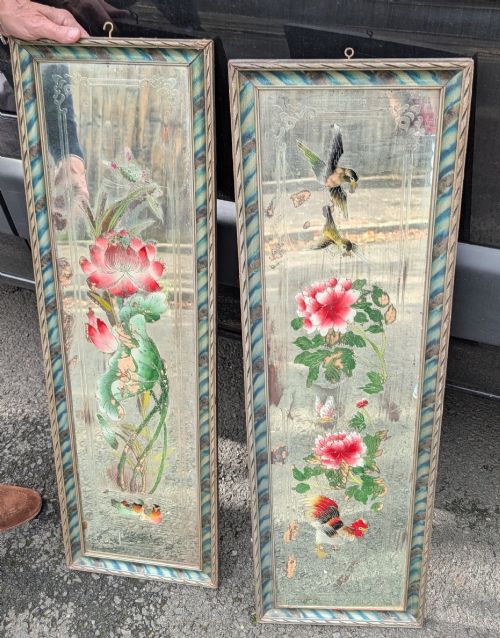
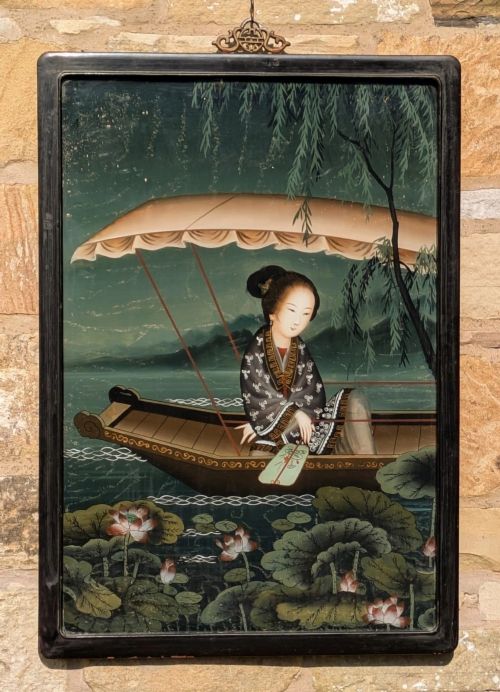
Reflective surfaces utilised traditional mercury glass or silvered mirror plates, paired with specialist techniques like verre églomisé and reverse painting on glass. Artists painted pastoral landscapes, equestrian subjects, and decorative scenes directly onto glass panels or silk inserts housed within the frame.
A naval engagement depicted on glass proves that mirrors double as historical battlegrounds.
What varies in quality
Quality rests in the harmony between the decorative artwork and the carved wooden frame. Superior examples display refined hand-painted details, such as crisp pastoral oils or delicate verre églomisé panels, executed by skilled hands rather than generic production methods.
The integrity of the original mercury glass or silvered plate and the depth of the gilding separate standard decorative items from finer works. Maker attribution, such as pieces originating from established workshops like Gillows, adds a distinct layer of historical provenance.
Gillows Of Lancaster
The Painted Glass Wall Mirror Glossary
- Trumeau mirror
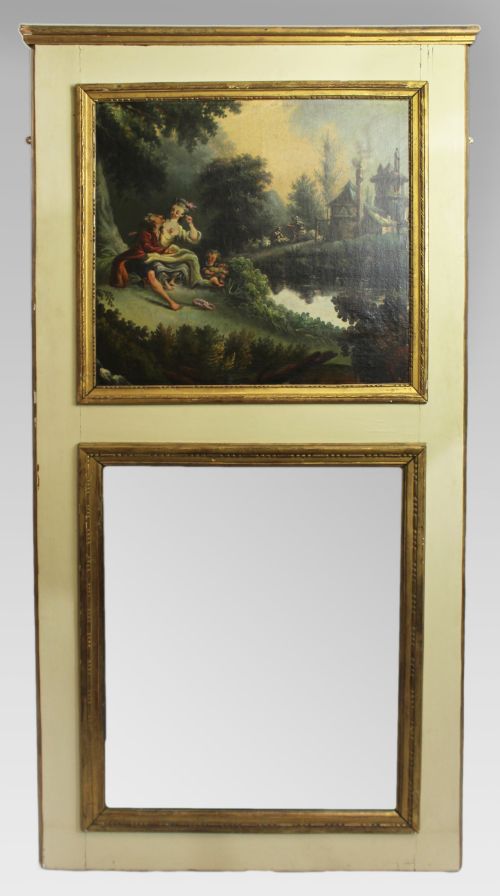
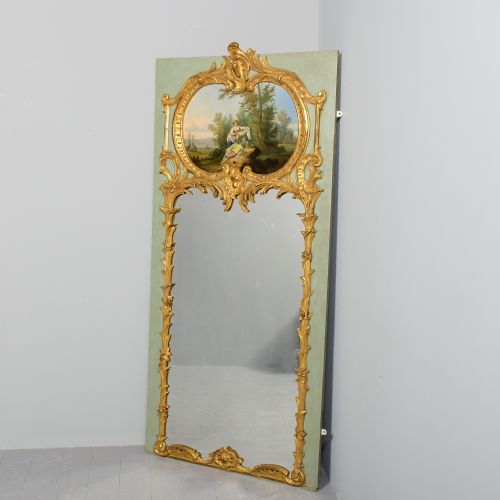
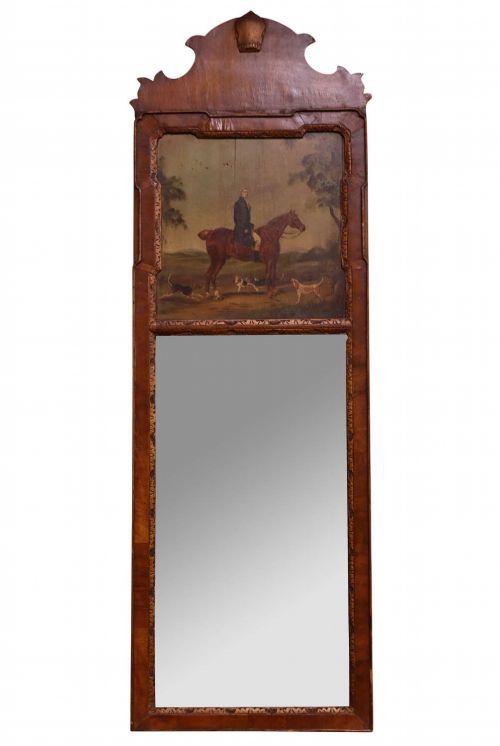
- A decorative wall mirror featuring an integrated painted panel or oil painting above the glass plate. These tall pieces were designed to fit the wall space between windows.
- Verre églomisé
- A cold decoration technique where design elements are painted and gilded on the reverse side of glass. This method creates a brilliant, reflective metallic finish viewed from the front.
- Pier glass
- A tall mirror specifically proportioned to hang on the narrow wall space between two windows. They frequently incorporate console tables or feature classical giltwood motifs.
- Overmantel mirror
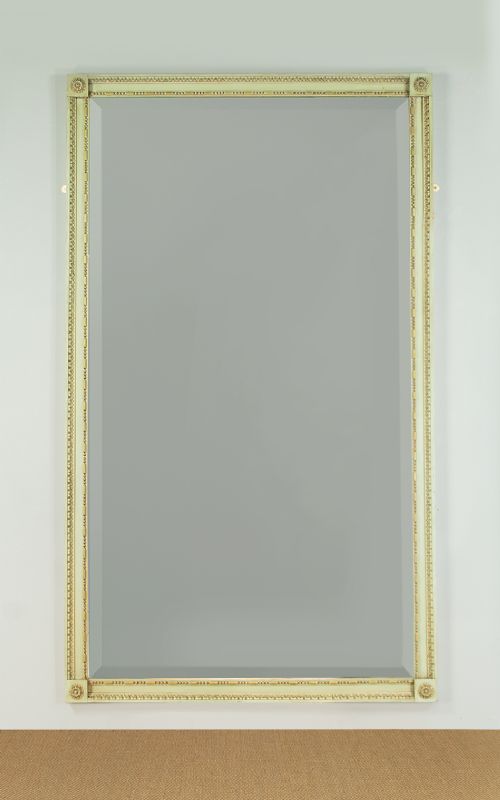
- A wide horizontal mirror designed to sit directly above a fireplace mantelpiece. Victorian and Georgian versions often incorporate elaborate carved wood and gesso frames.
- Convex glass
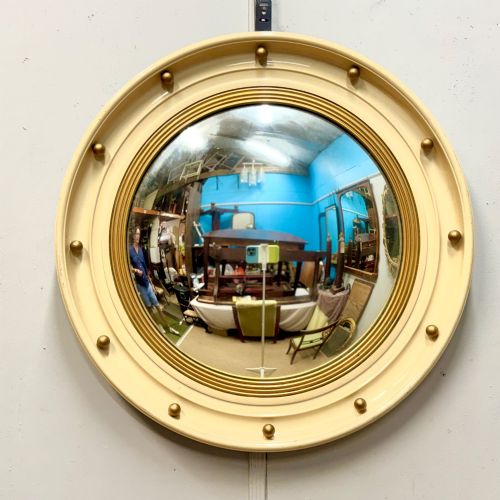
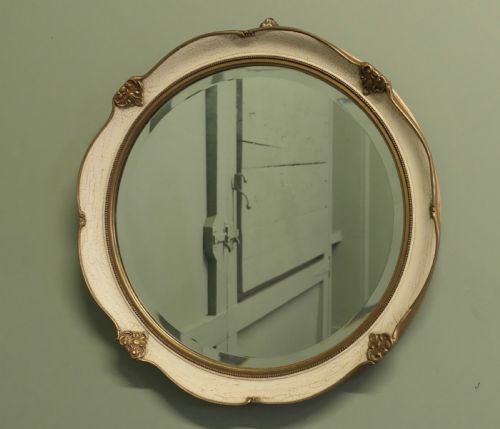
- A curved, rounded mirror glass plate that provides a wide-angle, fish-eye reflection of the room. These are commonly found in circular butler's mirrors.
Painted Glass Wall Mirror: Frequently Asked Questions
What is a trumeau mirror?
A trumeau mirror is a traditional wall mirror that combines a glass plate with an upper decorative panel, often containing an oil painting or pastoral scene.
Originating largely from French interior design, these architectural pieces were designed to hang on specific wall panels and bring both light and artwork into a room.
How do I hang a heavy antique mirror safely?
Heavy antique mirrors require secure wall fixings distributed evenly across the wooden frame or backed structure.
Due to the weight of carved wood, gesso, and thick glass plates, professional installation into wall studs or masonry is strongly recommended.
What is mercury glass?
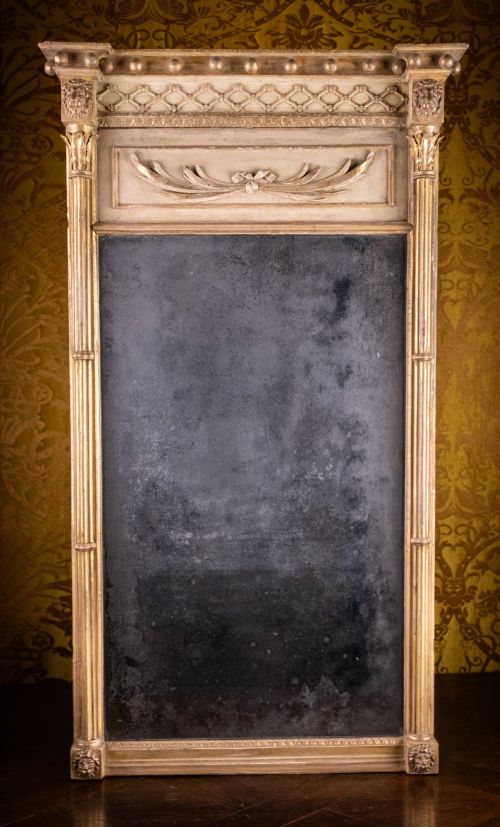
Mercury glass refers to antique mirror plates created by pouring a liquid mercury amalgam between two layers of double-walled blown glass, or applied to the rear of flat glass.
This historical technique produces a characteristic mottled, dark reflective quality that differs visibly from modern silvered manufacturing.
Where should I place an overmantel mirror?
An overmantel mirror is traditionally mounted directly above a fireplace mantelpiece to anchor the room's central focal point.
Placing the mirror here reflects light from opposing windows and visually expands the proportions of the living space.