


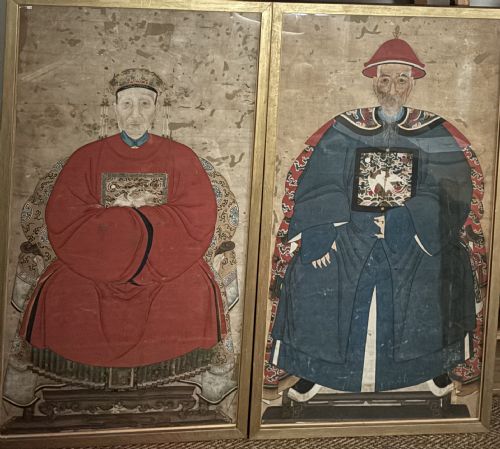


Pair Chinese Wall Art
Pair chinese wall art brings balance and symmetry to a room, offering matched panels, scrolls, mirrors, and paintings that span multiple centuries.
Pair Chinese Wall Art
Pair chinese wall art encompasses matched sets of decorative objects designed for symmetrical display on interior walls, drawing from traditional eastern motifs and craftsmanship. The selections gathered here range from carved wood temple panels and lacquered surfaces to delicate silk paintings, ancestral scrolls, and framed watercolours.
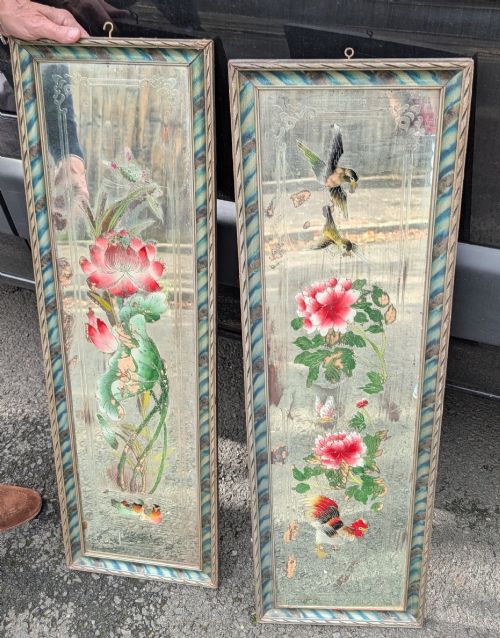
Buyers most frequently encounter nineteenth-century pieces alongside Edwardian and mid-twentieth-century examples, reflecting both Qing dynasty aesthetics and later republic period output. Forms vary widely from porcelain plaques and reverse paintings on glass to embroidered textiles depicting garden birds and mandarin ducks.
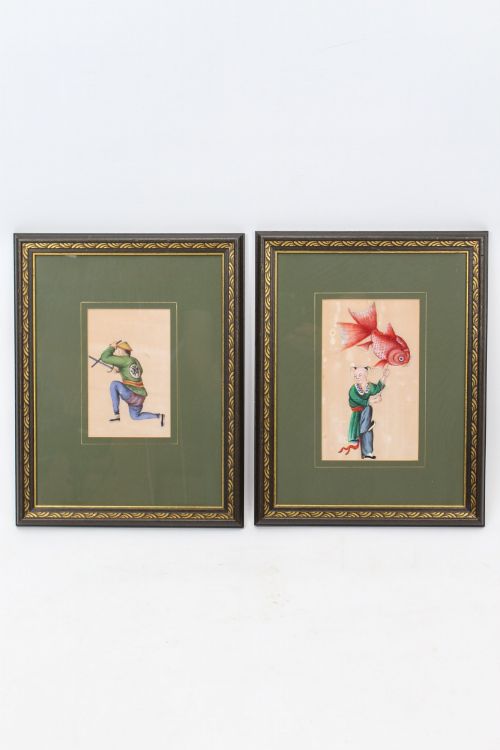
Each matched pair serves as a focal point, whether through the rich detail of carved gilt wood or the subtle tones of traditional pigment on paper and silk. The variety of object types ensures that interiors favouring either architectural relief work or flat pictorial framing can find suitable symmetrical compositions.
Materials and construction methods
Wood serves as the primary structural foundation for carved temple panels, wall plaques, and original frames, often shaped with hand-carved relief work and highlighted in gilt. Lacquered panels incorporate intricate inlay using mother-of-pearl and abalone, building textured depictions of birds amongst foliage and foilage.
Textile works utilise fine silk and paper supports for hand-painted or embroidered scenes, capturing minute details with traditional pigments. Glass and mirror glass appear in nineteenth and twentieth-century pieces, notably through reverse painting techniques and framed hanging mirrors.
Listings feature works spanning the nineteenth century through to nineteen sixty, utilising wood, silk, lacquer, glass, and porcelain.
Assessing quality in matched pairs
Quality rests upon the fineness of execution in the hand-carved woodwork, the precision of inlay work, and the delicacy applied to painted silk or porcelain surfaces. Superior examples demonstrate meticulous detail in figurative or naturalistic subjects, such as ancestral portraits and garden birds.
The preservation of original frames, surfaces, and pigments significantly influences the integrity of a pair. Matching symmetry between the two pieces and the clarity of older glass, silk, or lacquer determine the visual impact of the set.
The Pair Chinese Wall Art Glossary
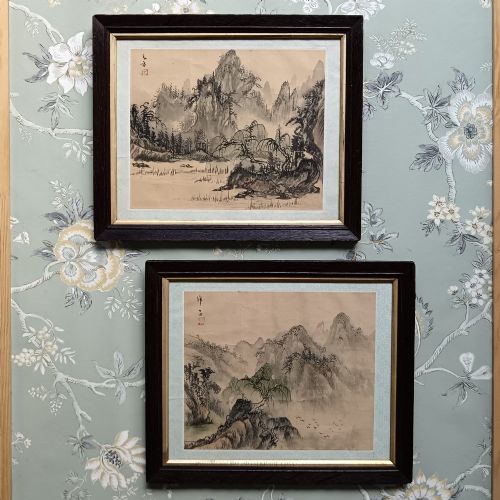
- Shan Shui
- A style of traditional Chinese painting that depicts scenery or natural landscapes, using a brush and ink rather than more conventional paints.
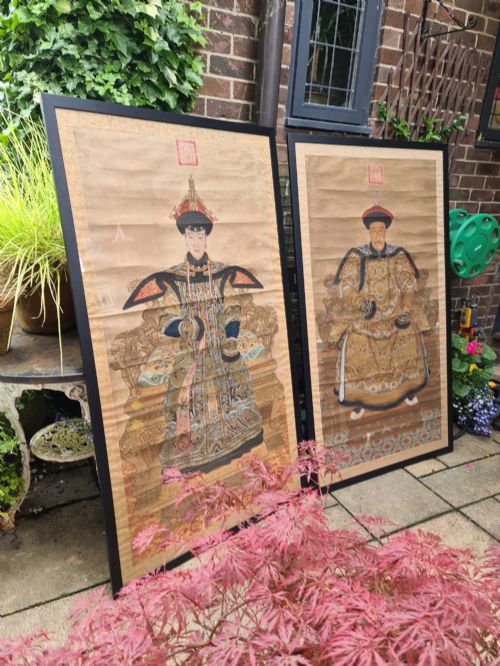
- Ancestor Portrait
- Formal paintings created to honour lineage and family heritage, often depicting seated figures in traditional robes.
- Reverse Glass Painting
- An art form consisting of applying painted imagery to the back of a piece of glass, viewed from the unpainted side.
- Chinoiserie
- European decorative style inspired by Chinese artistic traditions, prevalent in various historical periods.
- Qing Dynasty
- The last imperial dynasty of China, spanning from sixteen forty-four to nineteen twelve, frequently referenced in antique dating.
Pair Chinese Wall Art: Frequently Asked Questions
How do I hang a heavy pair of wooden panels?
Heavy carved wood panels require secure wall fixings suited to the weight of the timber and the specific wall construction. Professional installation is often recommended to distribute the load evenly and ensure symmetrical alignment.
Ensuring both pieces sit level and at an identical height preserves the visual balance characteristic of matched sets.
Are silk paintings sensitive to sunlight?
Silk and paper artworks are susceptible to fading when exposed to direct sunlight over extended periods. Hanging these pieces away from direct windows protects the delicate pigments.
Utilising UV-filtering glass in custom framing further safeguards antique textiles and watercolours from environmental degradation.
What is the difference between ancestral scrolls and portraits?
Ancestral scrolls typically encompass broader genealogical or narrative compositions on paper or silk. Ancestor portraits focus specifically on formal, seated likenesses intended for remembrance and veneration.
Both forms offer a direct connection to historical portraiture traditions within Chinese art.
How should I clean antique lacquer panels?
Antique lacquer and inlay surfaces require gentle dusting with a soft, dry cloth to prevent scratching. Moisture and chemical cleaning agents can damage aged finishes and mother-of-pearl inlay.
Maintaining a stable indoor humidity helps protect both the wooden substrate and the decorative surface layers.