

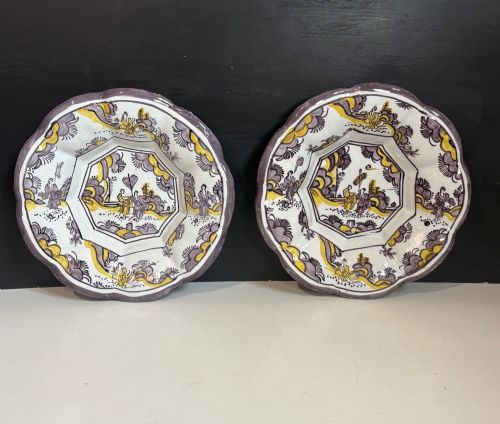
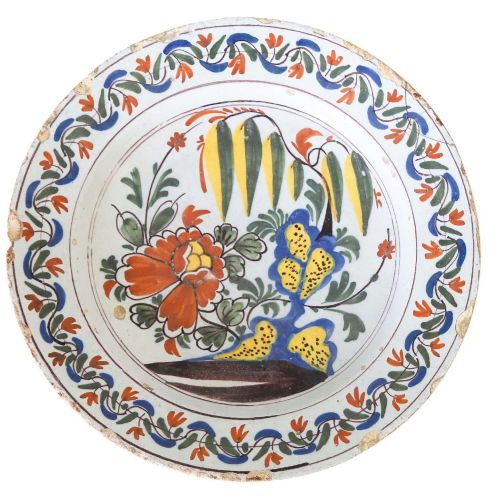
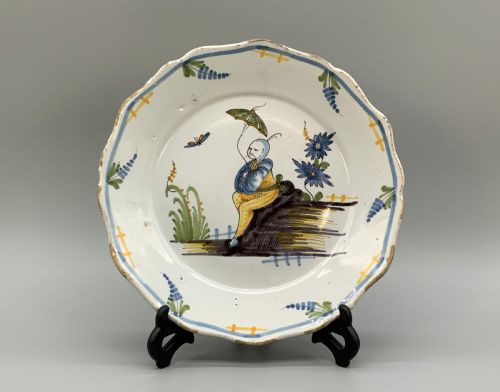
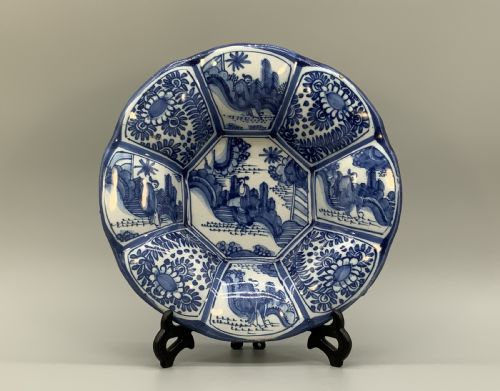


Chinoiserie Delft Dish
A chinoiserie delft dish brings together European earthenware and painted fantasies of East Asia.
Chinoiserie Delft Dish
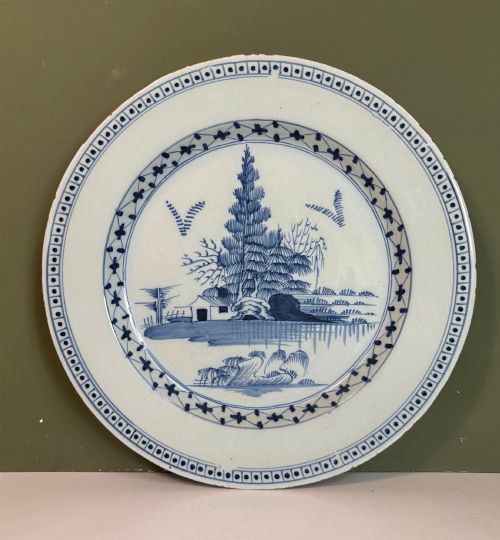
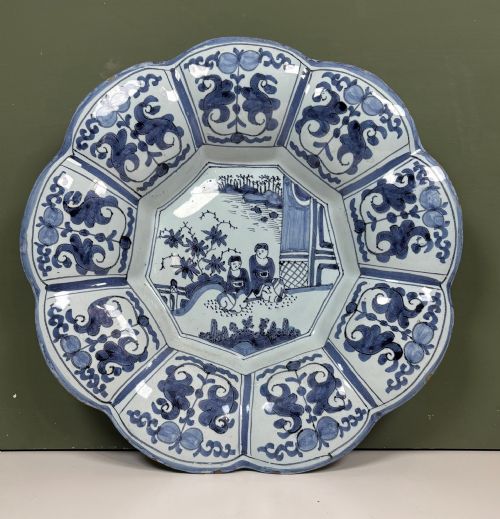
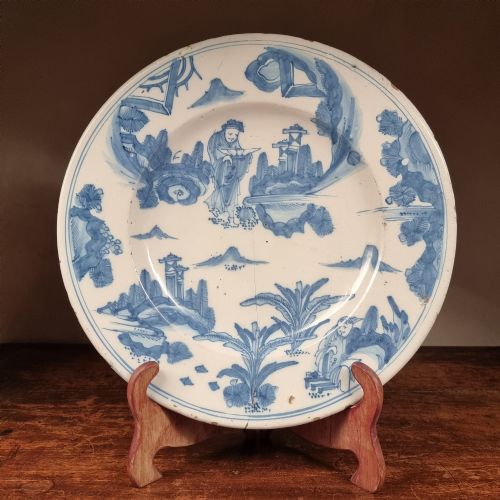
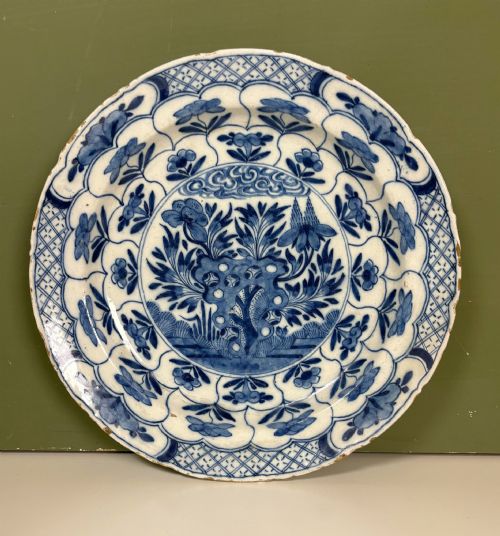
A chinoiserie delft dish represents earthenware plates, chargers, and platters produced across the seventeenth, eighteenth, and nineteenth centuries. These items draw on Dutch, English, and French origins, reflecting the widespread European fascination with Eastern motifs during those periods.
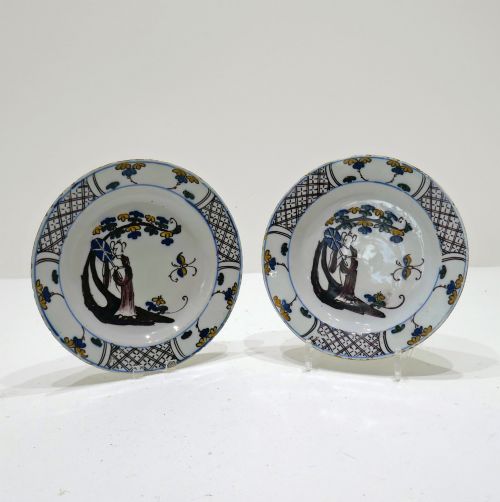
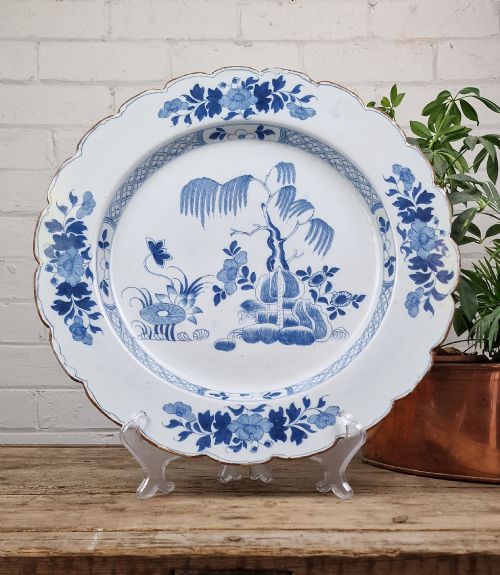
The version most commonly encountered on this page is the eighteenth-century charger or plate. These pieces display hand-painted blue and white or polychrome scenes inspired by Chinese porcelain designs.
Makers shaped these objects as decorative dishes and bowls, utilising earthenware bodies formed into plates and large chargers. The resulting wares range from late seventeenth-century examples up to nineteenth-century interpretations.
Materials and Techniques
Potters constructed these objects using earthenware covered in a tin glaze, which created an opaque white surface for painting. Artisans then applied cobalt pigment or manganese and yellow oxides directly onto the unfired glaze.
The painted designs relied on hand-painted brushwork to render floral decoration and Chinese-inspired landscapes. High-temperature firing fused the pigments into the tin glaze, fixing the characteristic gloss of the ware.
Object forms span decorative plates, chargers, platters, and bowls reflecting Dutch Baroque and Georgian styles.
Judging Quality in Tin-Glazed Earthenware
Quality rests upon the crispness of the hand-painted brushwork and the control of the cobalt pigment or polychrome oxides. Finer examples display confident, fluid execution of the chinoiserie motifs rather than stiff imitation.
The stability and gloss of the tin glaze itself distinguish superior pieces from heavier, more sluggishly glazed wares. Balance in the earthenware body and clarity in the final firing determine the distinction at the upper end of the range.
Bristol Delft·Lambeth Delft
The Chinoiserie Delft Dish Glossary
- Chinoiserie
- European decorative art influenced by Chinese and East Asian styles and motifs. This aesthetic shaped the painted landscapes and figures found on many tin-glazed dishes.
- Delftware
- Tin-glazed earthenware made in England, Holland, or other European regions. The term encompasses plates, chargers, and bowls produced in the seventeenth and eighteenth centuries.
- Charger
- A large ornamental plate intended for display on a wall or dresser rather than everyday dining. These broad surfaces provided ample space for elaborate painted scenes.
- Polychrome
- Decoration employing multiple colours rather than a single pigment like blue and white. On these dishes, this often includes manganese, yellow, and other oxide hues.
- Tin Glaze
- An opaque white ceramic glaze containing tin oxide. It formed the smooth ground upon which artists painted their cobalt and oxide designs.
Chinoiserie Delft Dish: Frequently Asked Questions
What is a chinoiserie delft dish?
A chinoiserie delft dish is a tin-glazed earthenware plate or charger painted with European interpretations of Chinese art. These ceramics date primarily from the seventeenth and eighteenth centuries.
Potters in England, Holland, and France produced them using earthenware bodies covered in opaque white glaze and decorated with cobalt or other metal oxides.
Were these dishes used for food?
Large chargers and decorative plates were primarily intended for display on walls or sideboards to showcase the owner's taste. Smaller plates saw more practical use in formal dining settings.
The porous earthenware and soft tin glaze make surviving pieces sensitive to modern heavy use.
How do I identify an eighteenth-century piece?
Eighteenth-century examples typically exhibit specific tin-glaze characteristics, distinct potting weight, and hand-painted cobalt or polychrome chinoiserie decoration. Stylistic traits align with Georgian and eighteenth-century Dutch production periods.
Examining the foot ring, glaze pooling, and pigment behaviour helps establish the manufacturing era.
How do I care for antique delftware?
Display these ceramics away from direct sunlight and areas subject to sudden temperature shifts. Dust them gently with a dry, soft cloth.
Avoid washing antique tin-glazed earthenware in water, as moisture can penetrate the porous earthenware body through old cracks or unglazed rims.