


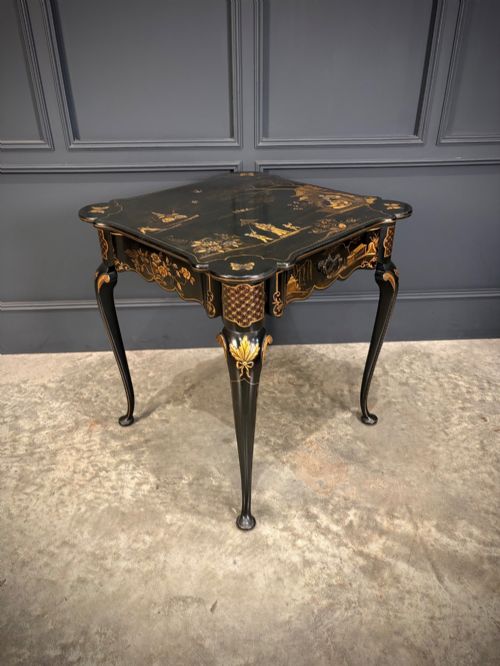

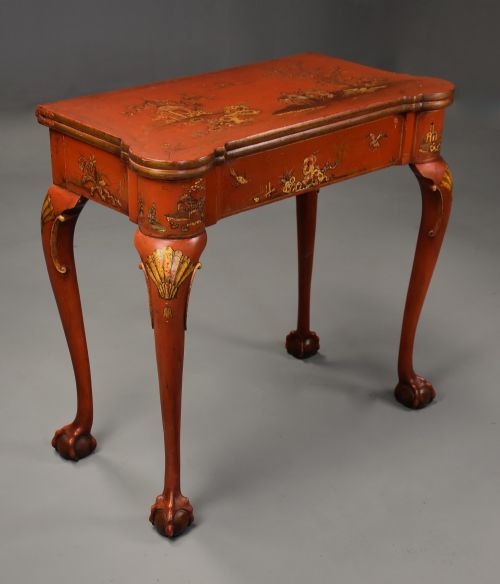


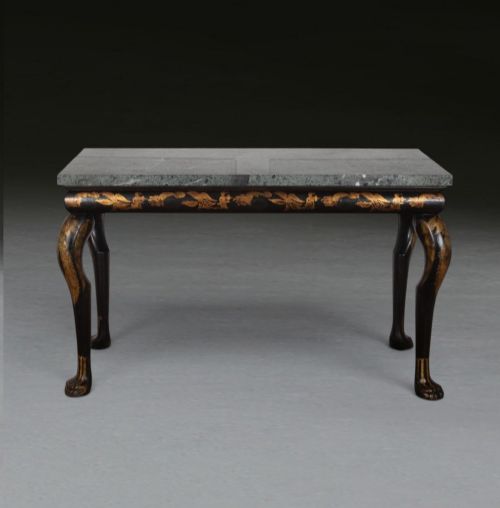


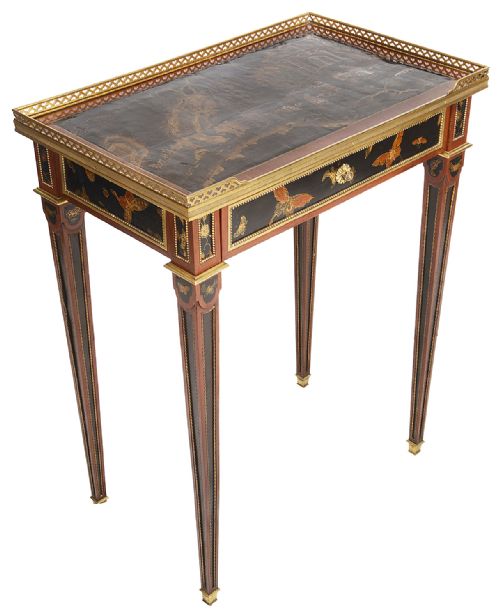


Chinoiserie Console Side Table
These chinoiserie console side table pieces bring fantastical painted scenes and rich lacquered surfaces into a room, offering both surface utility and decorative presence.
Chinoiserie Console Side Table
A chinoiserie console side table encompasses forms ranging from compact occasional pieces and games tables to half-moon console tables and grander serving pieces. These items serve functional roles as writing, dressing, or side surfaces while displaying distinctive decorative schemes rooted in European interpretations of East Asian design.
The selections span distinct periods including the eighteenth century, the Regency era, the Victorian period, and the early twentieth century. Common stylistic influences appearing alongside core chinoiserie include Regency, Sheraton, Aesthetic Movement, Brighton Pavilion Style, and Neoclassical designs.
Makers and designers drew upon diverse construction formats, producing drop-leaf tables, centre tables, and demi-lune consoles. Each variant provides a specific footprint suited to hallways, drawing rooms, or living spaces.
What varies in quality
The refinement of the painted decoration and the depth of the lacquered finish distinguish standard production from superior work. Hand-rendered details, intricate pictorial motifs, and the preservation of original paint schemes elevate the visual impact of a piece.
Structural integrity and the quality of secondary materials, such as integrated marble tops or brass accents, influence the overall calibre of the construction. Coherence between the chosen style period and the execution of the decorative scheme determines the success of the design.
Chinoiserie Console Side Table Retail Price Guide 2026
Typical asking prices for chinoiserie console side table among the pieces listed under this phrase on Sellingantiques today, from the lower quarter to the upper quarter. They describe what is for sale here now, not the wider market.
Listings feature woods, lacquer, painted finishes, brass, and marble across eighteenth-century, Regency, and twentieth-century periods.
The Chinoiserie Console Side Table Glossary
- Chinoiserie
- European artistic style reflecting Chinese and East Asian motifs, prominent in furniture decoration through lacquering and painting. This aesthetic dominated various periods from the eighteenth century onwards.
- Demi-lune
- A half-moon shaped table designed to sit flush against a wall as a console or side piece. This form allows for compact placement in narrow hallways or reception rooms.
- Faux bamboo
- Wood turned and painted to imitate real bamboo stalks, popular in Regency and Victorian furniture. This technique captures an exotic botanical aesthetic using standard cabinet timbers.
- Parcel-gilt
- Wood or gesso partially decorated with applied gold leaf to highlight carved details or structural lines. This method adds subtle brilliance against painted or lacquered surfaces.
- Occasional table
- A small, versatile table intended for flexible placement and light use within a room. These pieces function independently or alongside larger seating arrangements.
Chinoiserie Console Side Table: Frequently Asked Questions
Where should I place a console table?
These tables find natural placement in entrance halls, living rooms, or dining spaces where a shallow surface is practical.
Their narrow footprint, particularly in demi-lune formats, allows them to sit against walls without obstructing walkways.
How do I care for lacquer surfaces?
Lacquer requires gentle dusting with a soft, dry cloth and protection from direct sunlight and extreme humidity.
Avoiding harsh chemical cleaners preserves the integrity of the painted and varnished decoration over time.
What is a faux bamboo finish?
Faux bamboo involves turning solid wood on a lathe to replicate the segmented nodes of natural bamboo canes.
Artisans then paint these timbers, often in ochre or dark tones, to mimic oriental plant materials.
How do I distinguish nineteenth-century pieces?
Nineteenth-century examples often draw on Regency, Victorian, or Brighton Pavilion influences, combining painted wood with faux bamboo or lacquer.
Examining the construction methods and underlying timber helps separate these from later twentieth-century interpretations.