
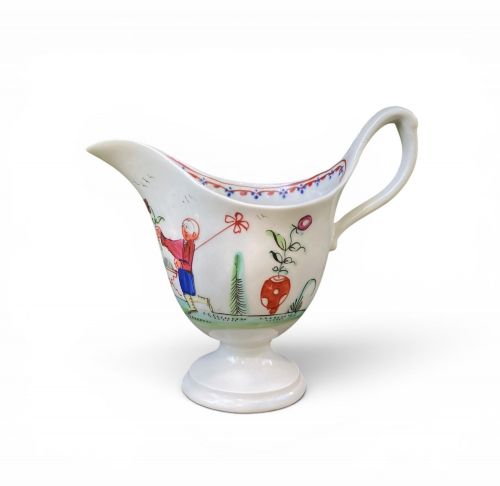
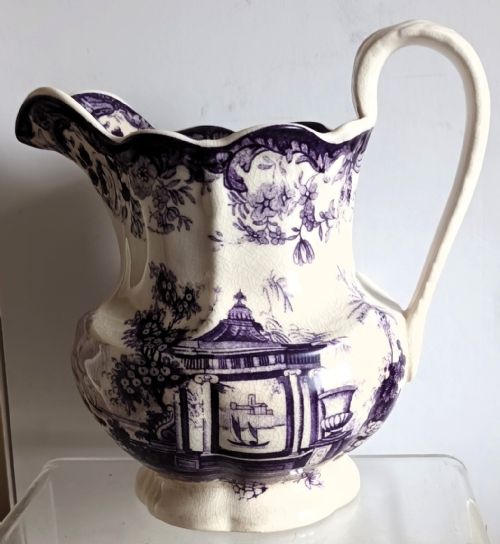


Chinoiserie Ceramic Pitcher
A chinoiserie ceramic pitcher brings painted oriental scenes into daily use, combining European pottery forms with decorative landscapes.
Chinoiserie Ceramic Pitcher
When you search for a chinoiserie ceramic pitcher, you encounter diverse forms ranging from individual jugs to large washbasin sets designed for nineteenth-century bedrooms. These vessels span multiple centuries, appearing in Dutch delftware, early porcelain, and robust ironstone bodies.
The decorative schemes draw heavily on oriental scenes, often featuring cobalt blue or magenta transfers alongside hand-painted highlights. Handles take imaginative shapes, including the characteristic dragon forms seen on hydra jugs and grotesque modelling.
Materials and production methods
Potters employed earthenware, ironstone, and porcelain as foundational bodies, applying tin-glaze or transparent lead glazes over painted or transferred motifs. Gold leaf occasionally accents the surface detail on pieces intended for formal display.
Transfer printing allowed workshops to apply complex oriental landscapes with precision before hand-colouring. High-temperature firing fixed the cobalt blue pigments firmly beneath or within the glaze layer.
Listings feature vessels spanning the seventeenth century through to the Edwardian era, utilising materials from tin-glazed earthenware to ironstone.
Judging quality in painted ceramics
Quality rests upon the clarity of the painted or transferred oriental scene and the crispness of the moulded body details. Sharp modelling on dragon handles and smooth glazing distinguish finer productions from standard wares.
The depth of the cobalt blue or the richness of the red scale pattern indicates the care taken during kiln firing. Weight and balance within the handle and spout construction further separate superior pieces from ordinary utility vessels.
Mason's Ironstone·New Hall
The Chinoiserie Ceramic Pitcher Glossary
- Ironstone
- A durable type of earthenware patented in the nineteenth century that resists chipping. It provided a strong body for large jugs and basin sets.
- Hydra jug
- A specific vessel shape featuring a serpent or dragon handle, frequently produced by nineteenth-century potteries with oriental decoration.
- Tin-glazed earthenware
- Pottery coated with an opaque white glaze containing tin oxide, providing a smooth surface for painted decoration in the Dutch delft tradition.
- Transfer printing
- A mechanical method of applying an engraved design onto ceramic surfaces using tissue paper and ink before glazing and firing.
Chinoiserie Ceramic Pitcher: Frequently Asked Questions
How do I date a chinoiserie pitcher?
Dating relies upon examining the ceramic body, glaze characteristics, and stylistic traits associated with periods from the seventeenth to the twentieth century. Ironstone pieces typically point toward the nineteenth century, while tin-glazed earthenwares align with earlier Dutch production.
Maker marks, where present underneath the base, provide further chronological indicators. Comparing the handle moulding and transfer technique against known period examples clarifies the era of manufacture.
Were these pitchers used for serving liquids?
Many pitchers functioned as utilitarian vessels for water or milk at the table before becoming decorative display items. Larger examples formed part of washbasin sets intended for bedroom ablutions.
The presence of staining or wear inside the bowl and spout often indicates practical use. Smaller porcelain and ironstone jugs served liquid contents during formal dining.
What is a hydra handle?
A hydra handle mimics the mythical serpent creature, curving away from the vessel body with scaled or moulded surface details. This specific handle style became popular on nineteenth-century ironstone jugs decorated with oriental scenes.
The boldness of the handle provides a sculptural contrast to the printed or painted landscapes on the pitcher body.