


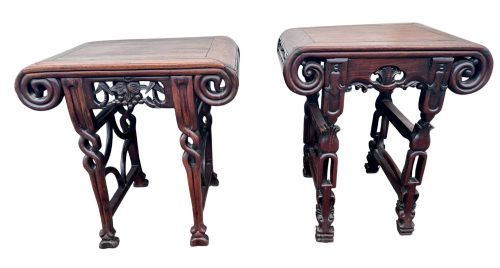
Chinese Rosewood Side Tables
Chinese rosewood side tables bring dense, figured timber and marble panels into a room, spanning low forms, nests, and tall stands.
Chinese Rosewood Side Tables
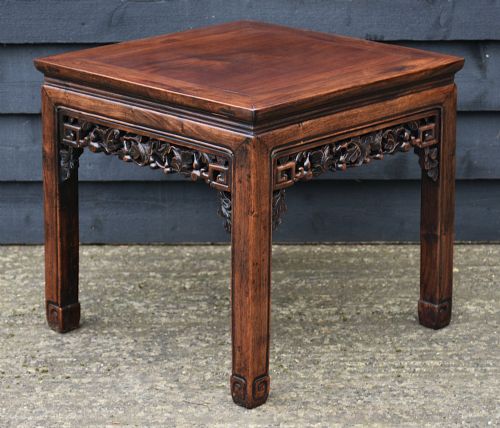
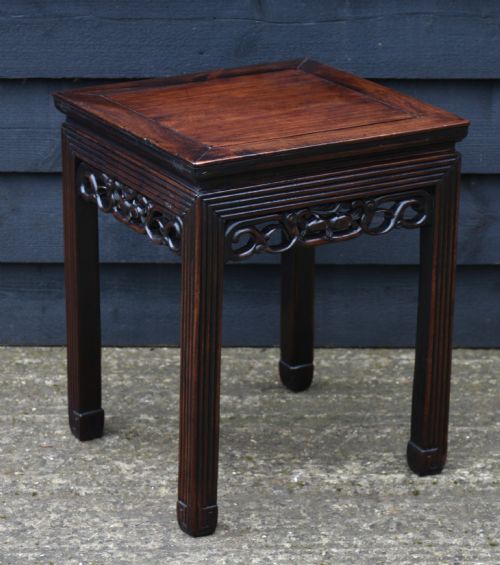
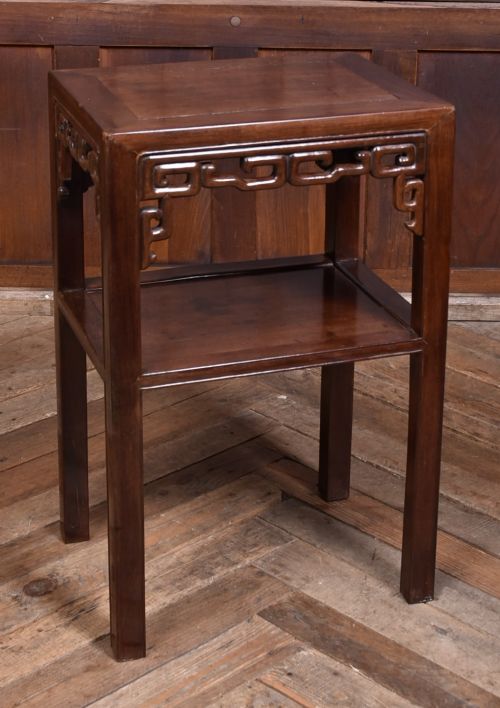
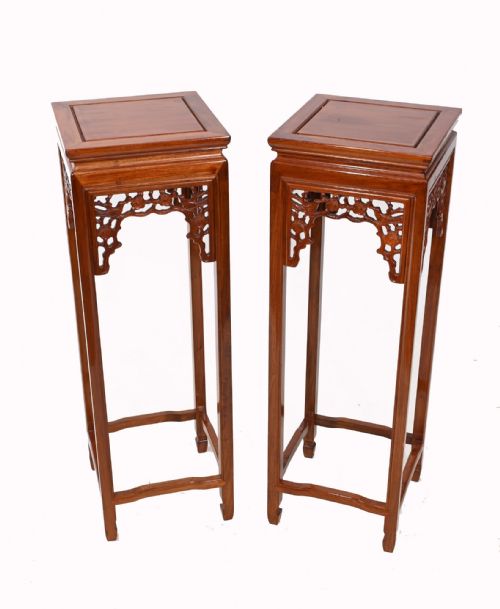
Chinese rosewood side tables encompass low tables, nests of four, altar tables, and tall plant or jardiniere stands produced across the nineteenth century and into the early twentieth century. These pieces reflect traditional forms and Qing dynasty styles, often serving functional roles for display or occasional use in domestic interiors.
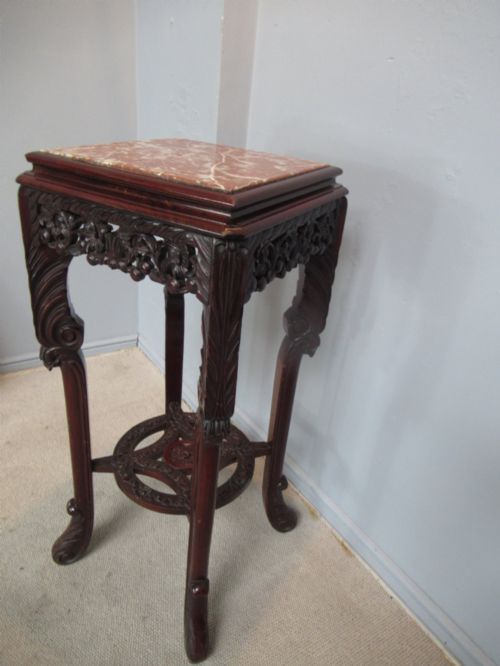
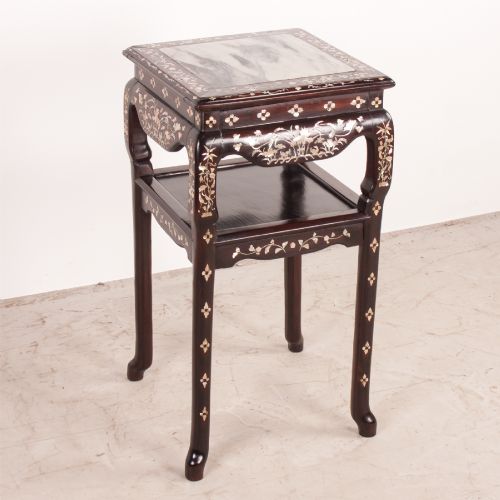
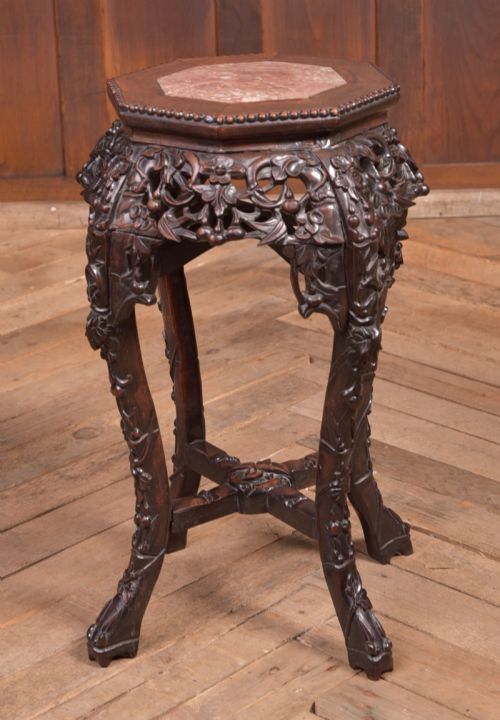
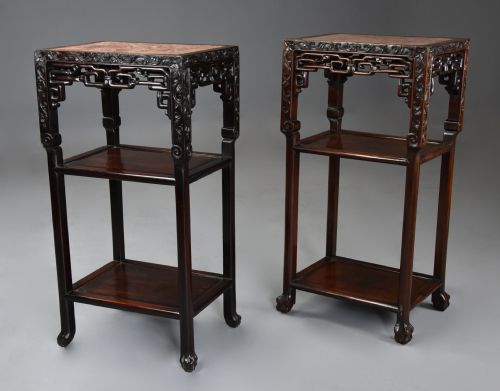
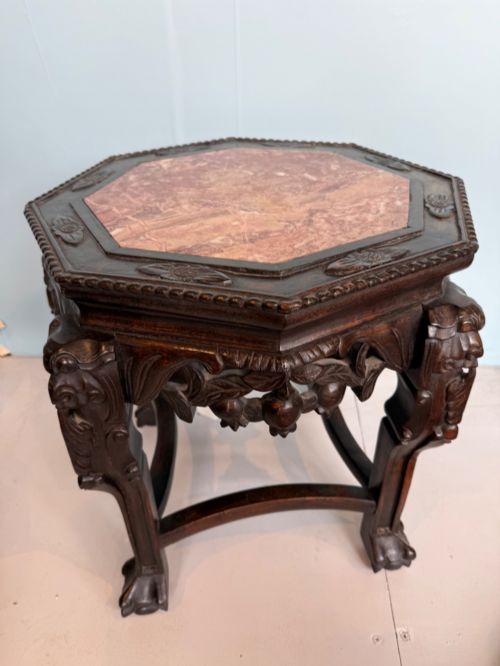
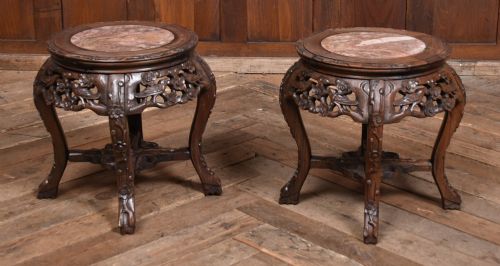
The version most frequently met on this page is the marble-top stand or low table, frequently constructed from dense tropical timbers like hongmu, padouk, or huali wood. Many examples incorporate carved detailing, inset porcelain panels, or mother-of-pearl inlay, linking them directly to traditional craftsmanship and export markets of the period.
How they were made
Construction relies on dense hardwoods such as rosewood, hongmu, and padouk, selected for weight, grain depth, and structural stability. Joinery techniques connect frames without excessive metal fastenings, allowing the heavy timber to endure decades of use.
Surface detailing combines hand carving with inset panels of rouge marble, porcelain, or mother-of-pearl. These contrasting materials are fitted flush into the wooden frames, requiring precision woodwork to accommodate natural timber movement.
Listings feature woods such as rosewood, hongmu, padouk, and huali wood alongside marble, porcelain, and mother-of-pearl inlay.
What varies in quality
Quality separates by the depth and crispness of the hand carving, alongside the density and grain selection of the rosewood or hongmu used in the frame. Superior examples display sharp undercutting in floral or dragon motifs and well-matched timber sections.
The integration of inset panels, such as rouge marble or porcelain, dictates the finish level of the piece. Tighter tolerances around stone inserts and consistent colour matching in mother-of-pearl inlay distinguish higher-grade tables from simpler utility stands.
The Chinese Rosewood Side Tables Glossary
- Hongmu
- Reddish-brown dense hardwood used in traditional Chinese furniture. It translates literally to red wood and provides exceptional weight and durability.
- Jardiniere stand
- Tall narrow table designed to hold heavy plant pots or ceramic jardiniere bowls. These pieces often feature inset marble panels to protect the wood from moisture.
- Nest of tables
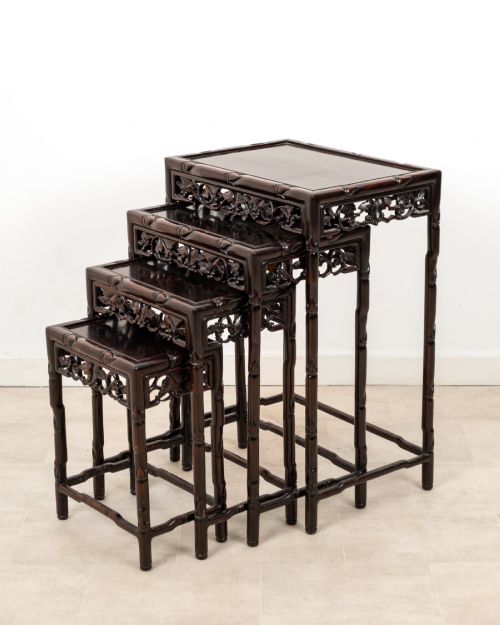
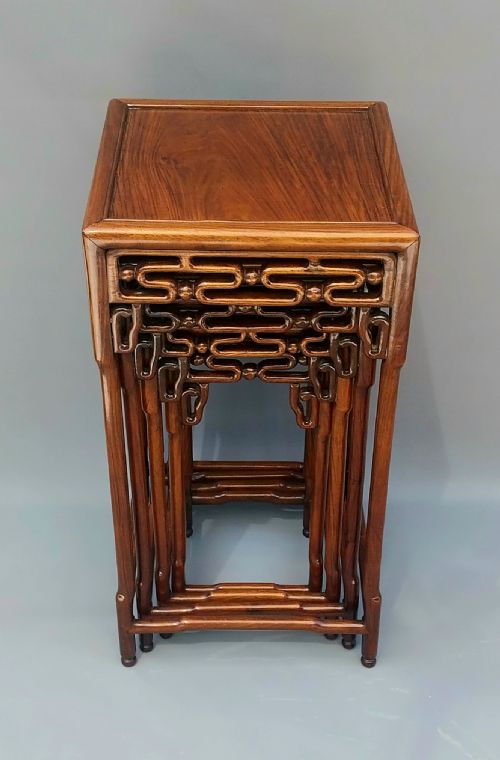
- Set of graduated tables designed to slide beneath one another for compact storage. They appear frequently in nineteenth-century hardwood formats.
- Huali wood
- Fragrant and highly figured Chinese hardwood prized for its grain pattern. It forms the primary material for many high-grade Qing dynasty stands.
Chinese Rosewood Side Tables: Frequently Asked Questions
How do I use a jardiniere stand today?
These tall stands suit corners or empty wall spaces to hold lamps, ceramic vases, or trailing plants.
Their narrow footprints make them practical for adding height and display surface without occupying excessive floor area.
What is the difference between hongmu and rosewood?
Hongmu is a specific Chinese category encompassing several dense, dark tropical hardwoods, including various species of rosewood.
While collectors often use the terms interchangeably, hongmu specifically denotes the heavy, highly prized timber traditional to Qing furniture.
Can I place hot items on marble top tables?
The inset marble panels provide a resilient surface that resists heat and moisture far better than bare timber.
This makes marble-top stands suitable for use as lamp tables or occasional drink surfaces.
How do nests of four tables function?
A nest comprises four graduated tables that stack neatly into the space of the largest single table.
They offer flexible surface space for entertaining, allowing users to pull out individual tables as needed.