


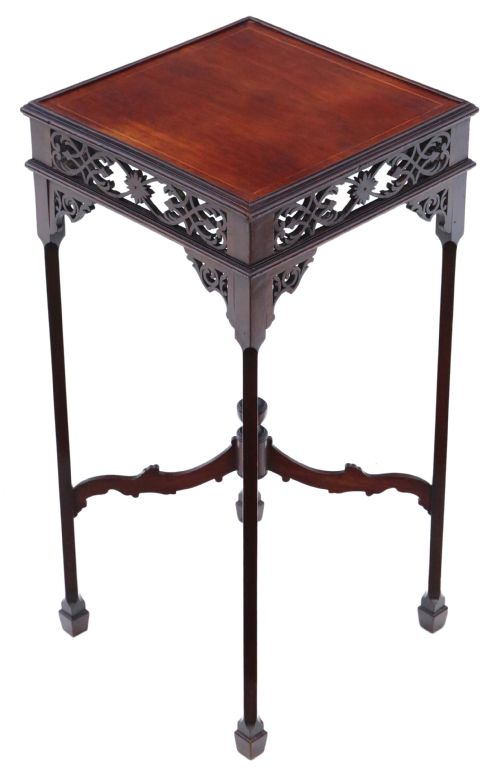


Pierced Carved Pedestal Stand
These pierced carved pedestal stand examples are elevated supports for plants and vessels, bringing carved detail and display height to a room.
Pierced Carved Pedestal Stand
A pierced carved pedestal stand serves primarily as a raised platform for holding planters, vases, and ornamental vessels within a room. These supports elevate decorative items to eye level, creating a focal point in a hallway, parlour, or reception space.
The versions most commonly met on this page originate from distinct regional traditions, spanning traditional Chinese workshop production to Anglo-Indian and British revival cabinet making. They take the form of plant stands, jardiniere supports, wine tables, and vase pedestals.
Makers produced these stands in various heights and top shapes, utilising circular and square surfaces to accommodate different decorative objects. The forms range from simple columnar supports to elaborate designs featuring pierced aprons and carved legs.
How they were made
Craftsmen built these stands using dense timbers such as mahogany, rosewood, padouk, teak, and general hardwood, alongside carved stone like alabaster and marble. The choice of material dictated the depth of carving achievable in the apron and legs.
Joinery techniques combined traditional framing with intricate hand piercing, where wood was cut through to create openwork patterns around the gallery and skirt. Carvers utilised chisels and gouges to render floral, foliate, and traditional motifs directly into the solid material.
Materials recorded across the selection include teak, rosewood, alabaster, marble, padouk, and general hardwood.
What varies in quality
The standard of a stand rests upon the crispness and depth of the hand carving rather than the mere presence of decoration. Superior examples display undercut work and clean piercing that reveals skilled craftsmanship in every panel.
Selection of timber also defines the grade of the piece, with dense, well-figured rosewood, padouk, and mahogany holding sharper details than softer or plainer hardwoods. The stability of the central column and the tight fit of the joints further separate standard production from finer work.
The Pierced Carved Pedestal Stand Glossary
- Pedestal
- A structural support or base that elevates a vase, statue, or plant stand above floor level. These columns provide stability while lifting the decorative object into prominence.
- Pierced
- A decorative technique involving cutting completely through the material to create openwork patterns and negative space. This method lightens the visual weight of heavy timber frames.
- Jardiniere
- A large decorative pot or stand designed specifically to hold indoor plants and floral arrangements. They often sit upon dedicated pedestals to showcase trailing foliage.
- Padouk
- A heavy tropical hardwood valued for its durability and rich colour range. Craftsmen utilised this dense timber for intricate oriental carving.
- Alabaster
- A fine-grained, translucent stone used for carving decorative objects and architectural stands. Its smooth surface accepts delicate sculptural detail.
Pierced Carved Pedestal Stand: Frequently Asked Questions
What is a pedestal stand used for?
These stands serve as elevated platforms for displaying heavy vases, ceramic planters, and sculptural ornaments. They lift decorative objects off the floor to command attention in a room.
Historically, homeowners placed them in corners or bay windows to showcase prized botanical specimens and imported porcelain vessels. Their compact footprints allow them to occupy tight spaces without overwhelming the surrounding furniture.
How do I care for a hardwood stand?
Maintain timber surfaces by dusting regularly with a soft, dry cloth to prevent grit accumulation within the deep carvings. Avoid placing stands near direct heat sources or strong sunlight, which can dry out dense woods like mahogany and rosewood.
Apply a minimal amount of appropriate furniture wax only when the timber appears dry, buffing it gently to preserve the natural lustre. Stone elements like alabaster require careful cleaning with a dry or barely damp cloth to protect the softer mineral structure.
How do I identify Chinese export stands?
Chinese export stands often feature dense tropical hardwoods such as padouk or rosewood, combined with traditional mortise and tenon joinery. The carving typically includes pierced aprons depicting floral motifs or geometric patterns native to Qing dynasty production.
These pieces demonstrate deep undercutting in the wood and specific proportions suited for elevating porcelain fish bowls and vases. Their structural weight and distinctive grain patterns distinguish them from later European revival interpretations.
Where should I place a pedestal stand?
Position a pedestal stand in an empty corner, beside a fireplace, or framing a doorway to add height and vertical interest to an interior scheme. They function well as standalone display pieces carrying a single sculptural vase or potted plant.
Ensure the location offers enough clearance to protect delicate pierced carvings and projecting bracket feet from passing foot traffic. Placing them away from heavy footfall preserves the intricate openwork edges of the aprons.