



Carved Hardwood Bonsai Stand
A carved hardwood bonsai stand lifts a plant or vessel to command the room through dense timber and patient chisel work.
Carved Hardwood Bonsai Stand
When you search for a carved hardwood bonsai stand, you look at elevated platforms designed to display plants, urns, and scholars' objects. These pieces originate primarily from the nineteenth and early twentieth centuries, spanning the Victorian era and the Qing Dynasty.
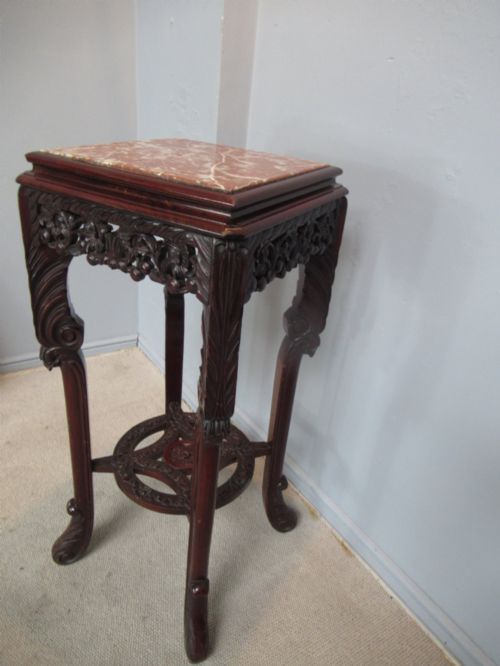
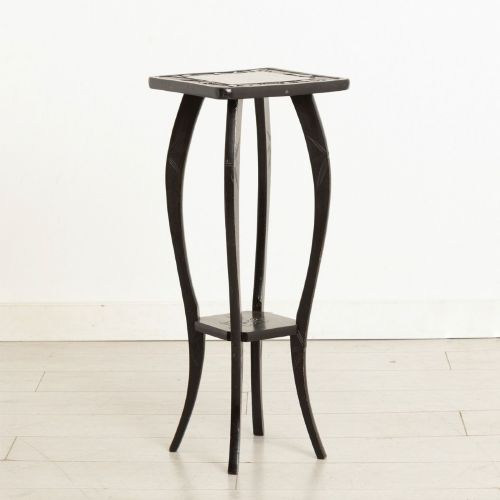
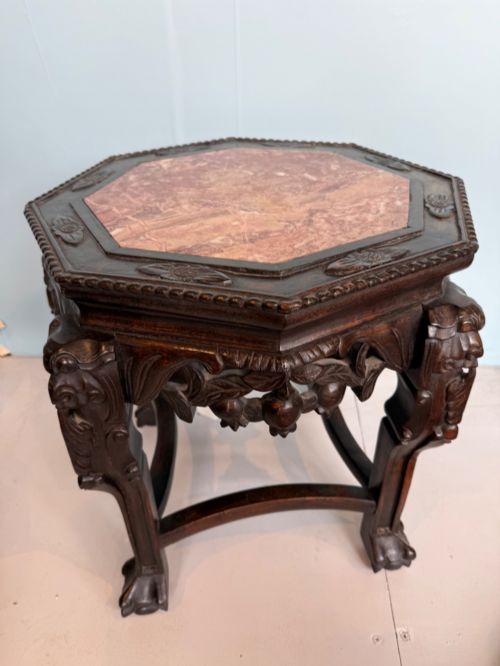
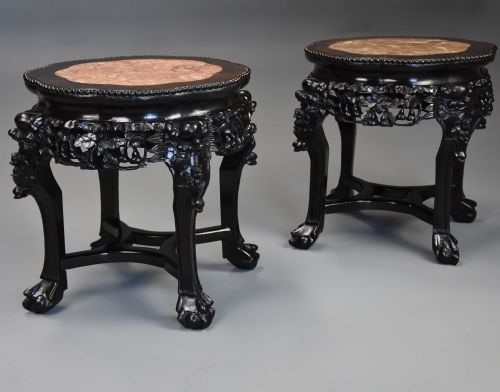
You meet various forms on this page, including low tables, jardiniere stands, pedestals, and kang tables. Chinese export pieces and Japanese Meiji or Taisho examples dominate the selection, often featuring inset marble tops.
How they were made
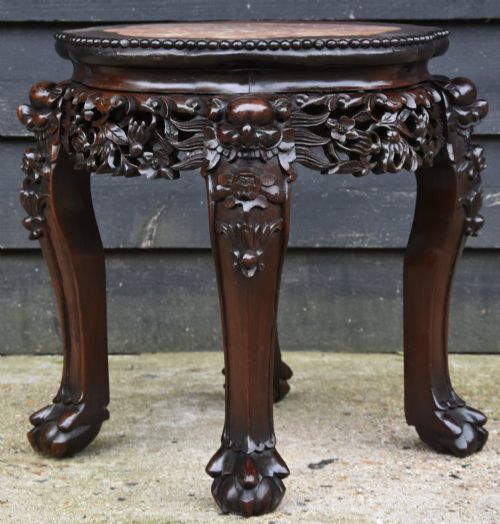
Maker-craftsmen utilised dense Asian timbers such as rosewood, hongmu, padouk, and huali wood to build structural rigidity without heavy profiles. These durable woods accept deep, crisp carving along aprons and legs.
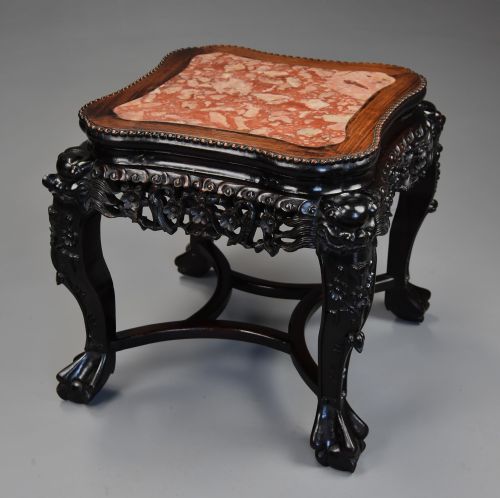
Many platforms incorporate cool stone surfaces, setting smooth marble panels flush into the wooden frame to contrast with carved floral or zoomorphic motifs.
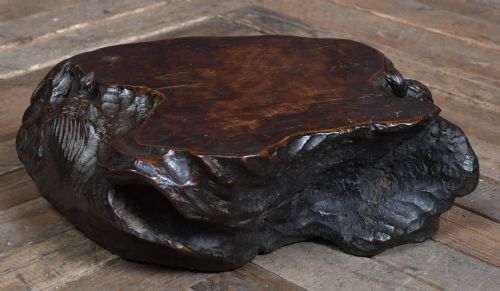
One determined turtle stand patiently holds up the botanical world in carved wood.
What varies in quality
Depth and crispness of the carving distinguish standard production from superior examples, where undercut foliage and animal forms show distinct muscle and petal definition. Heavier, denser timbers like hongmu and padouk generally command finer handwork than ebonised softer woods.
The integration of the marble insert affects overall balance, with tight joints and well-figured stone indicating higher workshop standards during the nineteenth century.
Liberty of London
The Carved Hardwood Bonsai Stand Glossary
- Hongmu
- A traditional Chinese term for dense red hardwoods. It translates literally as red wood and denotes heavy, durable furniture timber.
- Padouk
- A sturdy tropical hardwood displaying rich reddish-brown tones. Craftsmen select it for its stability under intricate carving.
- Jardiniere stand
- A tall or low table intended to support a large plant pot or flower bowl. These objects elevate greenery for interior display.
- Kang table
- A low platform traditionally used on a heated brick bed in China for dining or writing. Smaller versions function effectively as display tables.
- Meiji period
- The era of Japanese history spanning from eighteen sixty-eight to nineteen twelve. Pieces from this time often exhibit naturalistic animal and plant motifs.
Carved Hardwood Bonsai Stand: Frequently Asked Questions
What is a carved hardwood bonsai stand used for?
These platforms elevate bonsai trees, ceramic vases, and bronze urns to give them prominence within a room. Collectors also utilise smaller versions as lamp tables or occasional display surfaces.
Historically, they lifted prized botanical specimens off the floor to protect them and aid viewing during quiet contemplation.
How do I tell Chinese and Japanese stands apart?
Chinese pieces from the Qing Dynasty often employ dense hongmu or padouk with formal floral carvings and marble inserts. Japanese Meiji period examples frequently feature naturalistic subjects like turtles and distinct regional joinery.
Examining the timber density and the style of the relief carving usually clarifies the geographic origin.
Are marble inserts original to these stands?
Most marble panels fitted into nineteenth-century plant and urn stands are original to the piece. Makers set them flush into the hardwood frame to provide a cool, stable surface for heavy ceramic planters.
Variations in stone grain and tight fitting indicate period execution rather than later replacement.
How do I care for a hardwood display stand?
Maintain the timber by dusting with a dry cloth and avoiding placement near direct heat sources or strong sunlight. These precautions protect the dense grain and prevent the wood from splitting.
Applying a light, appropriate wax occasionally helps nourish historic rosewood and padouk surfaces without building up residue.