

Chinese Porcelain Urn
These Chinese porcelain urn pieces, ranging from ginger jars to grand floor vases, bring centuries of ceramic artistry and vibrant enamel palettes directly into contemporary spaces.

Chinese Porcelain Urn
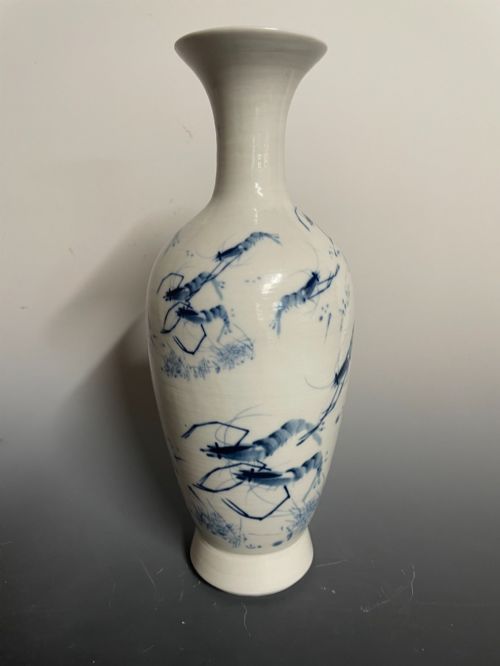
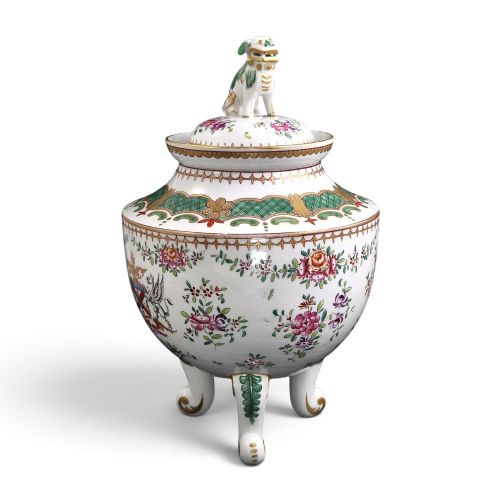
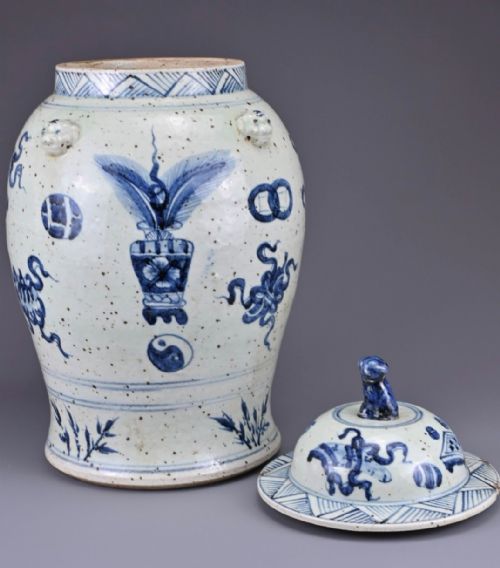
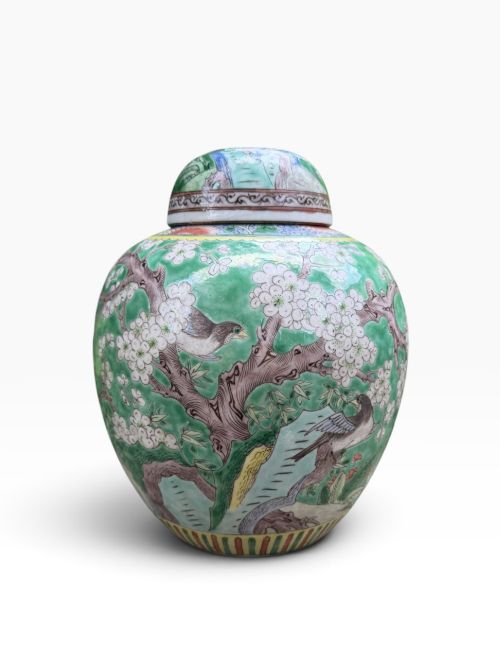
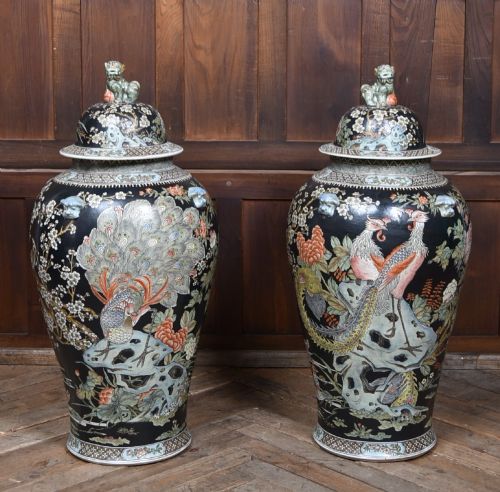
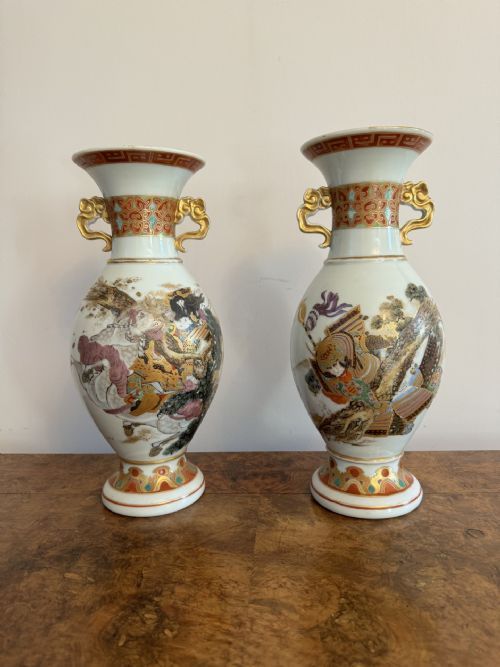
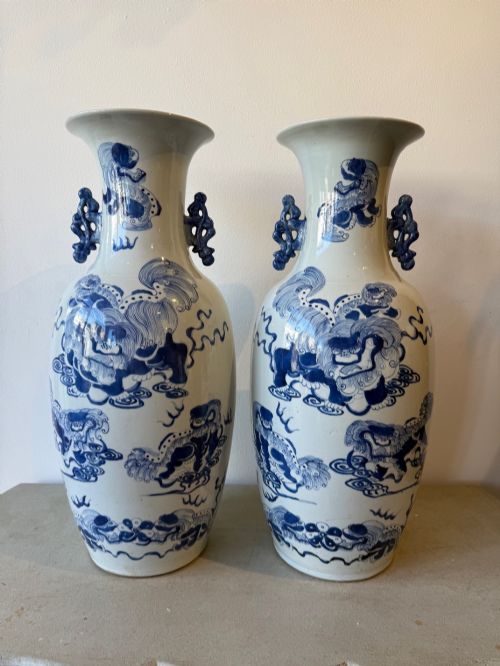
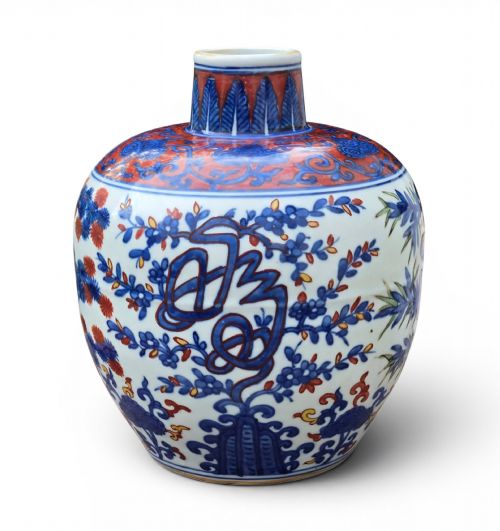
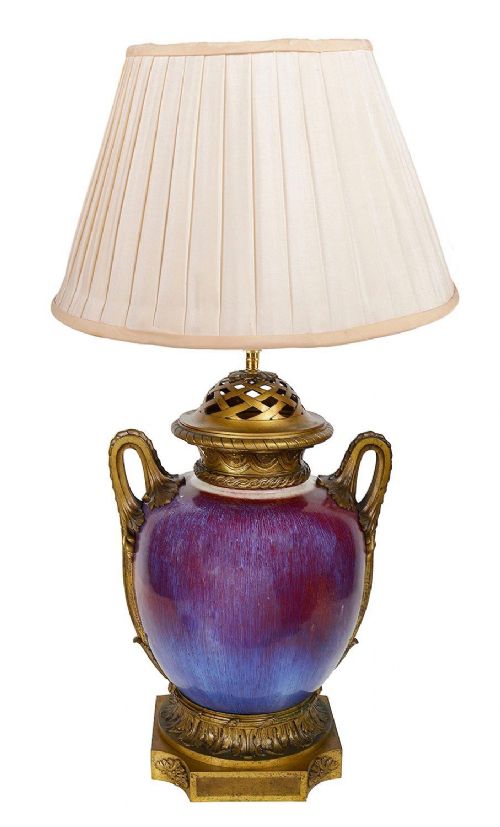
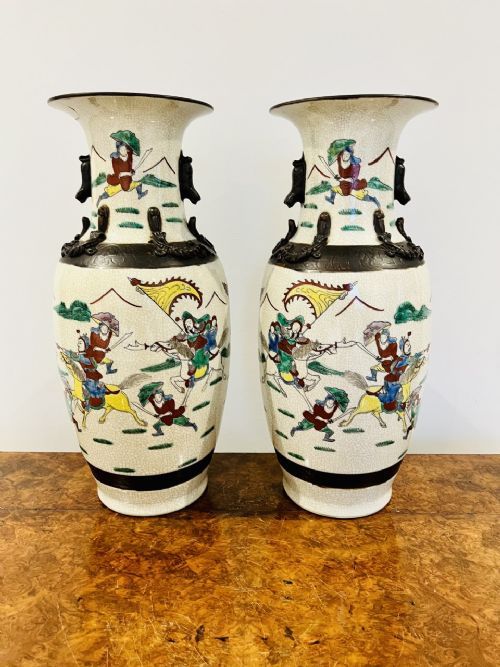
When you examine a Chinese porcelain urn on this page, you are looking at vessel forms that span from ginger jars and lidded jars to monumental floor vases and table lamps. The selection leans heavily toward nineteenth-century Qing Dynasty examples, alongside eighteenth-century works and later Republic period creations.
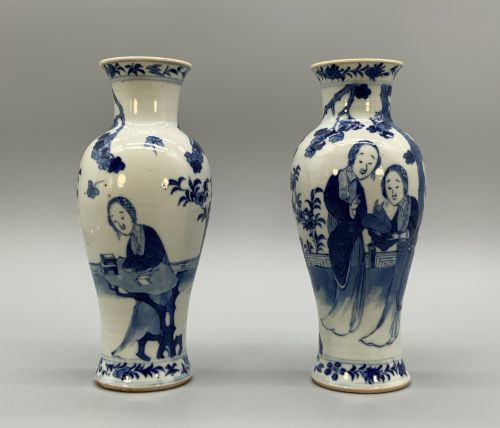
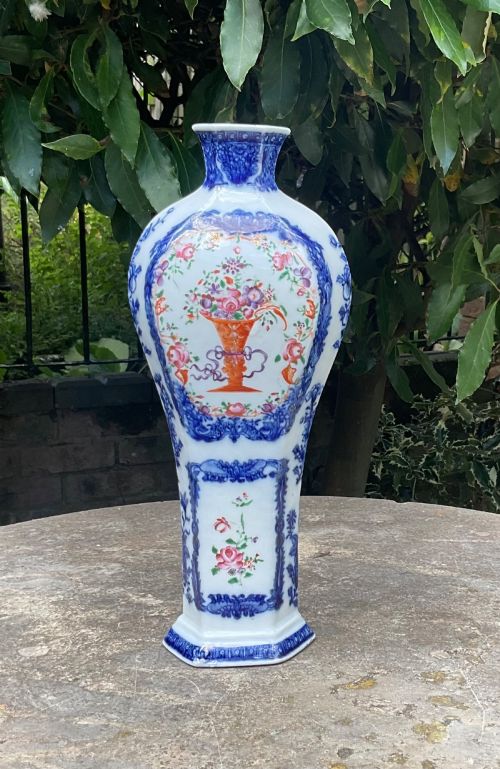
Makers often drew upon traditional shapes such as baluster vases, moon flasks, and square vessels with taotie rings. Many of these pieces arrive paired as matching sets, originally intended to balance formal interiors.
How they were made
Potters shaped fine ceramic and porcelain bodies before applying cobalt glaze, enamel colours, and delicate gold leaf detailing. Master craftsmen then fired these vessels at high temperatures to vitrify the clay and set the underglaze decorations.
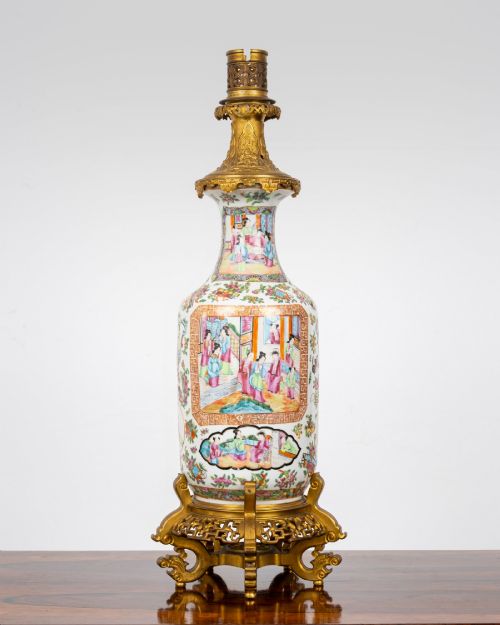
Certain examples incorporate brass, ormolu mounts, or fitted fabric elements added during later European adaptations, particularly when pieces were converted into table lamps.
Materials recorded across the archive include cobalt glaze, enamel, gold leaf, brass, and cracked ceramic glazes.
What varies in quality
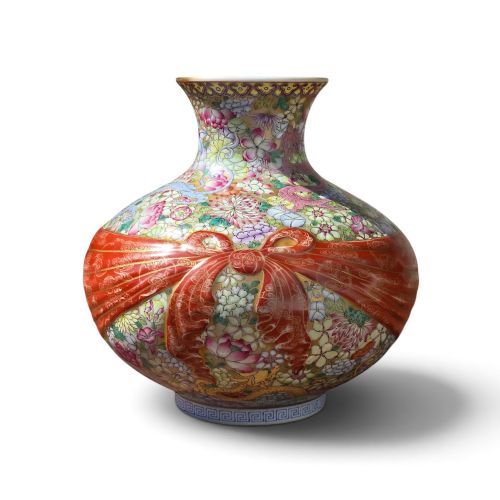
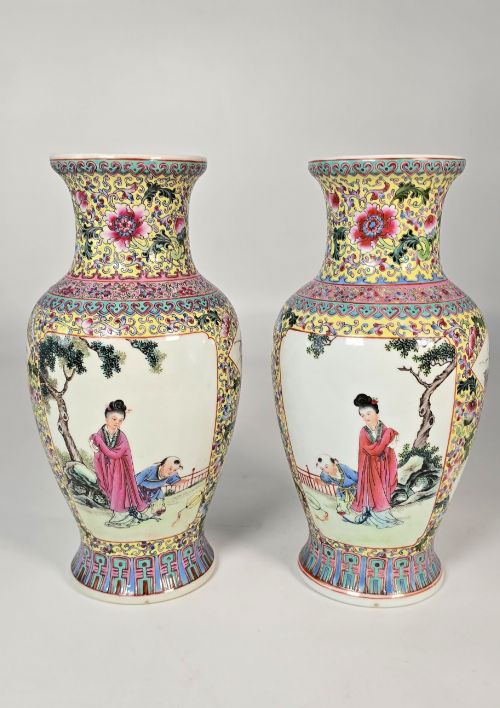
The distinction between ordinary and exceptional works rests upon the precision of the hand-painted brushwork and the depth of the glaze. Pieces featuring intricate famille rose, millefleurs, or carefully controlled underglaze blue demand significantly higher skill from the artisan.
Compositional balance and the crispness of imperial or six-character marks also separate standard decorative wares from master-level pieces executed during significant dynastic periods.
Samson Paris·Gao Hengsheng
The Chinese Porcelain Urn Glossary
- Famille rose
- A major palette of opaque enamel colours introduced in the Qing Dynasty, dominated by pink and rose tones. It allowed artists to render soft shading on floral and figural scenes.
- Ginger jar
- A wide-shouldered, high-bellied storage jar with a fitted cover, originally designed for spices or oil. Later periods turned these practical vessels into decorative centrepieces.
- Cobalt glaze
- A deep blue mineral pigment applied beneath the transparent glaze before firing. This technique produces the characteristic rich blue and white contrast seen on traditional jars.
- Celadon
- A pale green or grey-green transparent glaze that imitates the appearance of jade. Potters created this finish through iron oxide in a reducing atmosphere.
- Doucai
- A decorative technique combining underglaze blue outlines with overglaze enamel infill. Artisans fired the piece twice to achieve the distinct layered effect.
Chinese Porcelain Urn: Frequently Asked Questions
What are Chinese porcelain urns used for?
These vessels served diverse functions historically, ranging from the storage of tea and spices in covered ginger jars to grand ornamental displays in palace rooms. Today, collectors primarily display them as standalone decorative floor jars, mantel centerpieces, or converted lamp bases.
Their substantial forms and hand-painted narratives make them focal points in traditional and eclectic interiors alike.
How do you style a ginger jar?
Ginger jars work effectively when grouped in pairs on sideboards, consoles, or tables where their symmetry can be appreciated. They also function as standalone statements on bookshelves or hearths.
When fitted as table lamps, they introduce both ambient illumination and traditional ceramic pattern into a room.
How can I tell the period of a vase?
Dating relies on examining the characteristics of the porcelain body, the specific tones of the underglaze blue or enamel palettes, and stylistic nuances of the painting. Qing Dynasty and Republic period pieces each exhibit distinct brushwork conventions and glaze textures.
Base marks, where present, offer further clues regarding reign periods and workshops, though these require careful comparison against verified examples.
What is the difference between famille rose and famille verte?
Famille rose relies primarily on an opaque pink or purple enamel introduced during the eighteenth century, allowing for delicate gradients and softer floral tones. Famille verte, by contrast, is defined by a vivid green-dominated palette established earlier in the Qing Dynasty.
Both styles utilise overglaze enamels, but their distinct colour signatures create entirely different visual moods on the porcelain surface.