





Victorian Ormolu Vase
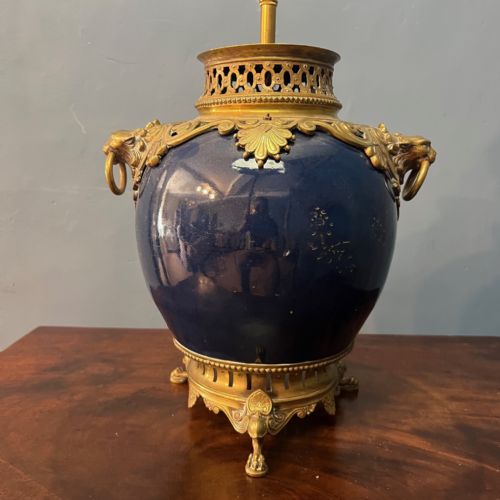
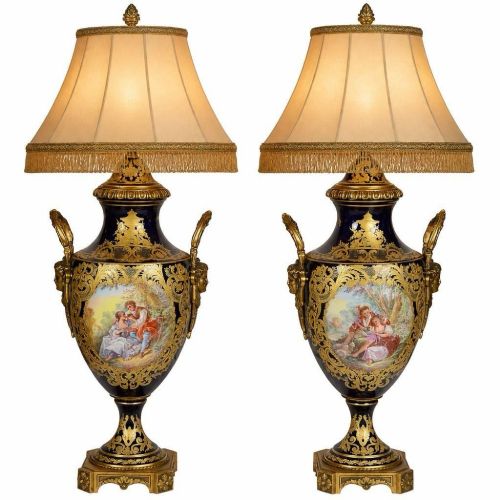
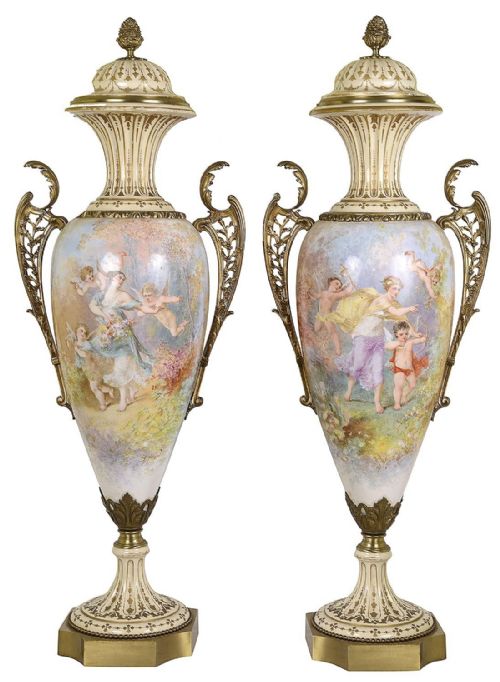
A victorian ormolu vase brings heavy gilt bronze and vibrant porcelain together in objects made for display during the nineteenth century.
Victorian Ormolu Vase
A victorian ormolu vase combines cast metal mounts with ceramic bodies spanning the nineteenth century. These objects frequently appear as matched pairs or integrated into table lamps and clock garniture sets.
Makers drew on French Rococo Revival, Neoclassical, and Chinoiserie styles. Forms include tall lidded vessels, ewers, and centrepiece bowls created for nineteenth century drawing rooms.
The material combination joins gilt bronze or brass with porcelain, crystal, and enamel. Many pieces incorporate Sevres style porcelain, Chinese blue ground ceramics, and Cantonese or Rose Medallion decoration.
How they were made
The manufacturing process required skilled metalwork alongside ceramic production. Gilt bronze and ormolu mounts were cast and chased by hand before being fixed to porcelain bodies.
Glass and crystal components were shaped and polished to fit heavy metal bases and rims. Champleve enamel and hand-painted porcelain added detailed colour and pattern to the finished forms.
Victorian Ormolu Vase Retail Price Guide 2026
Typical asking prices for victorian ormolu vase among the pieces listed under this phrase on Sellingantiques today, from the lower quarter to the upper quarter. They describe what is for sale here now, not the wider market.
Object forms span table lamps, clock garniture sets, ewers, candelabras, centrepieces, and decorative urns dating up to 1900.
What varies in quality
The crispness of the bronze casting and the depth of the gilding set the standard for metal mounts. Finer examples show sharp chasing work on the leaves and scrollwork rather than soft, flat surfaces.
Ceramic bodies range from standard commercial output to hand-painted Sevres style porcelain and rich Chinese monochrome glazes. The integration between the ceramic vessel and the metal mount reveals the maker's skill.
The Victorian Ormolu Vase Glossary
- Ormolu
- Gilt bronze created by applying a mercury and gold amalgam to a bronze base. This technique produces a durable golden finish seen on nineteenth century mounts.
- Gilt bronze
- Metal alloy coated with a layer of gold. It provides the heavy structural framework and decorative mounts for many decorative vessels.
- Champleve enamel
- Enamelling technique where troughs are dug into metal and filled with vitreous paste before firing. This method creates colourful patterns across decorative hardware.
- Sevres style
- Aesthetic inspired by the French porcelain factory, featuring painted panels and rich background colours like bleu celeste. It defined much of nineteenth century luxury taste.
- Garniture set
- Group of decorative vessels, typically a clock flanked by vases or candelabra, designed to match. They sat on mantelpieces in nineteenth century interiors.
Victorian Ormolu Vase: Frequently Asked Questions
What are ormolu vases made of?
These decorative objects combine a ceramic or glass body with cast metal mounts. The metal portions utilise gilt bronze, brass, or ormolu to frame the porcelain.
Additional materials include champleve enamel, crystal, and silk elements. Many pieces pair European metalwork with imported Chinese porcelain.
How do I style a vase at home?
Large nineteenth century vessels suit prominent positions on sideboards, mantelpieces, or large tables. Pairs look effective when balanced symmetrically within a room.
Many examples have been adapted into table lamps, allowing them to function as practical lighting while retaining their period appearance.
How do I date these pieces?
Dating relies on stylistic clues and material combinations from the nineteenth century. Periods like the 1870s and 1880s saw specific revivals of Rococo and Neoclassical forms.
Factory styles, such as Sevres or Chinese export porcelain mounted in France, help narrow the era of production.
Are these vases functional?
While originally created as ornamental display items or centrepieces, many have been converted for modern use. Some function as lamps with integrated electrical wiring.
Lidded vessels and open bowls remain primarily decorative objects meant to showcase craftsmanship and material quality.