



Chinese Porcelain Sculpture
Chinese porcelain sculpture pieces bring modelled forms into a room through figures, birds and animals made in ceramic.
Chinese Porcelain Sculpture
Chinese porcelain sculpture encompasses figures, figurines and animal studies shaped from ceramic and porcelain. These objects arrive from various periods including the eighteenth and nineteenth centuries, spanning Qing Dynasty pieces and Ming style works.
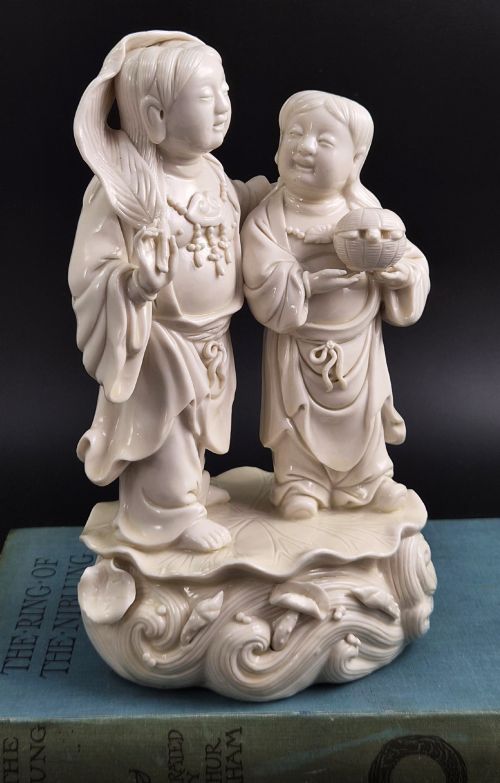
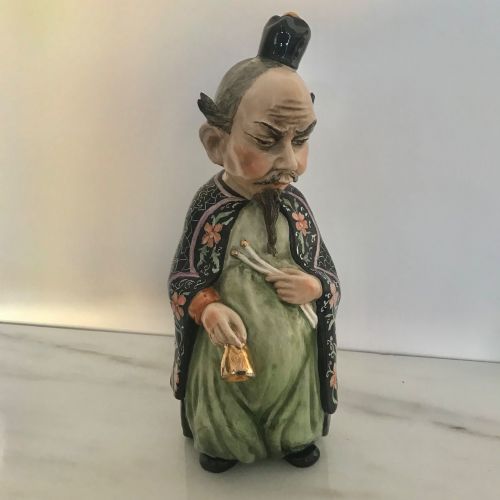
The selections on this page feature decorative figures such as immortals, luohans, and Hehe Erxian figure groups alongside pairs of ducks, parrots, Foo dogs, cockerels, dogs, tigers, apes, goats and pheasants. Forms range from turquoise glazed studies to hand enamel decorated pieces and famille rose or famille verte examples.
Buyers seeking chinese porcelain sculpture will encounter works fashioned in both Blanc-de-Chine and Shiwan pottery traditions. These figures combine moulded or modelled ceramic bodies with lead glazes, sancai glazes, and overglaze enamel painting.
How they were made
Potters shaped these sculptures using ceramic and porcelain bodies, frequently applying monochrome lead glazes or sancai glazes in turquoise and other naturalistic tones. Figures like the Dehua Blanc-de-Chine group rely on smooth white porcelain without additional pigment.
Wood elements occasionally support these porcelain figures, serving as fitted bases for seated apes, dogs, or immortal statues. Artisans shaped animals and deities by hand or in moulds before firing them in kilns.
Chinese Porcelain Sculpture Retail Price Guide 2026
Typical asking prices for chinese porcelain sculpture among the pieces listed under this phrase on Sellingantiques today, from the lower quarter to the upper quarter. They describe what is for sale here now, not the wider market.
Several animals sit patiently awaiting their new homes, including turquoise cockerels, green-glazed goats, and a solitary pottery tiger.
What varies in quality
Quality rests upon the precision of the modelling and the control of the glaze during firing. Superior figures display crisp facial expressions, detailed feather or fur rendering, and even glaze coverage without distracting pooling or dry spots.
The application of enamel and gilding dictates the visual success of painted pieces. Finer examples show careful brushwork on robes and plumage, whereas lesser items display rushed or heavy-handed pigment application.
The Chinese Porcelain Sculpture Glossary
- Blanc-de-Chine
- A pure white Chinese porcelain originating from Dehua, highly regarded for its smooth glaze and unpainted sculptural forms. This material defines figures such as the Hehe Erxian group.
- Famille Rose
- A palette of opaque pink and rose enamels introduced during the Qing Dynasty, used to colour porcelain figures and birds. The style allows for subtle tonal gradations in robes and plumage.
- Sancai
- A three-colour glaze tradition, typically amber, green and cream, applied to pottery and porcelain. It appears on Ming style figures such as decorative ducks.
- Foo Dog
- A traditional guardian lion depicted in pairs guarding doorways or sacred spaces. These ceramic sculptures combine fierce expressions with stylized manes.
Chinese Porcelain Sculpture: Frequently Asked Questions
How do I date Chinese porcelain figures?
Dating relies on stylistic markers, glaze characteristics, and the handling of the ceramic body. Qing Dynasty pieces often display specific enamel palettes or monochrome glazes associated with particular centuries.
Comparison with documented examples helps establish whether a piece belongs to the eighteenth or nineteenth century. Glaze depth and potting techniques offer further clues to age.
Where should I display these sculptures?
These figures suit tabletops, sideboards, and dedicated display cabinets where their glaze colours can catch ambient light. Placing them away from direct foot traffic protects protruding elements like ears and tails.
Pairs of animals or figures look balanced when arranged symmetrically on mantelpieces or console tables. Single deities or studies make strong focal points on low surfaces.
What is the difference between Blanc-de-Chine and enamelled pieces?
Blanc-de-Chine relies entirely on the interplay of light across a white porcelain body and clear glaze. These sculptures depend on sculptural form rather than colour for their impact.
Enamelled pieces utilise overglaze pigments to depict patterned robes, feathers, and facial details. This adds vibrant colour but shifts the aesthetic away from monochrome purity.
How do I clean porcelain sculptures safely?
Dusting with a soft, dry brush removes surface particles without risking the glaze or enamel. Avoid using liquid cleaners unless absolutely necessary, as moisture can harm aged ceramic bodies.
Handle figures firmly by their main bodies rather than protruding extremities like beaks or tails. Wooden bases, if present, should be cleaned separately from the porcelain.