
Chinese Porcelain Bowl
A chinese porcelain bowl brings centuries of kiln artistry to the table, offering lasting utility and visual weight.
What these pieces are
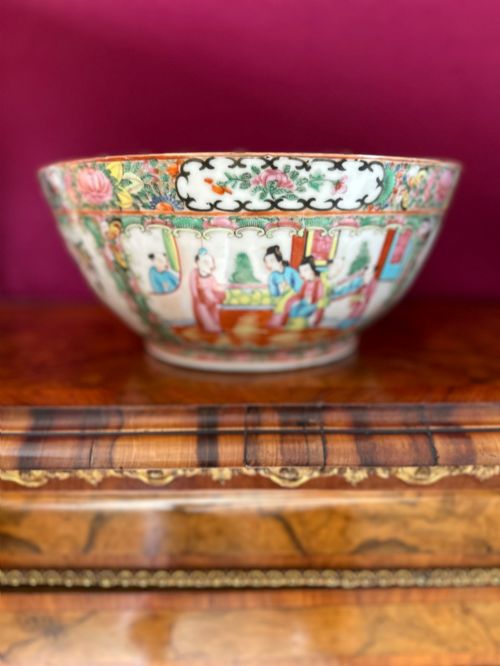
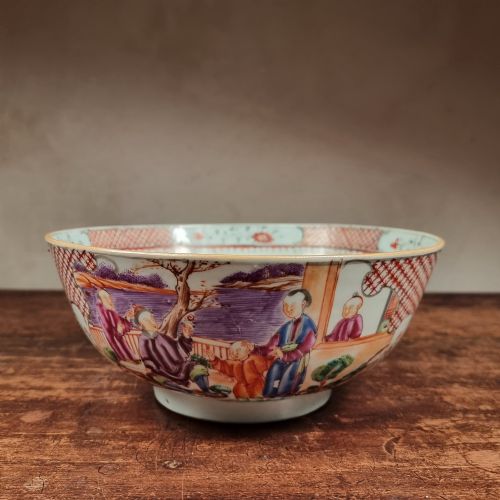
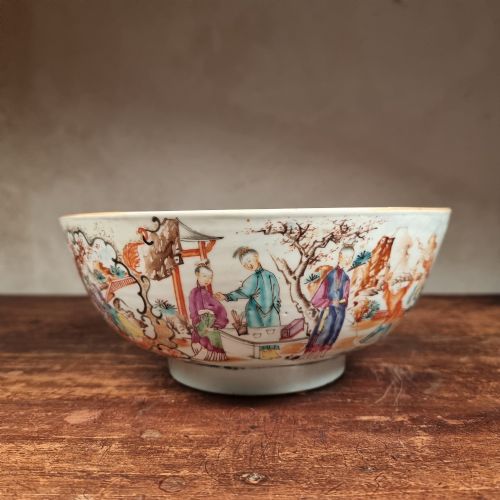
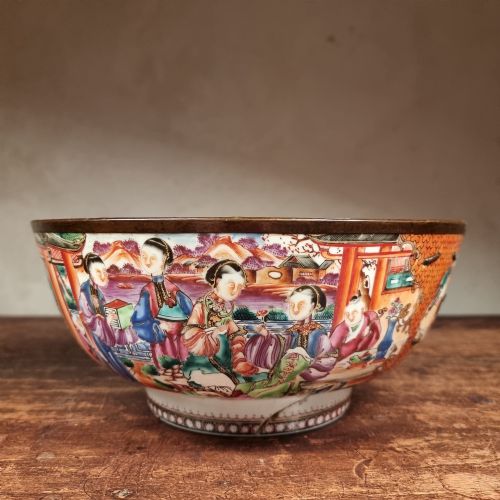
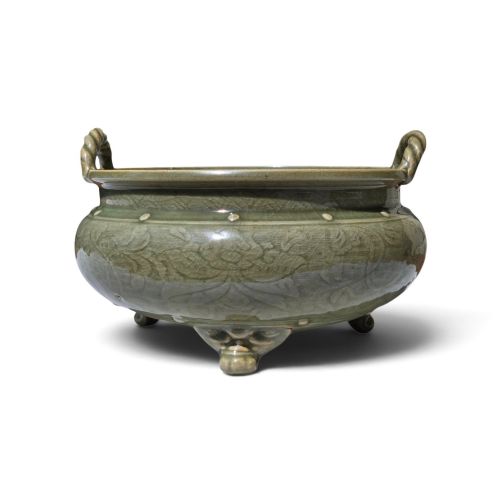
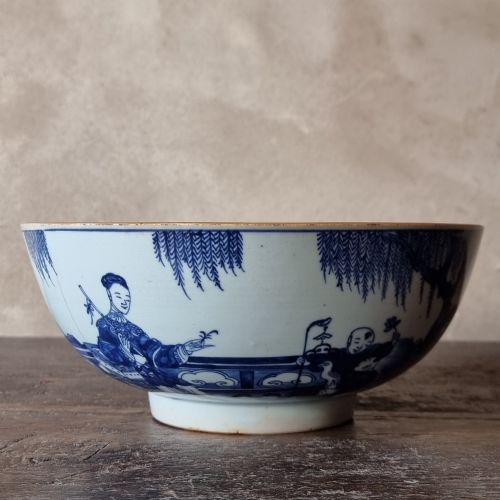
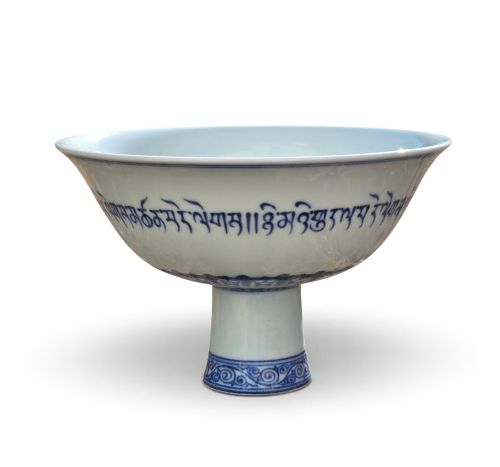
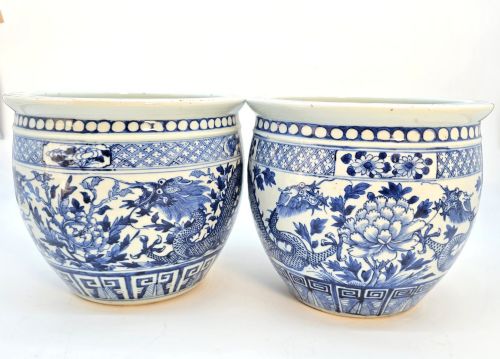
A chinese porcelain bowl encompasses everything from small tea cups and shallow dishes to massive punch bowls and fish bowl planters. The pieces on this page span several centuries, reaching from the Ming and Qing dynasties through the Georgian period.
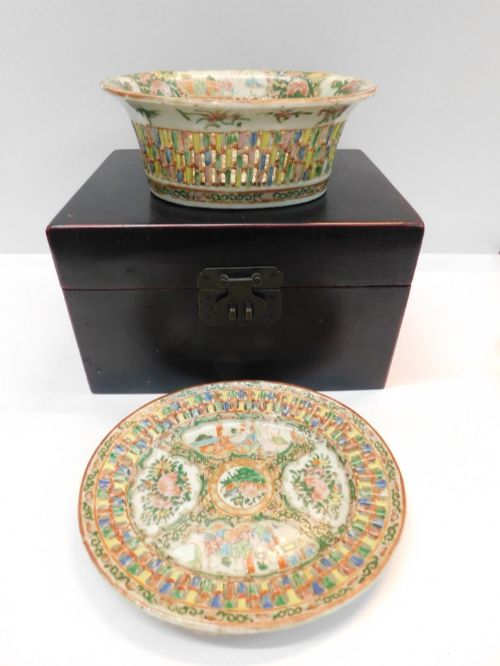
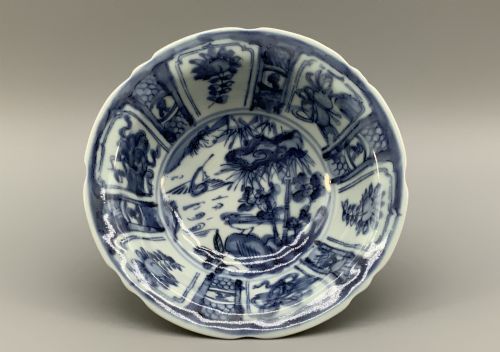
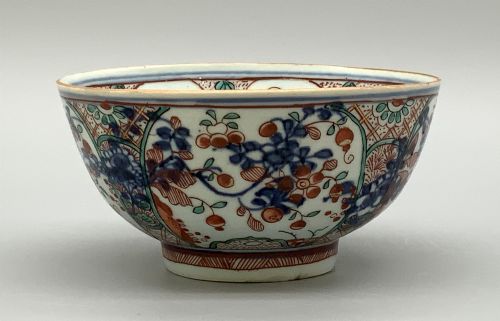
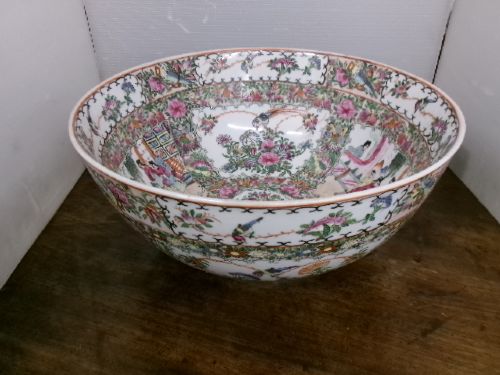
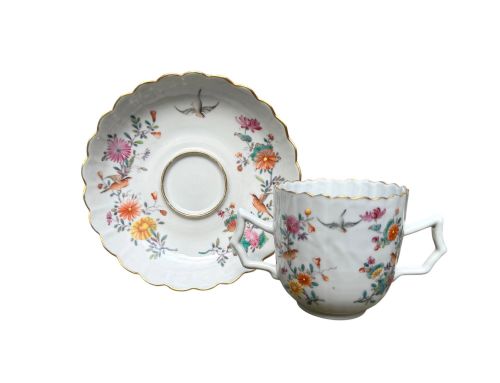
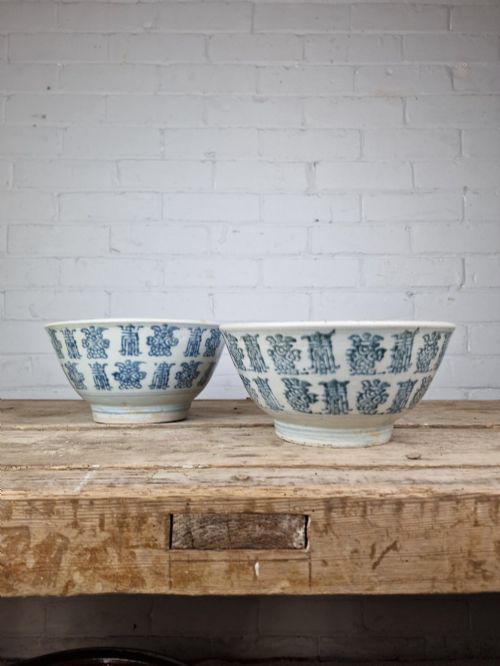
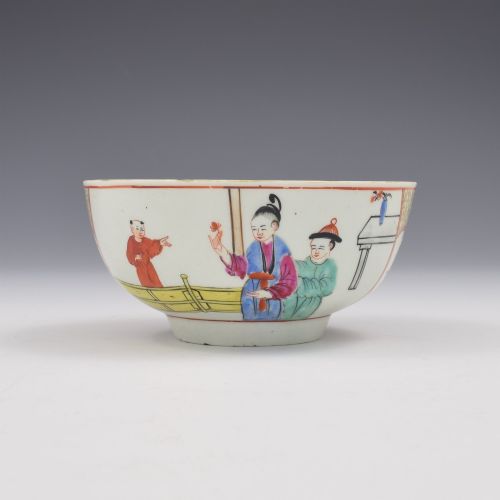
Buyers will encounter blue and white cargo pieces alongside colourful famille rose and famille verte enamel decorated vessels. Forms range from simple circular shapes to lobbed rectangular bowls, shell dishes and lidded vessels with Foo Dogs.
Many examples arrive with specific historical attributions, including Nanking cargo pieces, Canton large bowls and Chinese Export wares made for Western markets. These domestic and export vessels display the diverse range of forms produced across Chinese kilns.
How they were made
Potters shaped ceramic clay and porcelain bodies before applying cobalt pigment, glazes and overglaze enamels. Many works received bright turquoise, yellow or clear glaze layers that vitrified during high temperature firing.
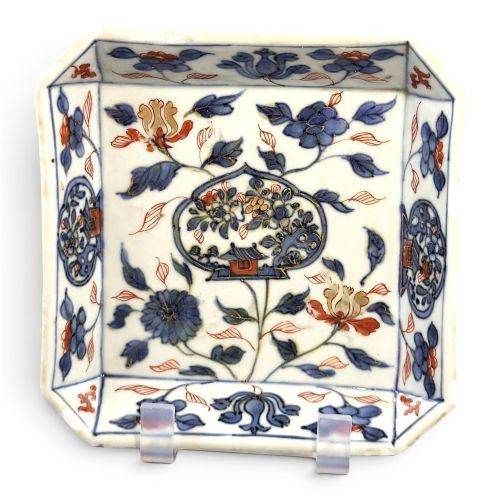
Decoration often combined cobalt blue underglaze painting with rich enamel colours, sometimes accented with gold leaf or paired with ormolu mounts. Workshops utilised skilled brushwork to render dragons, butterflies, flowering plants and figural scenes.
Retail Price Guide 2026
Typical UK retail prices for chinese porcelain bowl, calculated from the Sellingantiques database of over a million retail prices indexed since 2003. This retail price guide relies exclusively on Sellingantiques data; no external sources or auction records are used, so the figures do not describe the wider market.
Some vessels travelled to the seabed in the eighteenth century and emerged centuries later with marine life still whispering of the voyage.
What varies in quality
The finesse of the brushwork and the clarity of the cobalt pigment or enamel palette dictate the visual impact of each piece. Superior examples display crisp, controlled details in complex motifs like duelling dragons, butterflies and famille rose medallions.
The weight, thinness and translucency of the porcelain body also distinguish everyday utility wares from fine eggshell porcelain or large punch bowls. Kiln control over crackle glazes and gold leaf application marks the difference between standard production and exceptional output.
James Giles·Samson
The Chinese Porcelain Bowl Glossary
- Famille rose
- A palette of opaque enamels dominated by pink or rose colours, introduced during the Qing dynasty. This technique allowed for subtle shading and intricate floral or figural compositions.
- Famille verte
- A predominantly green enamel palette used on Chinese porcelain, particularly prominent in the Kangxi period. It often incorporates iron red, yellow and blue to create vibrant scenes.
- Chinese Export
- Porcelain manufactured in China specifically for trade and export to Western markets from the Ming dynasty onward. These pieces frequently blend traditional Chinese forms with European decorative preferences.
- Nanking Cargo
- Salvaged porcelain from Dutch East India Company ships that sank in the mid eighteenth century. These underwater finds provide secure dating for blue and white and Batavian wares.
- Kloptmuts
- A distinctive Dutch term for a type of flared porcelain bowl with an everted rim, popular in the Kangxi period. The shape resembles a traditional nightcap worn in the Netherlands.
Frequently Asked Questions
How do I date a chinese porcelain bowl?
Dating relies on stylistic markers, reign marks, and historical context recorded in the piece. Cargo recoveries and specific dynasty periods offer precise chronological anchors.
Examinations of the paste, glaze characteristics, and enamel palettes also help align an object with periods like the Kangxi, Qianlong, or Ming eras.
What is Chinese Export porcelain?
Chinese Export porcelain refers to ceramics made in China specifically for Western trade and consumption. These objects often combine Eastern manufacturing techniques with shapes and motifs tailored to European tastes.
Such items range from punch bowls and tea bowls to large basin services utilised in stately homes.
How were blue and white pieces decorated?
Blue and white pieces utilise cobalt pigment painted directly onto the ceramic body before glazing and firing. The high temperature kiln process fixes the cobalt beneath a transparent protective layer.
This technique produced enduring designs featuring dragons, floral motifs, and landscapes seen across centuries of production.
How do I display a large punch bowl?
Large punch bowls and centre bowls serve as striking focal points on dining tables, sideboards, or open shelving. Their generous scale allows them to hold decorative objects or stand alone as sculptural pieces.
Placing them away from heavy foot traffic protects their rims and delicate enamel surfaces from accidental impacts.