







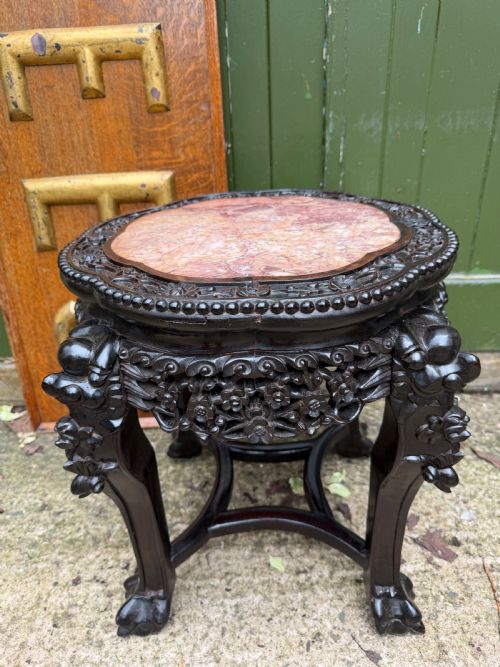
Chinese Marble Table
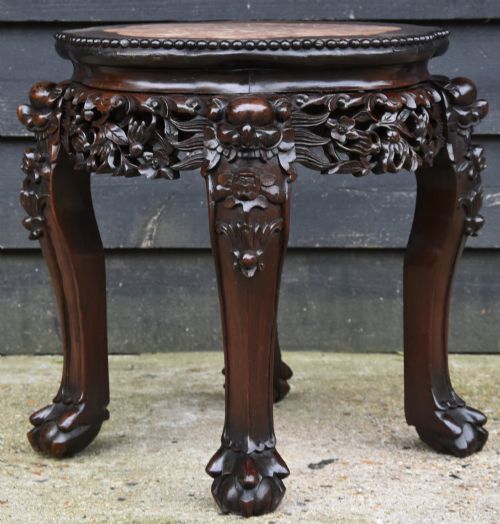
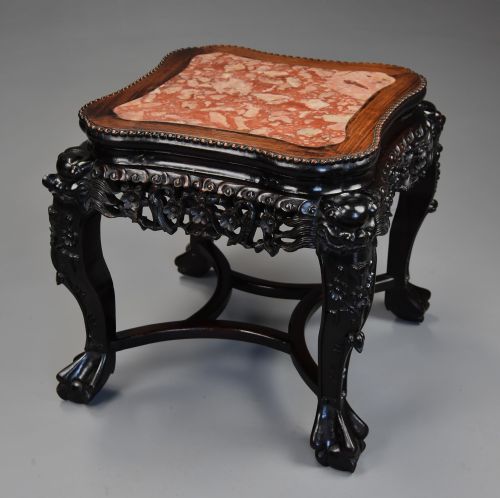
A Chinese marble table brings a heavy stone inset and rich carved timber into a room, serving as a sturdy pedestal for plants, lamps, or urns.

Chinese Marble Table
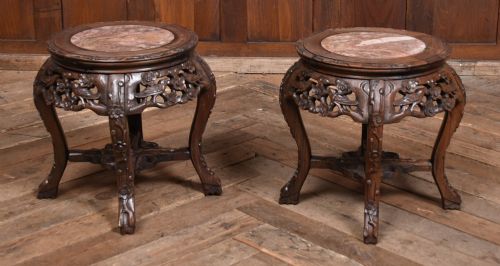
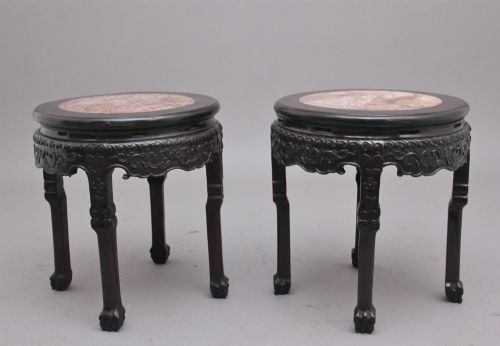
A Chinese marble table typically appears as a compact plant stand, jardiniere pedestal, or low occasional table rather than a large dining surface. The pieces met here span the late nineteenth century and the early twentieth century, aligning with Qing Dynasty traditions and Chinese Export production.
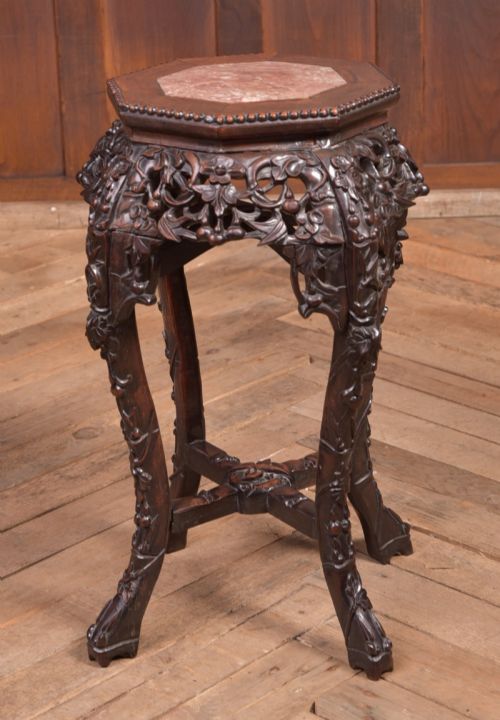
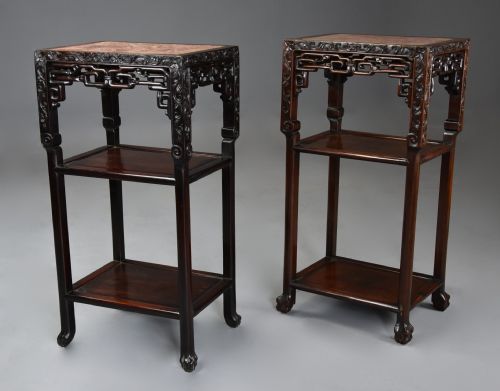
Makers shaped these items as tall urn stands, side tables, and multi-tiered surfaces designed to elevate ornamental objects. Many examples survive as matched pairs, particularly in low forms intended for displaying porcelain bowls or jardinieres.
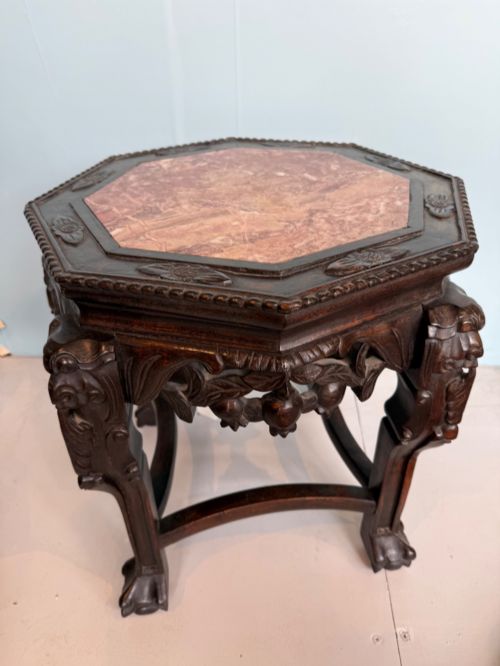
The primary structure relies on dense Asian hardwoods, which support the weight of inset stone panels. Buyers encounter circular, square, and rectangular formats reflecting traditional domestic furnishing styles of the period.

Materials and Construction
Cabinetmakers utilised durable tropical timbers such as rosewood, padouk, huanghuali, and hongmu to construct the frames. These dense hardwoods allowed for deep, intricate relief carving without compromising the structural integrity of slender legs and aprons.
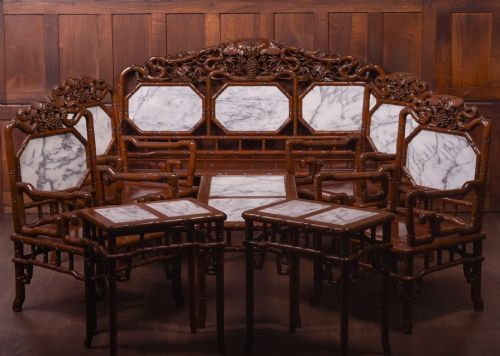
Smooth marble panels, often showing variegated rouge or pink veining, were channeled and set flush into the wooden frames. Mother-of-pearl inlay or rootwood construction occasionally supplemented standard hardwood methods on specific occasional tables.
Chinese Marble Table Retail Price Guide 2026
Typical asking prices for chinese marble table among the pieces listed under this phrase on Sellingantiques today, from the lower quarter to the upper quarter. They describe what is for sale here now, not the wider market.
Listings feature items dated from the Victorian and Edwardian eras alongside nineteenth-century pieces, spanning round, square, and multi-tiered forms.
Evaluating the Pieces
Quality rests on the crispness of the wood carving and the weight of the timber selected for the frame. Dense rosewood and padouk hold sharp undercut details far better than softer secondary woods.
The visual appeal of the inset marble panel heavily influences desirability. Collectors look for strong, natural mineral veining, particularly rich rouge tones, fitted tightly without movement within the wooden rebate.
The Chinese Marble Table Glossary
- Jardiniere stand
- A tall or low pedestal designed specifically to hold a ceramic plant pot or flower bowl. These stands protect interior flooring and elevate foliage to eye level.
- Padouk
- A heavy, durable tropical hardwood with a reddish-brown hue. Cabinetmakers favoured it for its strength in intricate carved furniture.
- Hongmu
- A traditional Chinese term for dense hardwoods, literally translating to red wood. It encompasses several heavy timber species used in Qing Dynasty workshops.
- Qing Dynasty
- The final imperial dynasty of China, lasting from 1644 to 1912. Furniture from the late phase of this period heavily influences current antique markets.
- Rootwood
- The gnarled underground growth of a tree utilised for rustic furniture. It creates irregular, organic forms distinct from straight-grained timber.
Chinese Marble Table: Frequently Asked Questions
What were Chinese marble tables used for?
These pieces served practical roles in traditional interiors as elevated platforms for heavy bronze urns, porcelain vases, and potted plants. Their solid stone tops resisted moisture and soil spills from greenery.
Over time, smaller versions transitioned into lamp tables and wine stands within Western Victorian drawing rooms as oriental export goods gained popularity.
How do I identify a Qing Dynasty table?
Examination of the timber density and the depth of the hand-carving provides the clearest indication of origin. Qing Dynasty pieces utilise heavy Asian hardwoods like rosewood or hongmu rather than European substitutes.
Mortise and tenon joinery without modern metal fasteners typically confirms the traditional manufacturing methods of the period.
Are the marble inserts original?
Most marble panels in these stands are original to the timber frame, cut specifically to fit the shaped recess. The stone was chosen to provide a cool, flat, moisture-resistant surface for display.
Slight variations in the fit or natural fissures within the marble are standard characteristics of period production rather than later replacements.
How should I care for the wood and stone?
Routine maintenance requires dusting with a dry lint-free cloth to protect the polished hardwood finish from abrasion. Avoid commercial silicone polishes that build up a hazy residue over decades.
The marble insert can be wiped gently with a damp cloth, ensuring no moisture seeps into the surrounding wooden joint.