









Carved Hardwood Flower Table
A carved hardwood flower table brings solid structure and dense timber grain into a room, designed originally to elevate plants, vases and urns.

Carved Hardwood Flower Table
A carved hardwood flower table sits in the room as a plant stand, jardiniere stand, or occasional pedestal. These pieces arrive primarily from nineteenth century Chinese workshops, alongside Victorian adaptations and Japanese export pieces.
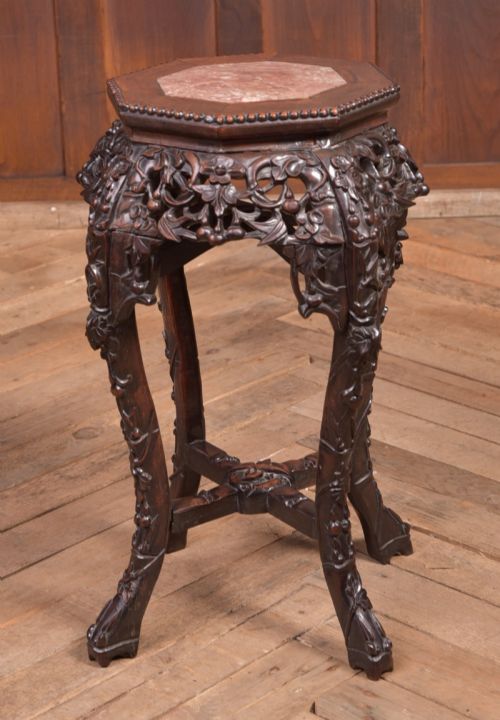
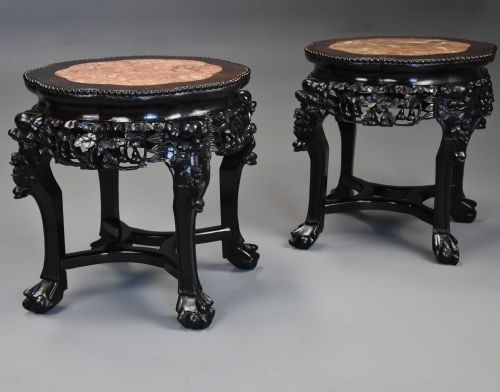
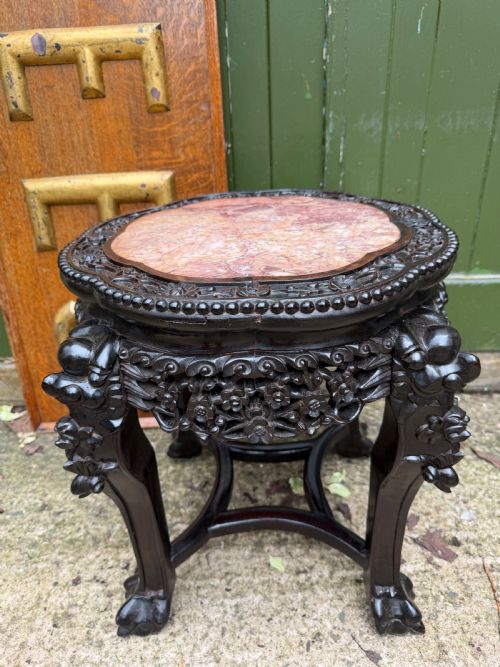
The version most commonly met on this page is the single pedestal or low table featuring an inset marble top and heavily carved aprons. Such pieces serve to lift ceramic planters and decorative objects above floor level.
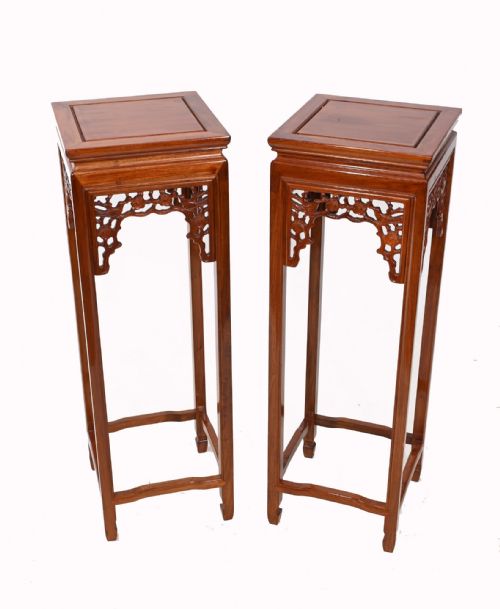
Makers utilised dense timbers such as hongmu, padouk, and rosewood, shaping square, rectangular, and shaped forms designed for domestic display. These compact surfaces function equally well as lamp tables or side tables.
Materials and technique
Craftsmen built these tables using dense tropical hardwoods that resist shrinkage and support heavy stone inserts. Timbers like hongmu and padouk provide the structural weight necessary for tall pedestals and jardiniere stands.
Surfaces frequently incorporate inset marble panels, contrasting the cool stone against carved wooden frames. Carving techniques include deep relief work on aprons and legs, depicting floral motifs and traditional patterns.
Inlay work appears in select examples, utilising mother of pearl set flush into the dark wooden ground. Joinery relies on traditional framing methods that accommodate the natural movement of dense timber over time.
Carved Hardwood Flower Table Retail Price Guide 2026
Typical asking prices for carved hardwood flower table among the pieces listed under this phrase on Sellingantiques today, from the lower quarter to the upper quarter. They describe what is for sale here now, not the wider market.
Materials recorded across the available selection include rosewood, hongmu, padouk, marble, and mother of pearl inlay.
Design and execution
The depth and clarity of the carving separate standard production from superior work. Crisp, undercut foliage and balanced proportions indicate skilled hand execution rather than mechanical repetition.
The choice and thickness of the inset marble panel dictate the upper tier of quality. Variegated rouge or grey marble selected for visual grain adds significant weight and presence to the table.
Timber selection governs the longevity and visual richness of the object. Heavier, dense rosewoods and hongmu maintain structural integrity and a deep natural sheen across centuries of use.
Liberty of London
The Carved Hardwood Flower Table Glossary
- Hongmu
- A traditional Chinese term denoting dense, dark hardwoods used in quality furniture production. This category includes timbers like rosewood and padouk.
- Jardiniere stand
- A tall or low table specifically constructed to support a ceramic plant holder or flower pot. These pieces feature water-resistant tops of marble or glazed tile.
- Marble top
- A stone insert fitted flush into the wooden frame of a table surface. This feature provides a cool, durable platform for heavy vases and damp pots.
- Mother of pearl
- An iridescent inner shell material used for decorative inlay work on select tables. Small pieces are shaped and embedded directly into the polished wood.
- Padouk
- A heavy, durable tropical hardwood with a reddish brown colouration. Artisans utilised this timber for robust stands and pedestal tables.
Carved Hardwood Flower Table: Frequently Asked Questions
What is a carved hardwood flower table used for?
These tables provide a sturdy raised platform for heavy ceramic pots, jardiniere bowls, and decorative urns. They function effectively in corners or beside seating as lamp and occasional tables.
The elevated surface protects floors from moisture and places botanical displays at eye level. Their compact footprint suits them to smaller domestic spaces.
How do I identify a Qing Dynasty piece?
Qing Dynasty stands display dense hardwood construction, typically hongmu or padouk, combined with deep manual relief carving. Inset marble panels and traditional Chinese joinery methods appear frequently in this group.
Decoration often incorporates classical floral motifs and geometric framing. The timber develops a deep natural patina across the nineteenth century.
Are these tables suitable for modern interiors?
The modest proportions and dark timber tones integrate easily into contemporary rooms. They provide practical surface area for lighting and decorative items without dominating a space.
The sculptural quality of the carved wooden bases adds texture and architectural interest to plain interiors.
What is the difference between a plant stand and a jardiniere stand?
Plant stands and jardiniere stands share similar structural forms designed to support botanical displays. The terms often describe the same category of tall or low occasional furniture.
Jardiniere stands frequently emphasise stone or tile inset surfaces to safely accommodate damp pots and water-holding vessels.