








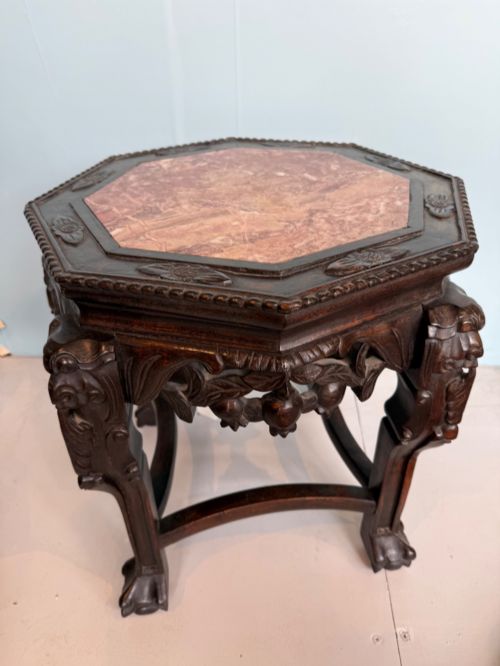
Chinese Hardwood Plant Stand
A Chinese hardwood plant stand brings dense, figured timber and stone into a room to elevate ceramics and lamps.
Chinese Hardwood Plant Stand
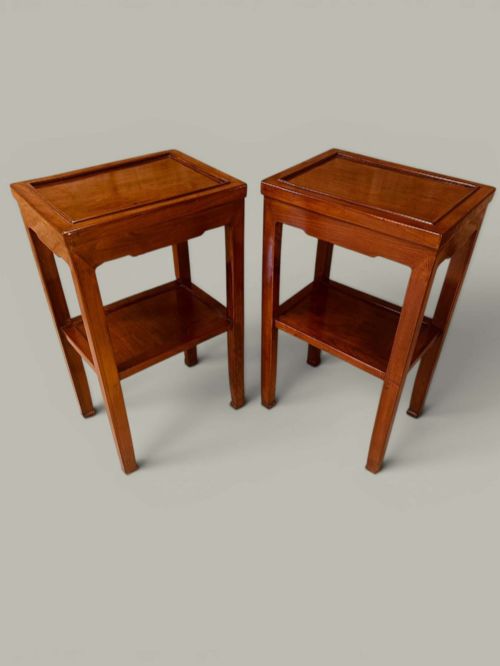
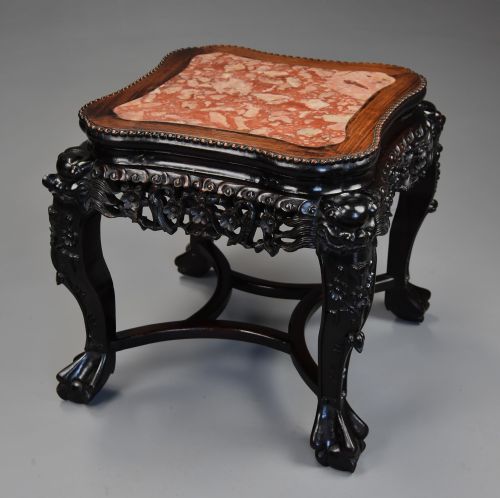
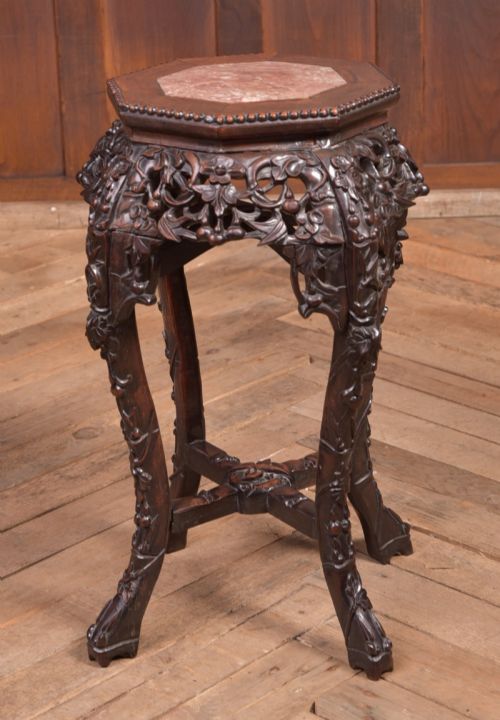
A Chinese hardwood plant stand serves primarily to elevate planters, vases and lamps, appearing in forms such as low tables, jardiniere stands, pedestal stands and barrel stools. These pieces emerge predominantly from the nineteenth century, including the Victorian and Edwardian eras, down to nineteen-twenty, alongside Qing Dynasty and traditional export styles.
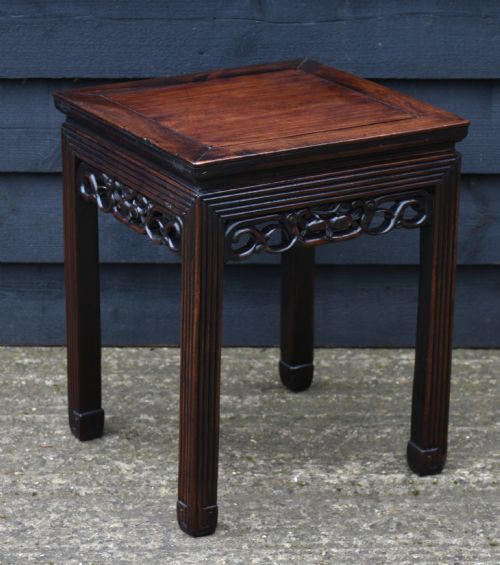
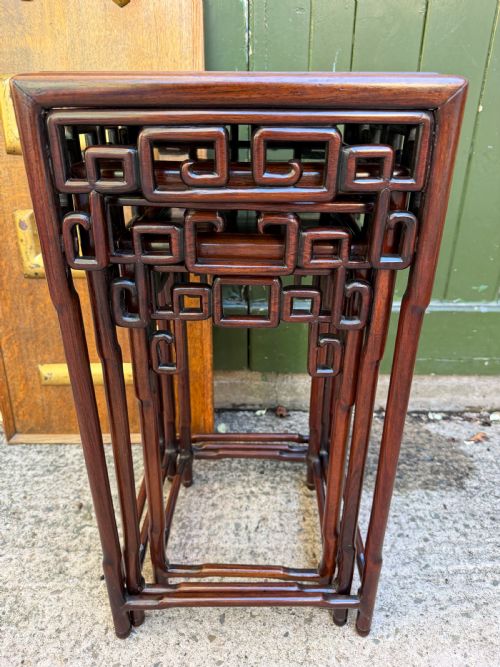
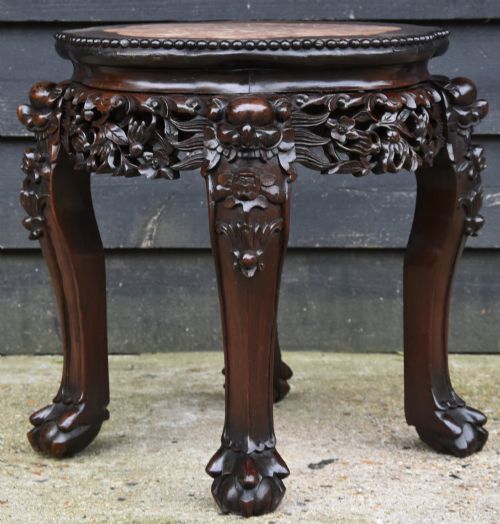
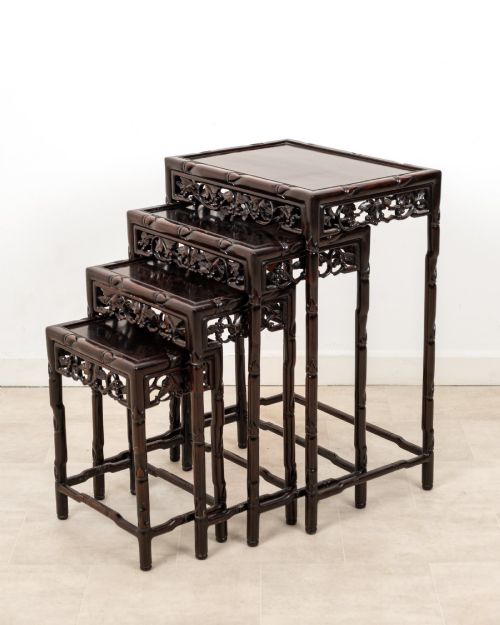
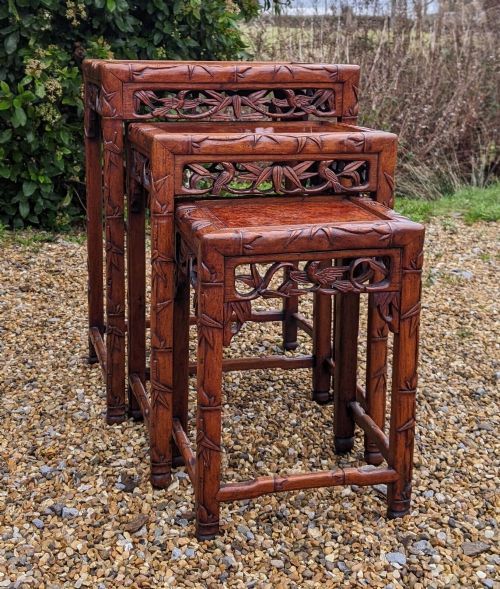
Buyers frequently encounter variants featuring inset marble tops, mother of pearl inlay or carved aprons, functioning equally as occasional tables, side tables and nests of tables. The forms range from tall torchere pedestals to low rectangular pot stands and matched pairs designed for balanced interior placement.
The architectural language spans traditional Chinese carving, dragon motifs and clean-lined geometric frames suited to both Asian interiors and classic European rooms. Each configuration fulfills a specific spatial function, whether supporting a heavy ceramic jardiniere or serving beside seating as a lamp table.
Materials and construction
Carpenters utilised dense exotic timbers including rosewood, padouk, hongmu and huanghuali wood, selected for exceptional colour and grain pattern. Burr wood and amboyna also appear as decorative veneer elements or contrasting panels within the primary hardwood structure.
Variegated rouge marble and plain stone inserts form cool, durable surfaces set flush into the wooden frames of table tops and pot stands. Mother of pearl inlay provides luminous detail against dark timber fields, secured through precise hand-chased recessing.
Traditional joinery methods bind these heavy timbers without reliance on modern adhesives, allowing the dense woods to accommodate natural expansion. Hand carving defines the aprons, legs and structural supports, incorporating pierced floral and zoomorphic reliefs.
Chinese Hardwood Plant Stand Retail Price Guide 2026
Typical asking prices for chinese hardwood plant stand among the pieces listed under this phrase on Sellingantiques today, from the lower quarter to the upper quarter. They describe what is for sale here now, not the wider market.
Factors of quality
Execution of the carved ornament dictates the visual standing of a piece, separating sharp, deeply undercut foliage and figures from shallow, mechanical moulding. The selection of the timber grain itself, particularly in huanghuali and rosewood, marks the distinction between standard production and exceptional workshop output.
The integration of the inset marble top reveals structural competence, depending on whether the stone sits flush and firm within a well-fitted rebate. Joinery rigidity in heavy stool and table forms ensures stability without wobble under weight.
Completeness of decorative elements such as mother of pearl inlay and original matched pairs maintains the integrity of the design. Subtle proportions in the curve of a leg or the taper of a pedestal distinguish restrained elegance from heavier proportions.
The Chinese Hardwood Plant Stand Glossary
- Hongmu
- A category of dense, dark tropical hardwoods prized in Chinese furniture making. It translates literally as red wood and yields deep, rich tones under polish.
- Padouk
- A heavy, durable timber displaying reddish-brown coloration that darkens with age. It provides stable construction for heavily carved stands and tables.
- Jardiniere
- A large ornamental pot or container for plants and flowers. Stands specifically built for these items feature reinforced tops designed to bear substantial damp weight.
- Torchere
- A tall stand or pedestal originally designed to support a torch or candle lamp. In later contexts, it functions as an elevated display surface for urns and vases.
Chinese Hardwood Plant Stand: Frequently Asked Questions
What is the difference between a jardiniere stand and a plant stand?
Jardiniere stands and plant stands share similar structural roles, though jardiniere stands traditionally accommodate heavy ceramic planter bowls with moisture-resistant marble or stone inserts. Plant stands often encompass lighter occasional tables and vase supports.
Both forms utilise dense exotic hardwoods and share nineteenth-century production periods, making their distinction largely a matter of top configuration and intended weight capacity.
How do I date a Chinese hardwood stand?
Dating relies on timber selection, joinery wear and stylistic markers aligning with the late Qing Dynasty, Victorian or Edwardian periods. Nineteenth-century examples often display deep hand carving and rich patina on rosewood or padouk.
Later pieces from around nineteen-twenty show subtle shifts in proportion and finish, while nineteenth-century items typically exhibit heavier timber density and traditional construction nuances.
Why do many stands have marble tops?
Marble inserts provided a cool, water-resistant surface that protected the underlying hardwood from damp soil and leaking water when holding live plants. This practical requirement evolved into a key decorative feature.
Variegated rouge marble and plain stone slabs also introduced contrasting texture and colour against dark rosewood and hongmu frames.
Can these stands support modern lamps?
These pieces provide stable surfaces for modern table lamps, provided the top dimensions match the base of the lamp fixture. Their robust hardwood construction handles daily utility easily.
Low tables, side tables and tall pedestal stands all offer suitable platforms for lighting while adding distinct grain and carved detail to a room.