








Asian Plant Pedestal
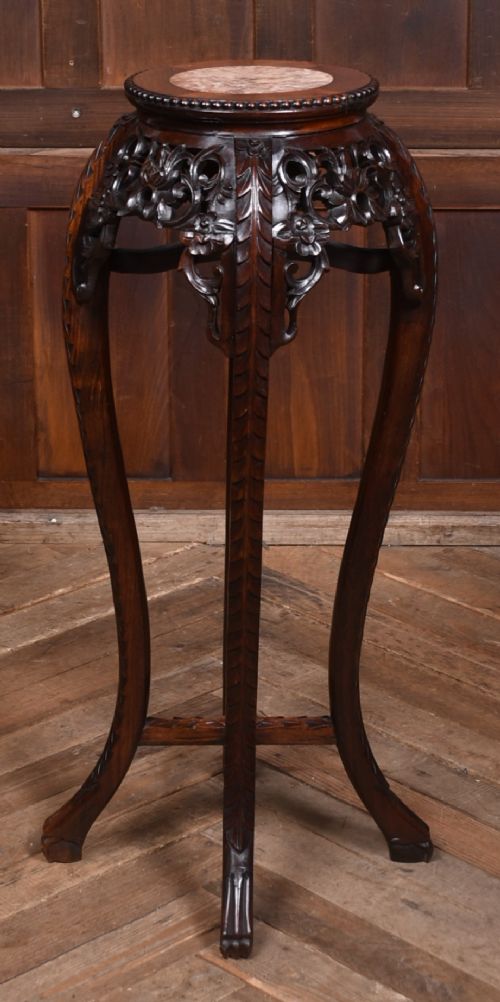
An asian plant pedestal holds ceramic pots and vases in domestic interiors, bringing structured height and carved detail to a room.
Asian Plant Pedestal
An asian plant pedestal takes several forms, including jardiniere stands, torchieres, urn pedestals, and occasional tables designed to elevate decorative vessels. These pieces emerge from the nineteenth century into the early twentieth century, spanning late Victorian eras and the Meiji period through Qing dynasty influences and Chinese export traditions.
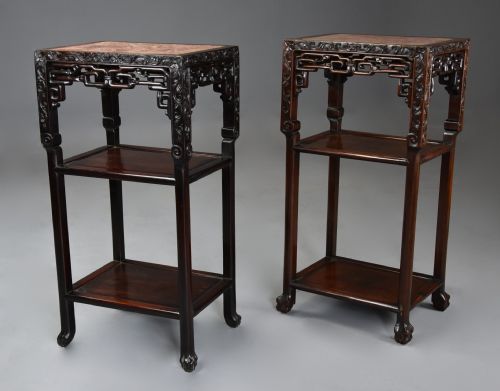
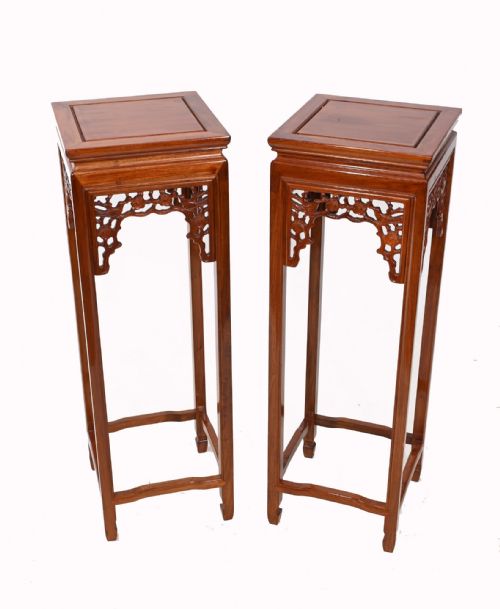
The version most commonly met on this page is a compact hardwood stand featuring an inset marble top, designed to support heavy ceramic planters or bronze vases without moisture damage. Alongside these round and square top tables, buyers encounter sculptural forms like carved elephant seats and rootwood tables with quartz inserts.
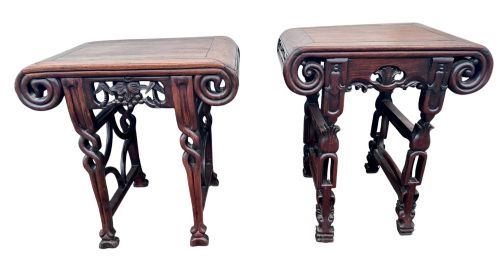
Lower profiles function as side tables or stools, while taller torchieres and two-tier pedestal stands create vertical punctuation in a corner or bay window. Construction formats range from single freestanding tables to matched pairs suited for symmetrical placement beside doorways or mantlepieces.
Materials and construction methods
Cabinetmakers utilised dense Asian timbers such as hongmu, huali, rosewood, padouk, and ebonised elm to build rigid frames capable of supporting heavy stone inserts. These hardwoods receive deep carving in traditional floral, animal, or geometric motifs, often accented with mother-of-pearl inlay or cinnabar lacquer coatings.
Many tables incorporate a central marble or quartz disc fitted flush into the wooden top, offering a cool, water-resistant surface for wet plant pots. Joinery relies on traditional interlocking techniques rather than modern metal fasteners, allowing the dense woods to expand and contract naturally across seasonal temperature shifts.
Asian Plant Pedestal Retail Price Guide 2026
Typical asking prices for asian plant pedestal among the pieces listed under this phrase on Sellingantiques today, from the lower quarter to the upper quarter. They describe what is for sale here now, not the wider market.
Listings feature nineteenth and early twentieth century items, encompassing Victorian, Meiji period, and Qing dynasty eras.
Evaluating craftsmanship and execution
The standard of carving defines the tier of a piece, separating crisp, deeply undercut foliage and figures from shallow, mechanical surface work. Heavier, dense timbers like hongmu and huali represent superior production compared to lighter composite woods or generic painted timber.
The integration of the inset stone top matters significantly, with well-fitted marble or quartz sitting level within the surround without excessive filler. Complete sets and matched pairs command greater interest than solitary survivors, particularly when original lacquering and mother-of-pearl details remain intact.
The Asian Plant Pedestal Glossary
- Hardwood
- Dense, slow-growth timber such as hongmu, huali, and rosewood used for heavy furniture construction. These woods take a high natural polish without requiring surface stains.
- Jardiniere stand
- A tall table specifically designed to hold a large ceramic plant container or flower bowl. These stands typically feature elevated platforms to keep moisture away from floorboards.
- Torchiere
- A tall, slender standing pedestal or lamp support. In Asian furniture, these pieces often feature elaborate pillar carvings and sturdy tripod or multi-legged bases.
- Hongmu
- A traditional Chinese classification for dense, red-brown hardwoods. Pieces fashioned from this material display considerable weight and durable grain structures.
- Mother-of-pearl inlay
- Decorative shell fragments set directly into recesses within the wooden surface. This technique creates contrasting iridescent patterns against dark timber grounds.
Asian Plant Pedestal: Frequently Asked Questions
What is an asian plant pedestal used for?
These pieces serve primarily to elevate ceramic planters, jardiniere bowls, and decorative bronze vases above floor level. Raising the vessel allows trailing foliage to drape downwards while protecting timber floors from water damage.
Beyond horticulture, smaller versions function effectively as lamp tables, bedside stands, or display surfaces for sculptures and decorative objects.
How do I care for a marble top stand?
The stone surface requires simple dusting and occasional wiping with a damp cloth to remove grit or moisture. Avoid acidic cleaners or harsh chemical sprays that can etch the polished surface of the marble or quartz.
Apply a neutral paste wax to the surrounding hardwood frame periodically to nourish the timber and maintain its natural lustre.
Are these stands suitable for modern rooms?
The compact footprints and vertical proportions of these pedestals allow them to fit easily into tight corners, alcoves, or beside low contemporary seating. Their dark hardwoods and carved details introduce tactile warmth and contrast into minimalist interiors.
They work well as independent accent pieces or paired symmetrically flanking a sideboard or architectural doorway.
How do I distinguish Qing dynasty styles?
Qing dynasty and Qing style pieces typically exhibit substantial construction in dense hardwoods like huali or hongmu, paired with deep, intricate relief carving. Motifs often draw from traditional symbols, natural flora, and mythological creatures.
Later export pieces from the turn of the twentieth century may incorporate simpler geometric borders or alternative finishes like ebonised elm and lacquer paint.