






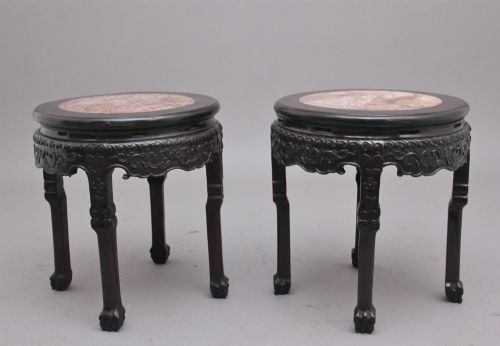



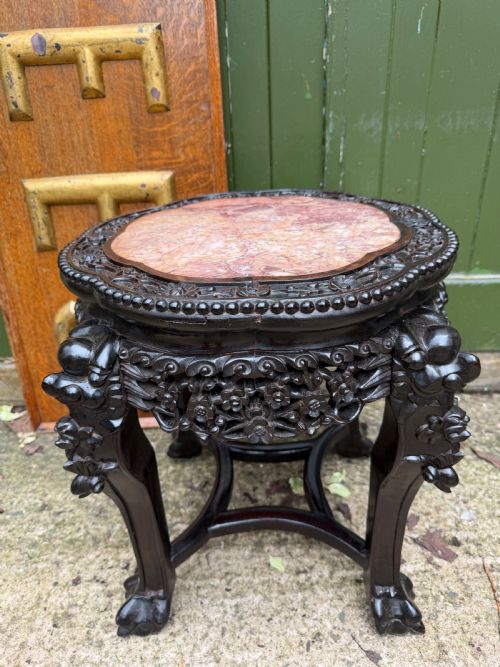

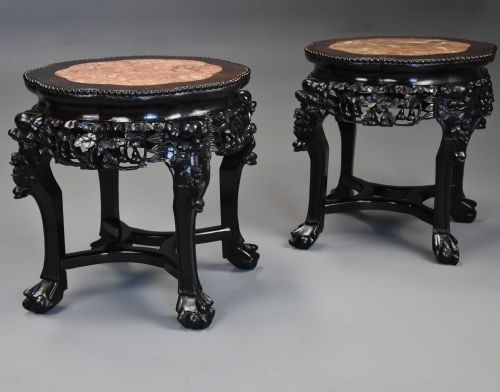
Hardwood Marble Plant Stand
A hardwood marble plant stand brings a solid stone surface and carved timber together to elevate jardinieres, urns and lamps in a room.
Hardwood Marble Plant Stand
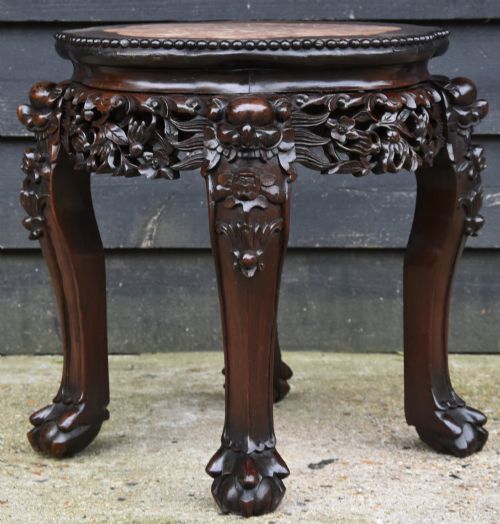
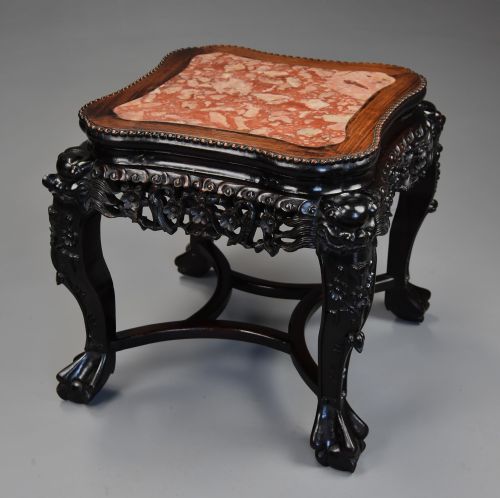
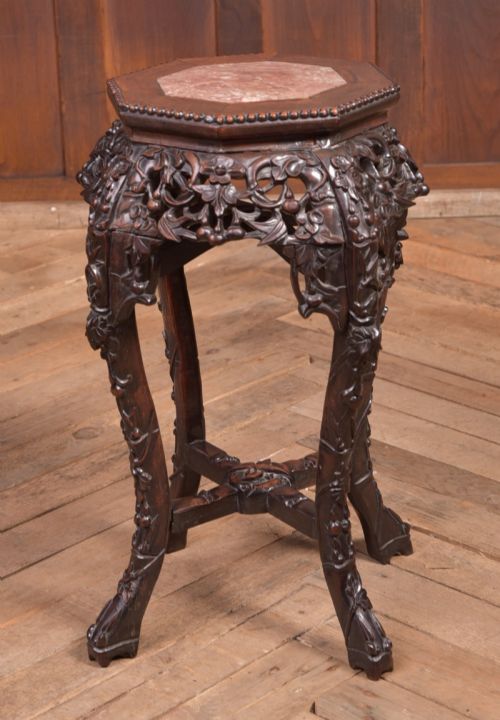
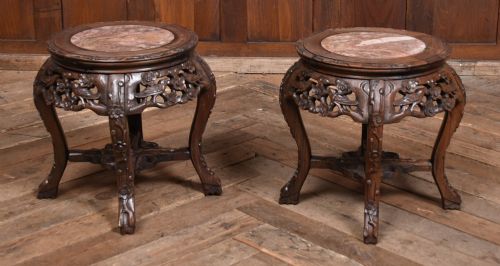
A hardwood marble plant stand combines dense timber framing with an inset stone disc or panel, serving as a sturdy perch for heavy pots and urns. These pieces appear most frequently in nineteenth-century Chinese export forms, including low table designs, tall pedestals and shaped pot stands.
Buyers encounter forms that double as occasional tables, side tables or lamp stands depending on their height and top configuration. The inventory spans compact nineteenth-century examples through to Edwardian interpretations, maintaining the characteristic combination of carved wood and cool stone.
Materials and Construction
Carpenters utilised dense exotic timbers such as rosewood, padouk and hongmu, selecting them for their heavy weight and ability to hold deep, crisp chisel work. These woods are joined using traditional methods to support the substantial downward pressure of stone inserts.
The inset tops utilise smooth marble or variegated rouge stone, fitted flush into carved wooden channels. Secondary decorative details occasionally incorporate mother-of-pearl inlay or ebonised surfaces to accent the main timber grain.
Hardwood Marble Plant Stand Retail Price Guide 2026
Typical asking prices for hardwood marble plant stand among the pieces listed under this phrase on Sellingantiques today, from the lower quarter to the upper quarter. They describe what is for sale here now, not the wider market.
Materials documented across the inventory include rosewood, padouk, ebonised hardwood and mother-of-pearl inlay.
Distinctions in Execution
The depth and crispness of the wood carving dictate the distinction between standard production and superior examples. Skilled hands produce undercut foliage and pierced frames that retain sharp definition without splintering the dense grain.
The fit of the marble insert into the wooden frame reveals the precision of the maker. A superior piece holds the stone securely without excessive filler, and the marble itself displays pleasing natural veining rather than muddy discoloration.
The Hardwood Marble Plant Stand Glossary
- Hardwood
- Dense timber derived from broad-leaved trees, including rosewood and padouk. These heavy woods resist dents and support intricate carving.
- Jardiniere
- An ornamental pot or stand for holding plants or flowers. These vessels require robust support from underneath.
- Hongmu
- A traditional Chinese term for dense red hardwoods. It translates to red wood and denotes heavy, highly polished timber.
- Padouk
- A sturdy tropical timber with a reddish hue that darkens with age. It accepts fine joinery and detailed chisel work.
- Inset top
- A panel of marble or stone dropped flush into a wooden frame. This provides a cool, water-resistant surface for potted plants.
Hardwood Marble Plant Stand: Frequently Asked Questions
What is a hardwood marble plant stand used for?
These pieces function primarily as elevated surfaces for heavy ceramic planters, jardinieres, urns and table lamps. The stone insert protects the timber frame from moisture when watering plants.
Beyond botanical displays, they operate effectively as compact side tables, wine stands or occasional tables in tight corners or hallways.
How do I identify a nineteenth century piece?
Nineteenth-century examples display dense tropical timbers like rosewood and padouk paired with hand-chiseled decorative motifs. The joinery relies on traditional construction methods rather than modern metal fasteners.
Examine the underside and joints for signs of hand tooling and natural wear consistent with age rather than factory replication.
Are these stands suitable for heavy ceramic pots?
The heavy timber frames and rigid marble panels provide exceptional structural stability for substantial pottery. The dense woods resist flexing under significant downward pressure.
Care should be taken to centre heavy vessels on the stone surface to maintain balance across the narrow legs.
How do I care for the marble top?
Wipe the stone surface regularly with a damp cloth and mild soap to remove dust and prevent water staining. Avoid acidic cleaners that etch the polished finish.
Treat the surrounding hardwood frame with appropriate wax or oil periodically to nourish the grain without damaging the stone inset.