






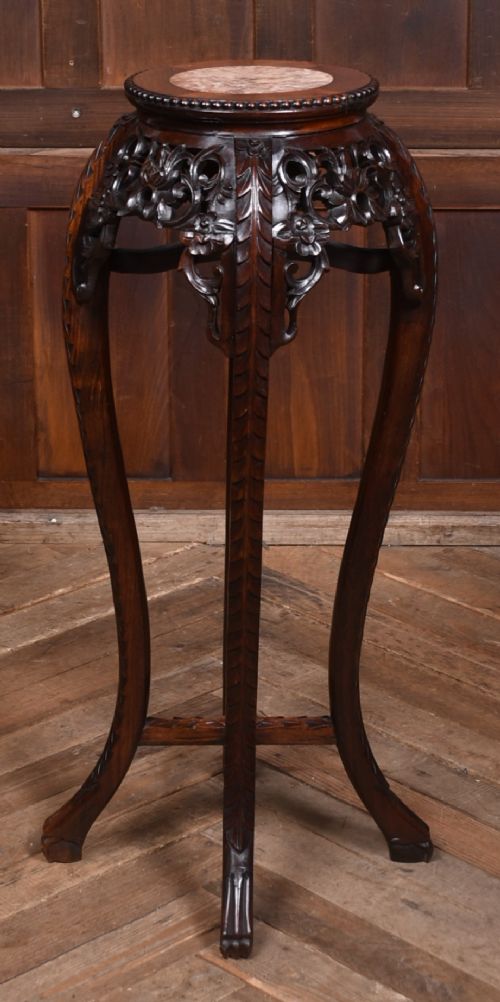


Chinese Hardwood Pedestal
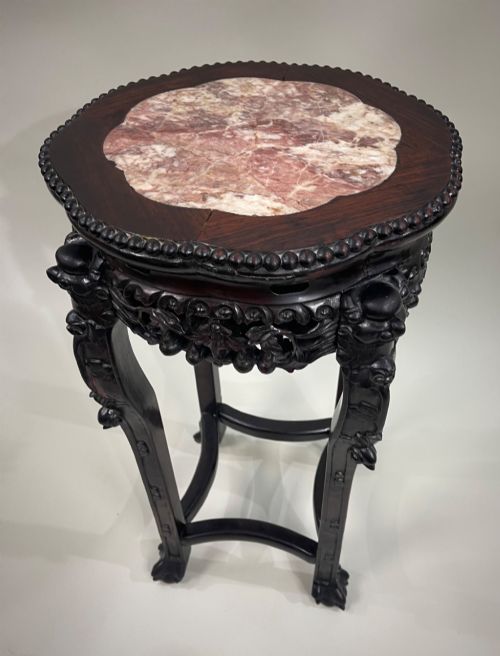
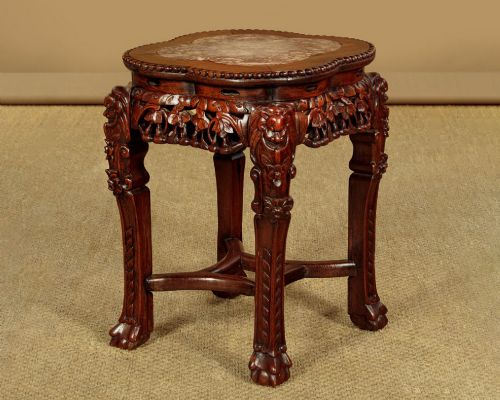
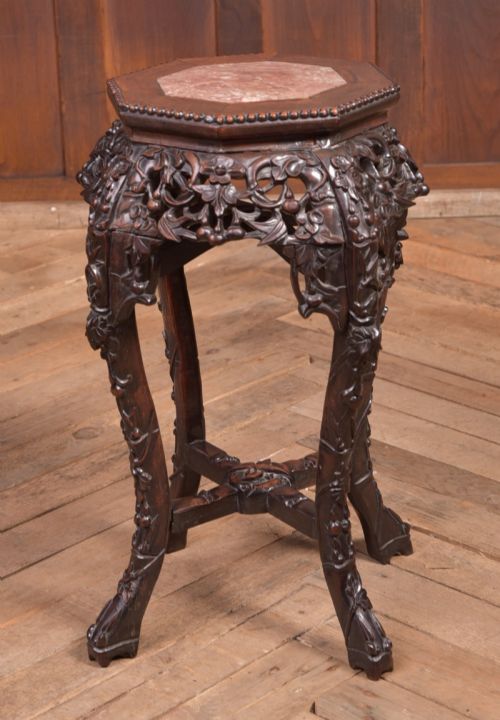
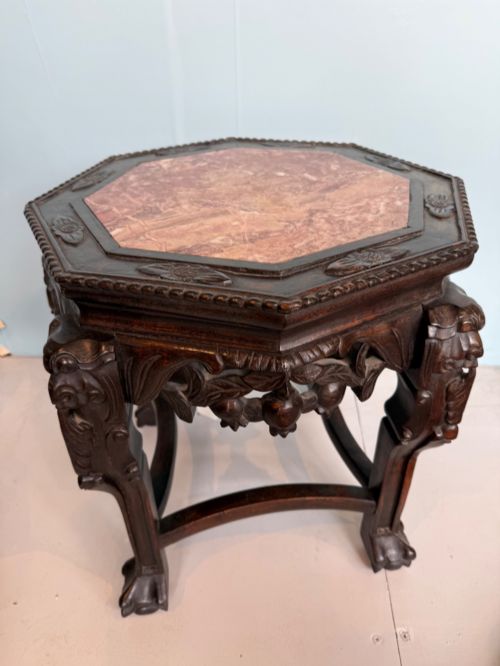
These Chinese hardwood pedestal examples bring tactile depth to interiors through dense timber and inset marble.
Chinese Hardwood Pedestal
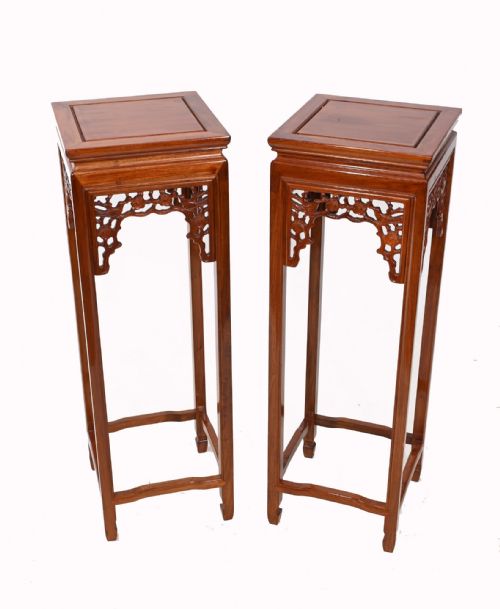
A chinese hardwood pedestal is typically encountered as a plant stand, jardiniere stand, or vase stand designed to elevate decorative objects within a room. Most examples span the nineteenth century and the early twentieth century, aligning with Victorian and Edwardian periods alongside Qing Dynasty influences.
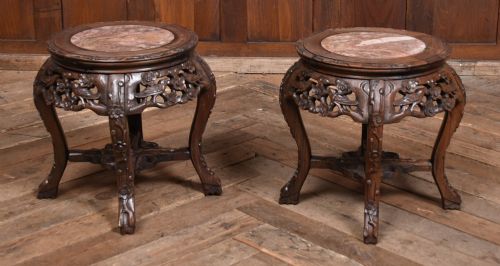
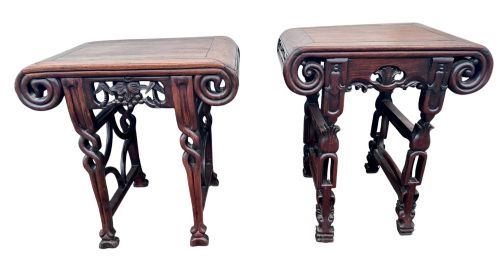
Form variations range from tall columnar supports to low occasional tables, side tables, and octagonal surfaces. Makers utilised dense timbers to create stable platforms often topped with inset marble panels for display purposes.
How they were made
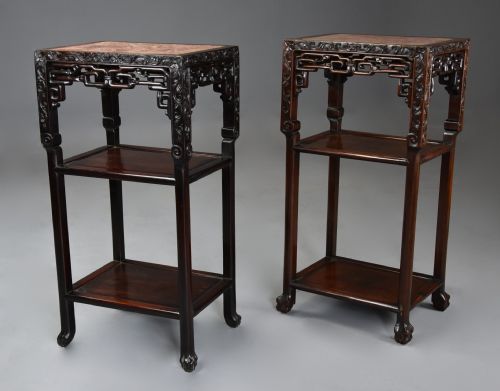
Construction relies upon dense timbers including rosewood, padouk, huali wood, and hongmu, often combined with inset marble tops. Artisans carved intricate decorative motifs directly into the heavy wood frames.
Detailing frequently incorporates mother of pearl inlay and lacquer work applied to the structural timber. Joinery methods secured heavy stone inserts within the wooden frames to withstand the weight of heavy planters.
Chinese Hardwood Pedestal Retail Price Guide 2026
Typical asking prices for chinese hardwood pedestal among the pieces listed under this phrase on Sellingantiques today, from the lower quarter to the upper quarter. They describe what is for sale here now, not the wider market.
Some nineteenth-century pot stands feature matched pairs that survived decades of domestic rearrangement together.
What varies in quality
Quality separates through the depth and crispness of the carved ornamentation across the timber frame. Deeper relief work and more intricate motifs indicate higher workshop skill.
The selection and fit of the inset marble top dictate the refinement of the piece. Uniform figuring in the stone and precise joinery with the surrounding hardwood distinguish superior examples.
The Chinese Hardwood Pedestal Glossary
- Hardwood
- Dense timber derived from broad-leaved trees used for durable furniture construction. Rosewood and padouk belong to this category.
- Jardiniere
- A large ornamental pot or planter designed to hold growing plants. These stands support such vessels.
- Padouk
- A heavy, durable timber with a reddish hue utilised in traditional furniture making. It provides structural stability for carved stands.
- Huali wood
- A prized fragrant hardwood utilised in Qing Dynasty furniture. It displays distinct grain patterns.
- Torchere
- A tall stand or pedestal originally intended to hold a candle or torch. These forms evolved into lamp tables and plant stands.
Chinese Hardwood Pedestal: Frequently Asked Questions
What were Chinese pedestals used for?
These pieces served primarily as elevated platforms for display purposes in domestic interiors. They held heavy ceramic planters, jardiniere bowls, vases, and lamps.
The raised height protected delicate surfaces and showcased decorative plants or art objects by placing them at eye level.
How do you identify the period?
Dating relies upon timber selection, carving styles, and construction traits recorded across nineteenth-century and early twentieth-century examples. Victorian and Edwardian cataloguing often aligns with Qing Dynasty stylistic phases.
Changes in inlay techniques and timber density help separate mid-nineteenth-century pieces from later Edwardian productions.
What is huali wood?
Huali is a dense, highly valued hardwood documented in Qing Dynasty furniture production. It possesses notable durability and distinctive natural grain patterns.
Craftsmen utilised this timber for fine vase stands and end tables intended for formal reception spaces.
How should you live with them?
These stands integrate easily into contemporary rooms as side tables, lamp bases, or plant pedestals. Their compact footprints suit corners and narrow wall spaces.
Maintenance involves regular dusting of the carved surfaces and gentle cleaning of the inset marble tops to preserve the finish.