
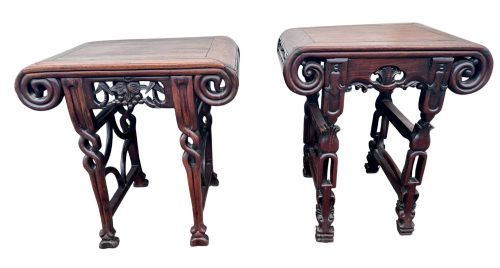


Chinese Hardwood Accent Table
A chinese hardwood accent table brings dense timber grain, carved detail and versatile proportions into a room.
Chinese Hardwood Accent Table
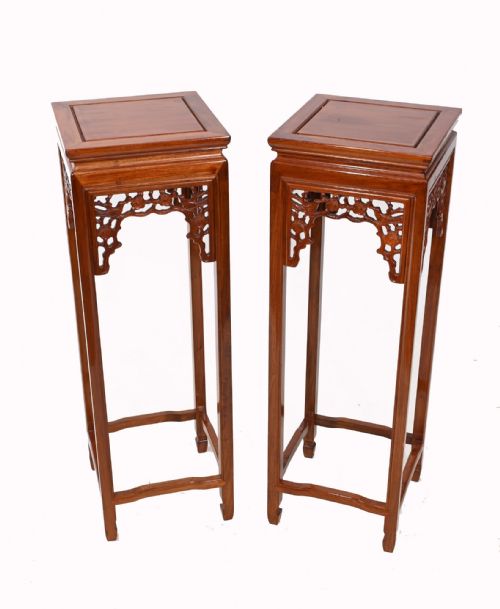
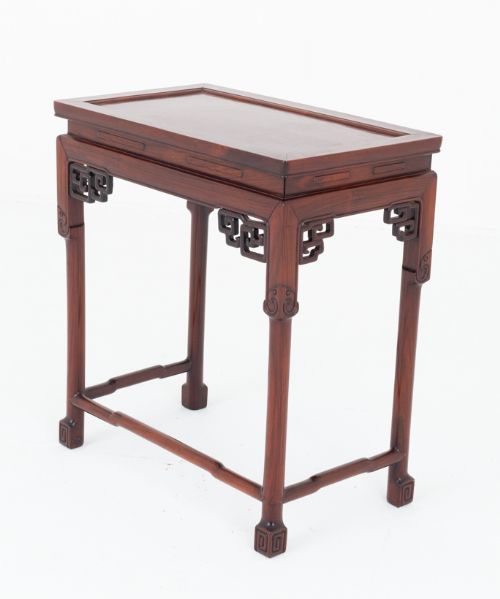
A chinese hardwood accent table spans low coffee tables, nested sets, side tables and tall plant or vase stands designed for specific domestic display. The pieces met most frequently on this page date from the nineteenth century through the early twentieth century, encompassing late Qing dynasty and traditional export workshops.
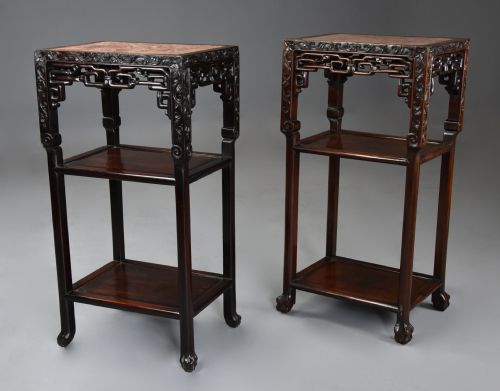
Makers shaped these items for practical utility as lamp tables, wine tables or small occasional surfaces, alongside tall pedestal stands meant for urns and jardiniere displays. Many survive as matched pairs or nesting sets designed to tuck away when not in use.
Materials and construction
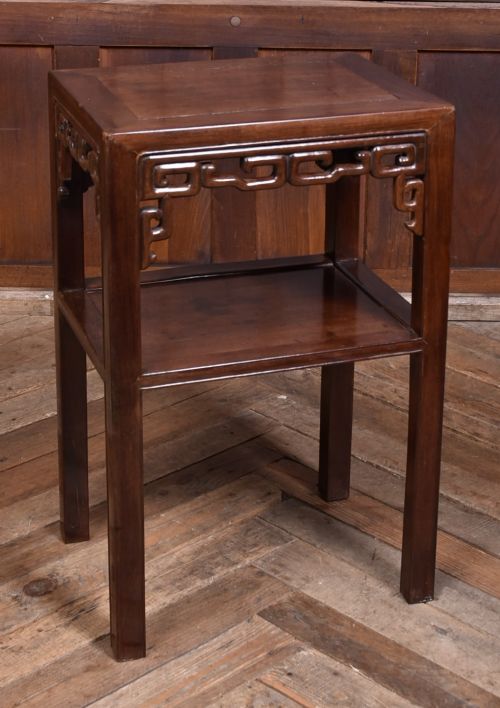
Workshops utilised dense timbers including rosewood, hongmu, elm, huali and amboyna, chosen for structural strength and deep natural colour. These heavy woods supported intricate hand carving depicting traditional dragon motifs and foliage.
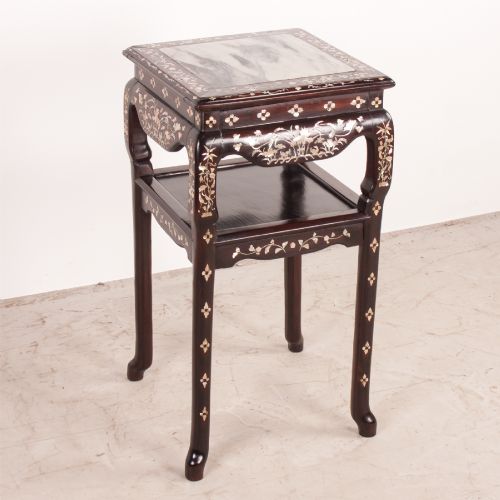
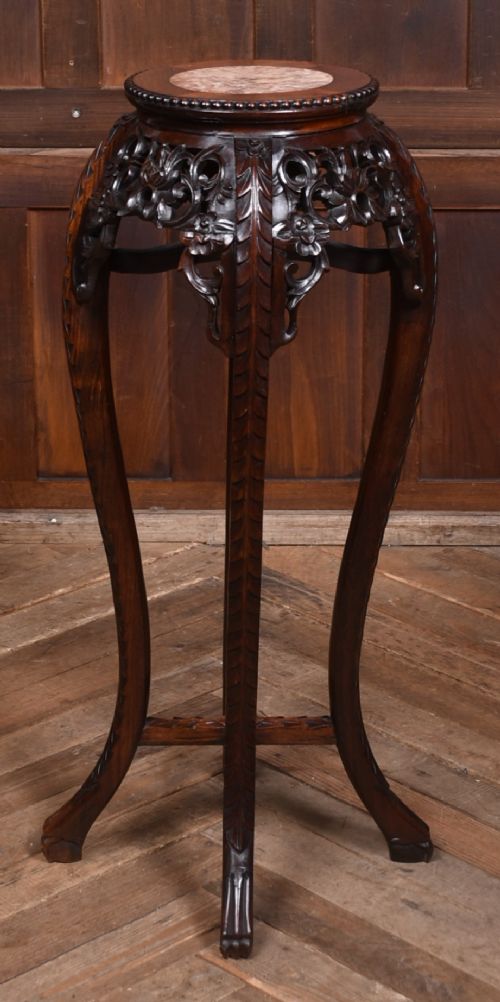
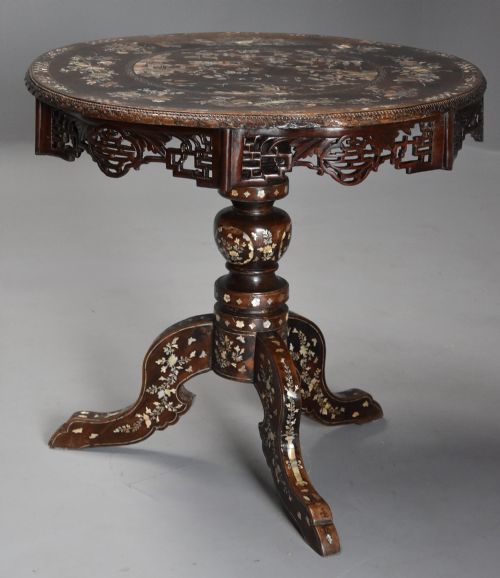
Many surfaces incorporate inset marble panels or delicate mother of pearl inlay work, contrasting smooth stone and shimmering shell against dark timber frames.
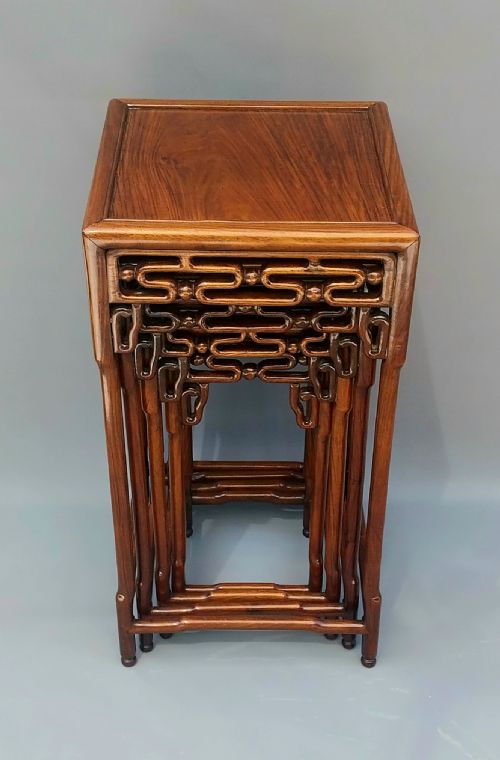
Recorded forms include nesting sets, opium tables, pedestal stands and low coffee tables spanning the nineteenth and early twentieth centuries.
Assessing quality and finish
Depth and sharpness of the hand carving separate standard production from superior examples, with finer pieces showing crisp undercut details on dragons and floral borders. The quality of timber selection, visible in the grain of the rosewood or hongmu, dictates the visual weight of the furniture.
Condition of integrated elements such as marble inserts and mother of pearl inlay influences integrity, particularly where timber movement over decades affects fitted joints.
The Chinese Hardwood Accent Table Glossary
- Hongmu
- A dense tropical hardwood prized in traditional Chinese furniture making for its heavy weight and rich reddish-brown tone. It translates directly to red wood.
- Jardiniere stand
- A tall pedestal or small table specifically constructed to elevate plant pots or floral arrangements. These stands often feature circular marble tops to protect the wood from moisture.
- Huali
- A fragrant and highly decorative hardwood utilised in Qing dynasty workshops for fine tables and stands. The timber exhibits striking natural figuring.
- Mother of pearl inlay
- A decorative technique embedding thin shimmering layers of marine shell into chiselled recesses within the timber surface. Artisans secure the pieces before polishing the entire top flat.
- Nest of tables
- A graduated set of smaller tables designed to slide neatly beneath one another. This form maximises surface space while maintaining a compact footprint.
Chinese Hardwood Accent Table: Frequently Asked Questions
What periods do these tables cover?
The pieces span the nineteenth century, Victorian era and early twentieth century, with significant representation from the late Qing dynasty.
Workshops produced these items across decades of traditional craft continuity, creating pieces that reflect both domestic Chinese interiors and export markets.
How were plant stands used?
Plant stands and jardiniere tables held heavy ceramic pots containing ornamental plants or trees within reception rooms. Their tall, narrow proportions elevated greenery to eye level.
Many incorporate inset marble tops specifically to resist water damage from watering plants.
What is hongmu timber?
Hongmu is a collective term for dense, heavy Asian hardwoods that develop a deep patina with age and use. It provides the structural integrity required for intricate openwork carving.
Tables built from this material possess substantial weight relative to their physical size.
Are nested tables a recent invention?
Nested tables appear frequently among nineteenth century Chinese hardwood forms designed for flexible living spaces. Sets of four tables slide together into a single compact block.
This format allowed households to expand surface area quickly when serving tea or hosting guests.