
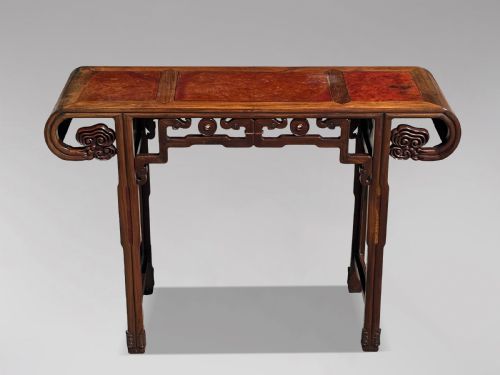


Chinese Hallway Table
A chinese hallway table brings restrained elegance and striking architectural form to an entrance, grounding the space with centuries of skilled joinery.
Chinese Hallway Table
A chinese hallway table typically manifests as a console or altar table designed with clean lines and practical surface area. You will most frequently encounter nineteenth century examples that reflect Qing Dynasty aesthetics and provincial traditions.
The selection ranges from restrained rectangular altar tables with subtle flanged ends to substantial carved hardwood consoles. These versatile forms serve admirably in modern entryways just as they did in historic interiors.
Makers adapted traditional proportions to create narrow profiles suited to passages and corridors. The common thread is a sturdy timber frame built to anchor a narrow space without impeding movement.
How they were made
Cabinetmakers utilised dense hardwoods such as hongmu and elm, employing sophisticated mortise and tenon joinery that avoided the need for metal nails. This traditional construction allowed the timber to expand and contract naturally across seasonal shifts.
Surfaces often received meticulous layers of red lacquer or polishing to highlight the grain of the wood. Brass mounts appeared on drawer fronts and structural braces, adding functional contrast to the dark timber.
Carving was executed by hand, rendering crisp panels and relief work along aprons and legs. Artisans balanced structural integrity with decorative restraint, ensuring that weight distribution remained sound.
Some tables retain subtle ink marks underneath their tops, left by workshop joiners keeping tally centuries ago.
What varies in quality
The grade of timber dictates much of the distinction between pieces, with heavier, highly figured hardwoods commanding greater presence than standard utility woods. Natural patination accumulated over generations separates untouched surfaces from later interventions.
Joinery execution reveals the hand of the workshop, where precise interlocking joints maintain stability without visible gaps. Crispness in hand-carved details along the apron and legs indicates the artisan's skill level.
Proportion and balance define the superior examples, where the height of the legs matches the mass of the top surface harmoniously. Original hardware and undisturbed lacquer finishes preserve the integrity of the piece.
The Chinese Hallway Table Glossary
- Altar table
- A long, narrow table featuring upturned flanged ends, historically placed against a wall in domestic halls or temples. These surfaces offer a distinctive silhouette defined by architectural stretchers.
- Hongmu
- A translation meaning red wood, referring to various dense and heavy tropical hardwoods prized by traditional cabinetmakers. This material provides exceptional durability and a deep natural colour.
- Qing Dynasty
- The final imperial dynasty of China, spanning from the seventeenth to the early twentieth century. Pieces from this era often exhibit refined proportions and sophisticated carving traditions.
- Chinoiserie
- European decorative style reflecting Chinese artistic influences, frequently seen in nineteenth century British interpretations of oriental forms. This aesthetic blends traditional European cabinetmaking with Asian motifs.
- Lacquer
- A durable resin finish applied in multiple thin coats to seal and protect wooden surfaces. Red lacquer variations provide a vibrant protective layer that develops a rich sheen over time.
Chinese Hallway Table: Frequently Asked Questions
How do I style a narrow hallway?
A narrow corridor benefits from a slim console or altar table that provides surface space for lamps or ceramics without blocking foot traffic.
Pairing the table with a wall mirror or hanging art above it creates a balanced focal point upon entering the home.
What is the difference between console and altar tables?
Console tables sit flush against walls and serve general display purposes in domestic interiors. Altar tables traditionally feature distinct flanged ends and deeper proportions derived from ritual furniture.
Both forms adapt easily to contemporary hallways due to their narrow depth.
How do I care for antique hardwood furniture?
Maintain these wooden surfaces by dusting regularly with a dry cloth and avoiding placement near direct heat sources or strong sunlight. Natural waxes applied sparingly will preserve the historic patination of the timber.
Sudden changes in humidity should be avoided to protect traditional joinery.
How can I tell a nineteenth century piece apart?
Examine the construction methods underneath the table for traditional joinery marks and hand-cut elements rather than modern mechanical fasteners. The weight of the timber and the depth of the finish offer further clues to age.
Wear patterns around the feet and drawer edges should align with extended use over time.