





Chinese Glazed Porcelain Lamp
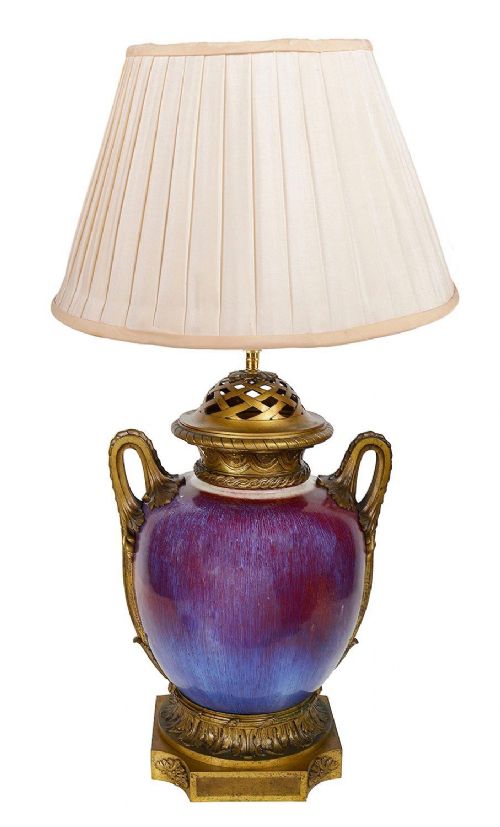
These Chinese glazed porcelain lamp examples bring vibrant colour and texture to a room, formed from centuries-old vases.
Chinese Glazed Porcelain Lamp
A chinese glazed porcelain lamp transforms antique vessels into domestic lighting, using forms originally shaped as lidded vases, ginger jars and baluster vases. These pieces span the eighteenth century, nineteenth century and early twentieth century, incorporating Victorian interpretations and Chinese Qing styles.
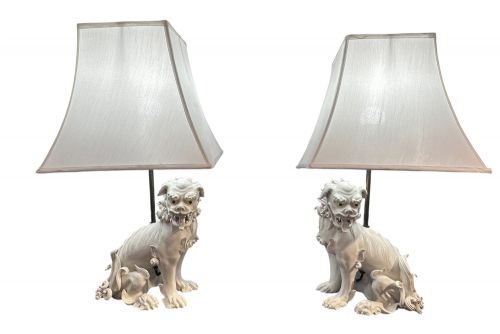
Buyers mostly meet pairs and single items featuring monochrome glazes or painted decoration. The common forms on this page include crackleware bodies, figural lamps depicting Shi lions, and twin-handled vessels fitted for electricity.
Originating from Chinese export workshops and later adaptations, these objects combine historic ceramic bodies with structural elements like brass bases and fabric shades. Each item bridges centuries of decorative arts through functional interior lighting.
Materials and construction
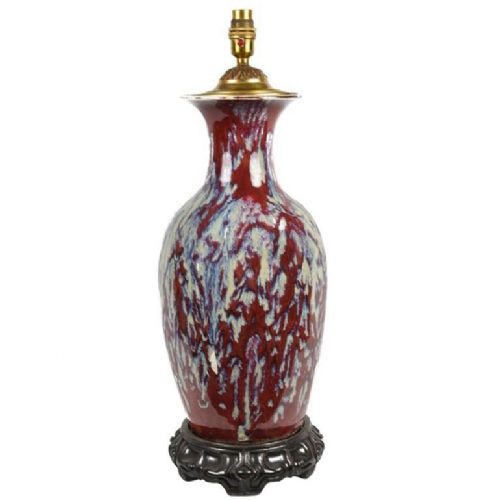
The primary bodies utilise fired porcelain and ceramic, finished with specialist glazes such as celadon, sang de boeuf, turquoise, flambe and famille verte. These ceramic forms are frequently mounted with metalwork components including brass and ormolu.
Makers adapted existing vases and jars by drilling bases for wiring and securing metal hardware to support lamp fittings. Wooden bases and fabric elements complete the assembly, turning utilitarian or decorative vessels into functional table lamps.
Glaze varieties present on this page include celadon, sang de boeuf, turquoise, flambe, famille rose and crackleware.
Evaluating quality and merit
Quality rests upon the age, integrity and visual depth of the ceramic glaze, ranging from richly layered sang de boeuf surfaces to finely crackled blue and white finishes. The crispness of hand-painted details in famille rose or famille verte pieces further separates standard items from finer examples.
The sophistication of the mounting work defines the physical construction, where heavy ormolu or cast brass mounts integrate seamlessly with the porcelain body. Pairs demonstrate higher desirability when the matching ceramic vessels share identical dimensions, firing characteristics and glaze tones.
The Chinese Glazed Porcelain Lamp Glossary
- Celadon
- A pale green jade-like glaze created through iron oxide in the reduction firing process. It is frequently seen on nineteenth-century twin-handled and baluster vases.
- Sang de boeuf
- A deep red copper-based glaze translating as ox-blood, prized for its mottled colour variation. This rich finish appears on eighteenth-century and nineteenth-century lidded vase lamps.
- Famille verte
- A Qing dynasty enamel palette dominated by green hues alongside contrasting colours. This decorative style adorns ginger jars converted into table lamps.
- Crackleware
- A decorative glaze featuring a network of fine intentional cracks across the ceramic surface. This technique appears widely on blue and white nineteenth-century vases.
- Blanc de chine
- A pure white porcelain originating from Dehua, free of coloured glaze. This smooth material defines the figural Shi lion and dog of Fo lamp pairs.
Chinese Glazed Porcelain Lamp: Frequently Asked Questions
How are these lamps wired?
These pieces use modern electrical wiring threaded through the drilled base or body of the antique porcelain vessel. The fittings connect securely to standard lamp holders and plugs for safe domestic use.
Professional conversion preserves the structural integrity of the ceramic while accommodating contemporary bulbs and fabric shades.
Are these lamps sold in pairs?
Many examples are offered as matched pairs, particularly those fashioned from identical nineteenth-century crackleware or celadon vases. Single pieces also appear frequently across various glaze types and forms.
Pairs provide symmetrical lighting options for sideboards, mantels or bedside tables.
What is crackleware?
Crackleware is a ceramic style featuring an intentional network of fine fissures across the glaze. This effect occurs during cooling when the glaze shrinks at a different rate than the porcelain body.
It adds textural depth to nineteenth-century blue and white vases adapted for lighting.
How do I clean the porcelain?
Dust the porcelain body gently with a dry, soft cloth to remove everyday particles. Avoid harsh chemical cleaners or abrasive materials that might damage the historic glaze.
Keep fabric shades separate and clean them according to their specific textile requirements.