





Chinese Court Scene
A chinese court scene depicts figures in traditional imperial settings, captured on porcelain and lacquer to bring colourful narrative depth to a room.
Chinese Court Scene
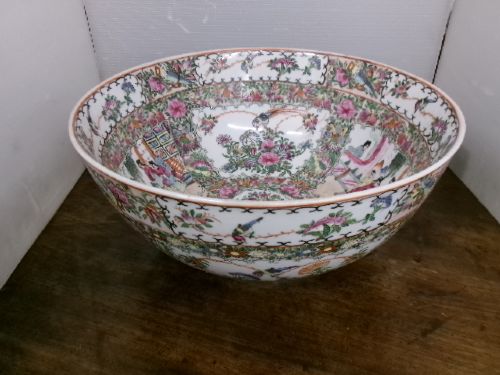
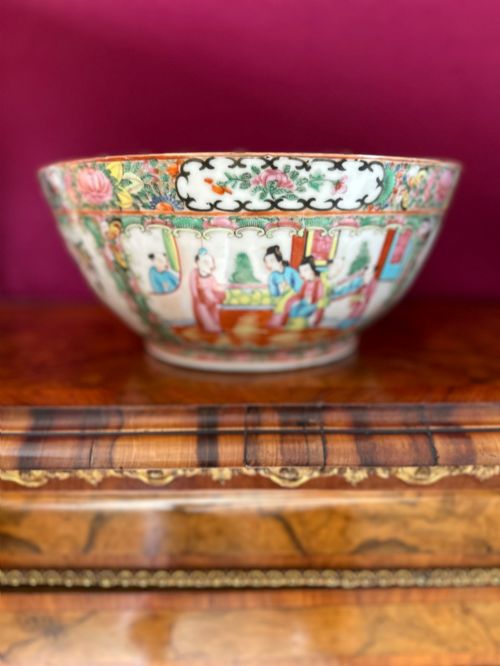
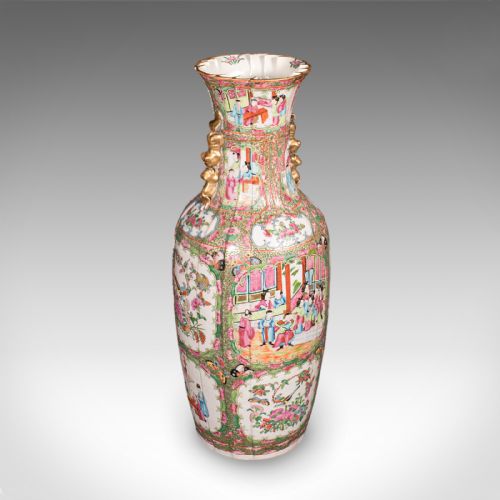
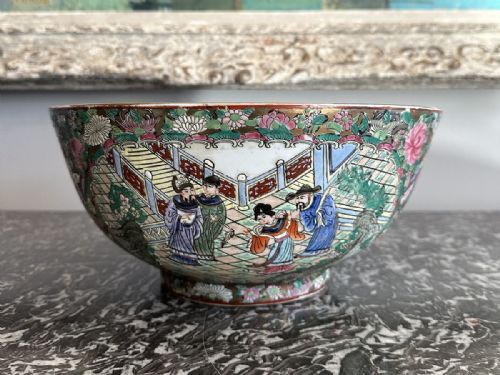
A chinese court scene brings figures in traditional imperial environments into decorative arts, appearing most frequently on nineteenth century porcelain such as Canton bowls, vases, dishes, and garden seats. These pieces range from large floor vases to smaller plates, often associated with the Qing Dynasty or Chinese Export production.
Beyond ceramics, the motif extends to elaborate folding screens and handheld fans executed in lacquer with gold leaf details. Watercolours depicting genre and court scenes also form part of the recorded record, showing court life through painted narratives.
The aesthetic bridges domestic utility and visual storytelling, utilising palettes like famille rose, famille verte, and blue and white to populate surfaces with detailed human figures. Collectors encounter these works across various forms, each centring on traditional narrative compositions.
How they were made
The construction of these objects relies on ceramic manufacture, wood carving, and lacquer work, with porcelain forming the basis for vases, bowls, and garden seats. Overglaze enamels are applied by hand to define figures and architectural elements, sometimes heightened with gilding or gold leaf.
Folding screens and handheld fans utilise wood and black lacquer grounds decorated with painted or gilded motifs. Artisans combined traditional potting methods with meticulous hand painting to render the complex narratives associated with court life.
Chinese Court Scene Retail Price Guide 2026
Typical asking prices for chinese court scene among the pieces listed under this phrase on Sellingantiques today, from the lower quarter to the upper quarter. They describe what is for sale here now, not the wider market.
Thousand faces decoration ensures that no single painted courtier shares an identical expression across the entire bowl.
What varies in quality
Quality in a chinese court scene rests upon the precision of the hand painting and the clarity of the figures rendered in enamels. Pieces described as outstanding or fine demonstrate superior control in brushwork, particularly when delineating facial expressions, robes, and background pavilions.
The richness of the palette, including the application of gold leaf and overglaze enamel details, distinguishes standard domestic wares from monumental or exhibition pieces. Scale and structural complexity also differentiate the work, seen in monumental floor vases and multi fold lacquer screens.
The Chinese Court Scene Glossary
- Famille rose
- A palette of opaque enamel colours dominated by pink or rose, introduced during the Qing Dynasty. It allows for subtle tonal gradations suitable for rendering court figures and floral details.
- Famille verte
- A green based palette utilised in overglaze enamel decoration on porcelain. This grouping of colours dominates earlier Qing pieces and highlights narrative scenes.
- Canton
- A style of Chinese export porcelain decorated in port cities with colourful panels of figures and flowers. It accounts for a large portion of the nineteenth century bowls and vases found in trade.
- Rose medallion
- A specific decorative layout featuring panels filled with court figures interspersed with birds and flowers, arranged symmetrically around a central medallion. This pattern appears frequently on nineteenth century plates and lidded vases.
- YenYen
- A tall trumpet shaped vase form with a flaring rim and wide body, popular during the Kangxi period. These porcelain vessels provide a large surface area for narrative painting.
Chinese Court Scene: Frequently Asked Questions
What is a chinese court scene?
A chinese court scene is a pictorial depiction of imperial life, featuring figures in traditional settings, architecture, and gardens.
These narratives appear on porcelain vases, bowls, and plates, as well as on lacquer screens and fans.
How do I date these pieces?
Dating relies on stylistic markers, palette types, and recorded periods such as the nineteenth century, Victorian era, or Qing Dynasty.
Changes in enamel saturation and form help separate earlier Kangxi examples from later Canton export pieces.
Where were these items made?
These pieces were produced in China, primarily for export to Western markets through trading ports like Canton.
Lacquer items, fans, and porcelain wares travelled globally to satisfy European demand for oriental decoration.
How do I care for lacquer screens?
Lacquer requires stable environmental conditions away from direct sunlight and excessive humidity to prevent warping.
Gentle dusting with a soft, dry cloth preserves the black lacquer ground and gold leaf details.