



Chinese Ceramic Wall Plate
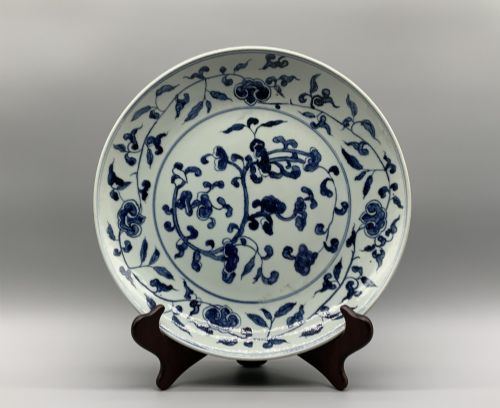
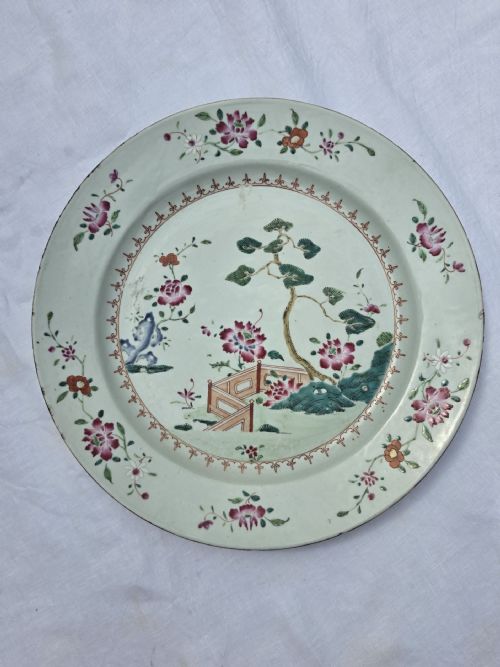
A chinese ceramic wall plate brings centuries of hand-painted artistry to a room, offering rich blue and white scenes or vibrant enamelled palettes.
Chinese Ceramic Wall Plate
A chinese ceramic wall plate encompasses large decorative chargers, deep dishes, and cabinet plates originating from periods spanning the sixteenth century to the Victorian era. Buyers searching for a chinese ceramic wall plate encounter items produced for both domestic Asian markets and European export trade.
The selection includes Chinese Export wares, Qianlong dynasty pieces, and European interpretations in Georgian Chinoiserie and Regency styles. Eighteenth-century examples and nineteenth-century productions appear frequently across these listings.
Materials and methods
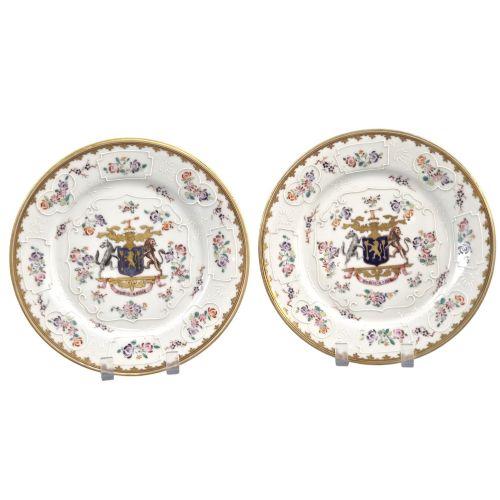
Potters shaped porcelain, earthenware, and pearlware into plates and chargers, applying cobalt pigment under the glaze to create deep blue and white designs. Painters used enamel colours and gold leaf over the fired surface for polychrome decoration.
Makers utilised hand-painting techniques across Chinese workshops and European factories such as those in Paris, Worcester, and Staffordshire.
Listings span multiple centuries, incorporating Kangxi, Wanli, and Qianlong periods alongside Victorian European interpretations.
Quality differences
Execution of the hand-painted brushwork separates standard decorative items from superior examples. Precision in cobalt pigment application and the complexity of court life or floral motifs dictate the standing of a piece.
The depth of the porcelain body and the preservation of enamel colours and gold leaf influence the overall desirability of the charger or plate.
Edmé Samson & Cie·C.J. Mason·Minton
The Chinese Ceramic Wall Plate Glossary
- Charger
- A large decorative plate, typically exceeding standard dinner plate dimensions, intended for display on walls or sideboards.
- Famille Rose
- A palette of opaque enamel colours dominated by pink or rose hues, introduced during the Qing dynasty.
- Kraak porcelain
- Chinese export porcelain featuring panelled designs radiating from a central motif, produced mainly during the late Ming dynasty.
- Imari
- A style of ceramic decoration employing underglaze blue combined with iron red, gold, and other enamel colours.
- Pearlware
- A fine earthenware developed in Staffordshire featuring a bluish glaze that pooled in recesses to mimic Chinese porcelain.
Chinese Ceramic Wall Plate: Frequently Asked Questions
How do I hang a heavy charger safely?
Use a specialised spring-loaded wall plate hanger that grips the rim securely without scratching the ceramic body.
Ensure the wall fixing engages directly with a stud or utilises an appropriate anchor for the weight of the porcelain.
Are these plates safe for serving food?
Antique plates with overglaze enamels and gold leaf are intended for decorative display rather than daily culinary use.
Historic glazes and pigments may contain substances unsuitable for modern food contact.
How do I date an antique plate?
Examine the foot rim, potting characteristics, and pigment tones to compare them against known period production standards.
Maker marks, factory stamps, and stylistic influences such as Qianlong or Georgian Chinoiserie provide further chronological context.
What is the difference between a plate and a charger?
Chargers possess a significantly larger diameter, historically used for serving communal courses or as decorative underplates.
Plates are smaller in scale and designed for individual table service or compact wall hanging.