









Chinese Carved Urn Stand
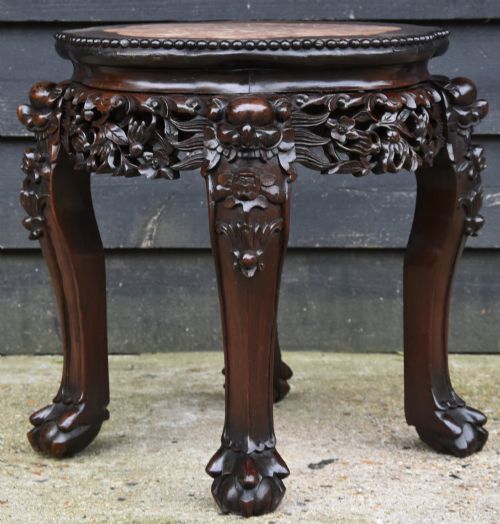
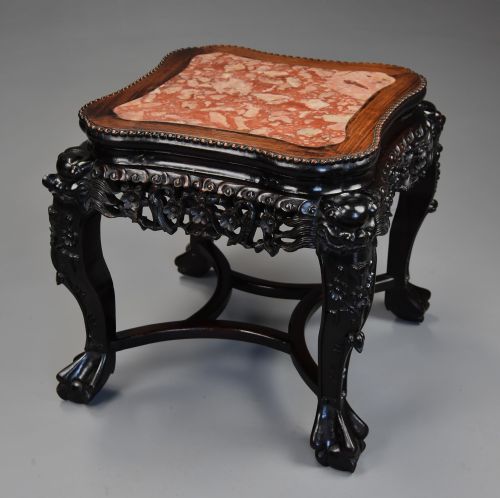
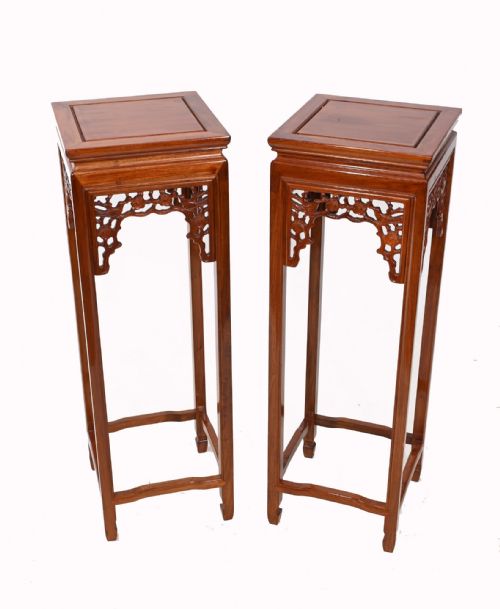
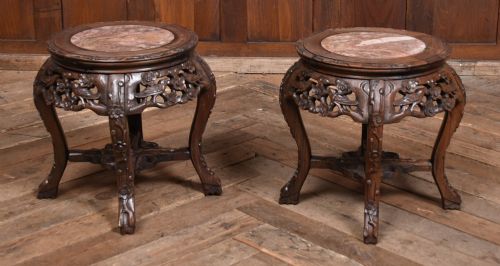
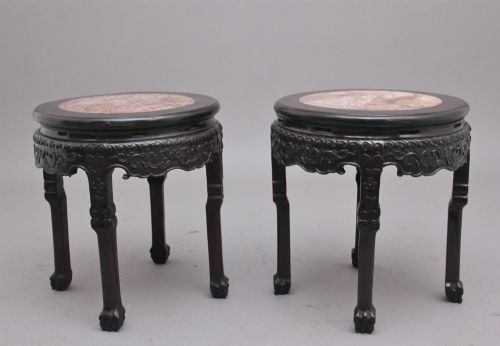
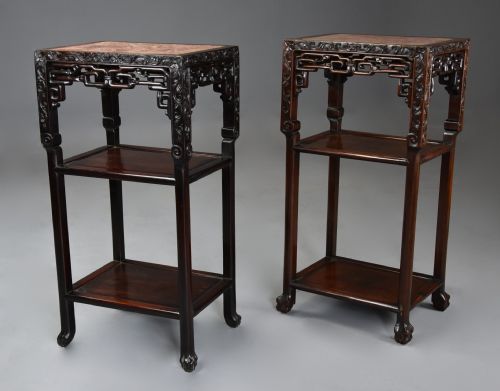
A chinese carved urn stand brings solid timbers and inset stone together to elevate heavy ceramic vessels in a traditional interior.
Chinese Carved Urn Stand
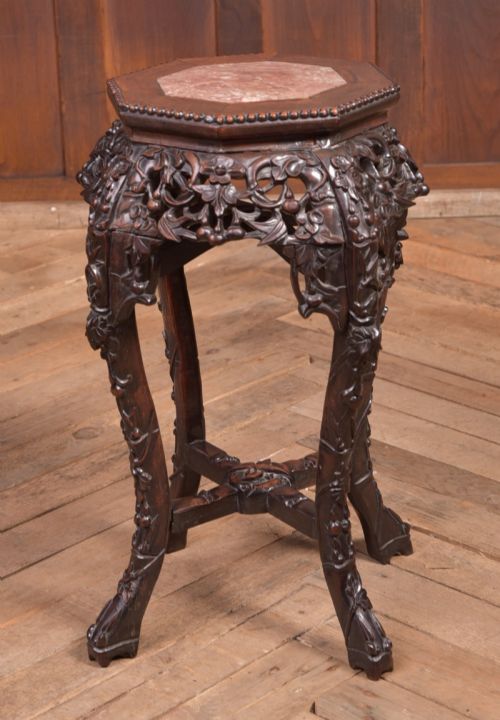
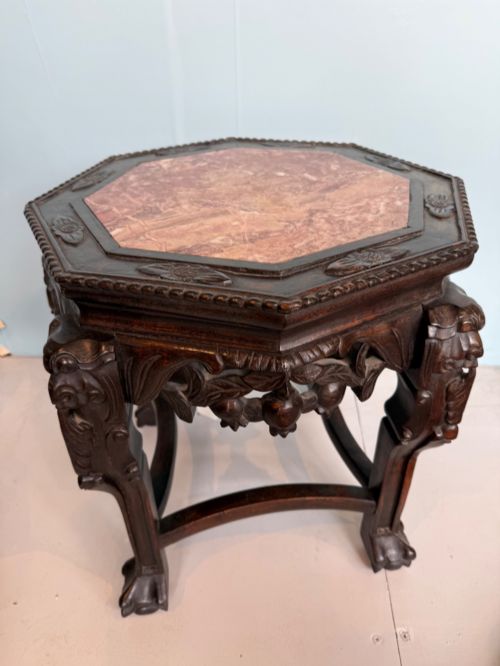
A chinese carved urn stand takes many forms across the selection, appearing primarily as low tables, plant holders, and pedestal supports. Most examples stem from the nineteenth century, including the Victorian era, bringing dense dark timbers and shaped tops into domestic spaces.
Makers shaped these pieces to hold heavy porcelain, bronze censers, and decorative planters securely. The design ranges from low square proportions to taller torchère styles, each built to support weighty objects.
The selection includes matched pairs alongside single tables, offering flexibility for room layouts. Traditional Chinese carving techniques define the aprons and legs, reflecting Qing Dynasty styles and later export designs.
Materials and construction methods
Carpenters relied on dense exotic timbers such as rosewood, padouk, hongmu, and general hardwood to build a durable chinese carved urn stand. These heavy woods supported intricate hand-carved floral and academic motifs without warping under weight.
Many surfaces integrate a fitted marble or rouge marble inset into the wooden top, providing a cool, stable resting place for damp flowerpots and urns. Mother of pearl inlay occasionally adds contrast against the dark polished wood of the frame.
Chinese Carved Urn Stand Retail Price Guide 2026
Typical asking prices for chinese carved urn stand among the pieces listed under this phrase on Sellingantiques today, from the lower quarter to the upper quarter. They describe what is for sale here now, not the wider market.
Judging the standard of execution
Quality rests in the crispness of the hand carving and the selection of the timber. Deeply undercut foliage and tight joinery separate standard production items from finer workshop pieces.
The choice of inset marble alters the character of the table, with variegated rouge stone and well-fitted slabs marking superior examples. Weight and stability indicate the density of the hardwood used in the frame.
The Chinese Carved Urn Stand Glossary
- Hongmu
- A traditional Chinese term for dense red or dark hardwoods used in fine furniture. These durable timbers take a high polish and resist heavy wear.
- Jardiniere stand
- A low table or pedestal specifically designed to display a ceramic flower pot or plant container. The reinforced top supports heavy damp earthenware.
- Torchère
- A tall standalone pedestal or stand meant to hold a lamp or decorative urn. They elevate display items above floor level.
- Padouk
- A heavy, durable tropical timber with a reddish hue seen frequently in nineteenth-century export tables. It provides strong structural support for stone insets.
- Qing Dynasty
- The imperial dynasty of China lasting from sixteen forty-four to nineteen twelve. Pieces from the late nineteenth century reflect the aesthetic of this period.
Chinese Carved Urn Stand: Frequently Asked Questions
What were chinese carved urn stands used for?
These tables served primarily to elevate heavy porcelain urns, bronze vessels, and large indoor plant pots. Raising the containers protected polished floors from moisture and displayed decorative objects at a convenient height.
In traditional interiors, they anchored corners or filled spaces between seating arrangements. Their sturdy construction allowed them to bear substantial weight without shifting.
How do I care for a marble top stand?
Wipe the stone surface with a soft, damp cloth and dry it immediately to prevent water rings. Avoid harsh chemical cleaners that can dull the polish of the marble or stain the surrounding wood.
Treat the hardwood frame periodically with suitable wax to nourish the grain. Keep the table away from direct heat sources to prevent the wood from shrinking around the stone inset.
How can I tell the period of a table?
Examine the construction joints, timber density, and patination of the wood. Nineteenth-century examples often display hand-cut joinery and heavy rosewood or padouk frames with traditional Qing carving.
Later pieces from around nineteen hundred may show subtle shifts in proportion and finish. Comparing the style of the carved aprons helps place the piece within the Victorian or Edwardian eras.
Can these stands support heavy modern objects?
The original design intended these tables to hold heavy ceramic planters, bronze vessels, and stone ornaments. Their dense hardwood frames and solid joints make them well suited for heavy lamps or large vases today.
Ensure the weight is distributed evenly across the marble or wooden surface. The stable base prevents tipping even when holding substantial items.