
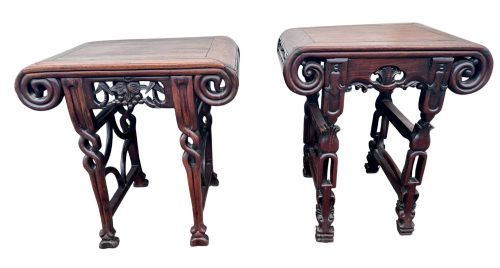


Chinese Carved Hardwood Stools
Chinese carved hardwood stools are heavy, solid seats and stands rooted in Qing Dynasty tradition, prized for their dense timber and intricate hand-carved detail.
Chinese Carved Hardwood Stools
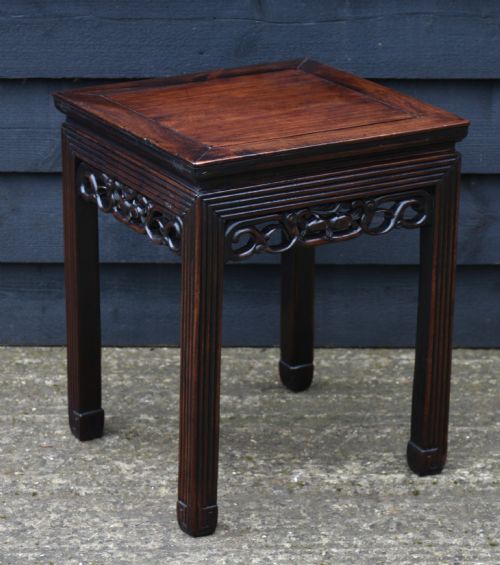
Chinese carved hardwood stools encompass a variety of low seats, dressing benches, window seats, and barrel-shaped plant stands originating across the nineteenth century and into the early twentieth century. These pieces bridge domestic seating and display functions, often doubling as side tables, lamp stands, or jardiniere supports depending on their height and top surface.
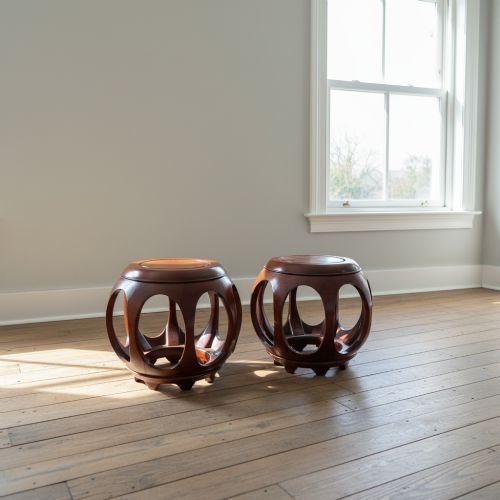
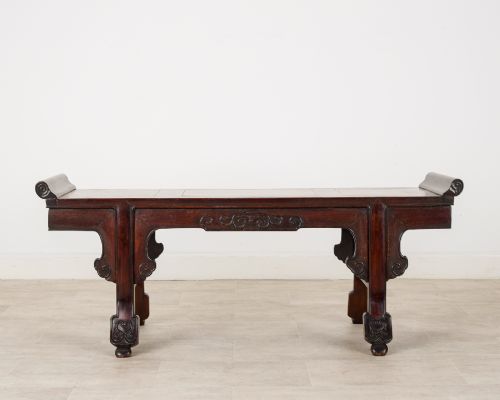
You are most likely to encounter nineteenth-century examples reflecting Qing Dynasty aesthetics, alongside pieces bearing Victorian influences or created for the Chinese export market. Forms range from square low tables and drum-shaped barrels to dish-top stools and altar benches, constructed from dense Asian timbers.
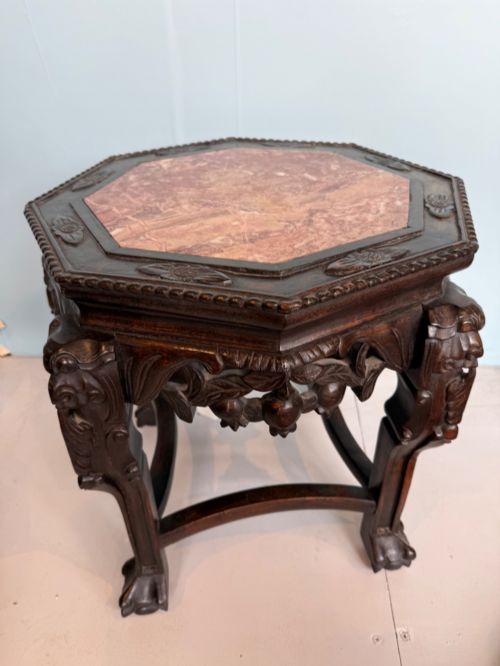
The material palette leans heavily towards rich dark woods, occasionally enhanced by inset marble panels, burr wood sections, or mother-of-pearl inlay. Whether configured as single accent pieces or matching pairs, these items display the robust joinery and sculptural carving characteristic of traditional workshops.
Factors of Quality
Integration of secondary materials elevates an object, specifically the quality and fit of inset marble panels or intricate mother-of-pearl inlay. Furthermore, symmetry in matched pairs and the structural integrity of complex barrel or drum forms mark the work of more accomplished makers.
Some nineteenth-century drum-shaped stools manage to look remarkably like stout wooden barrels while functioning entirely as household seating.
The Chinese Carved Hardwood Stools Glossary
- Hongmu
- A dense, heavy Chinese hardwood prized for its deep reddish-brown colour and strength. It translates literally as red wood and forms the structure of many traditional stands and stools.
- Huali
- A fragrant and highly decorative Asian hardwood utilised in fine furniture and dressing stools. Its distinct grain patterns make it a sought-after material for Qing Dynasty pieces.
- Jardiniere stand
- A tall pedestal or table specifically designed to support heavy plant pots and floral arrangements. These often feature inset marble tops to protect the wood from moisture.
- Barrel form
- A rounded, swelling furniture shape resembling a traditional wooden cask, frequently applied to drums and garden-style seats. This curved silhouette requires advanced carpentry to achieve.
Chinese Carved Hardwood Stools: Frequently Asked Questions
What were Chinese carved hardwood stools used for?
These items served primarily as flexible household furnishings, functioning as occasional seats, dressing stools, and window benches.
Beyond seating, their flat or inset marble tops made them ideal stands for lamps, decorative vases, and large indoor plants.
How do I identify a Qing Dynasty piece?
Identification relies on observing traditional construction methods, dense timbers like hongmu, and characteristic carving styles associated with the period.
Many pieces from this era also incorporate inset rouge marble or subtle mother-of-pearl detailing typical of nineteenth-century export production.
Can I use these stools as side tables?
Their sturdy construction and flat surfaces make them well suited for use as lamp tables, wine stands, or low occasional tables.
Many surviving examples from the nineteenth century share dimensions with modern side tables, allowing straightforward integration into contemporary rooms.
How should I care for hardwood furniture?
Maintenance requires keeping pieces away from direct heat sources and sudden temperature shifts to prevent the dense timber from splitting.
Regular dusting with a dry cloth and occasional light conditioning help preserve the natural lustre of rosewood, huali, and ebonised surfaces.