




Chinese Timber Plant Stand
These Chinese timber plant stand pieces bring sculptural form and rich grain to a room, offering sturdy support for vases and trailing foliage.
Chinese Timber Plant Stand
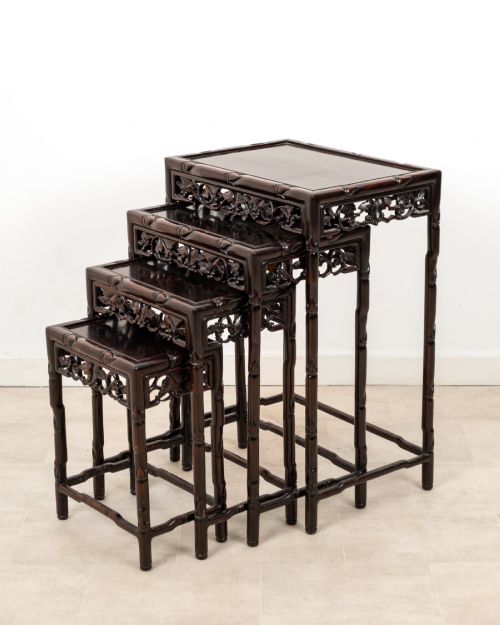
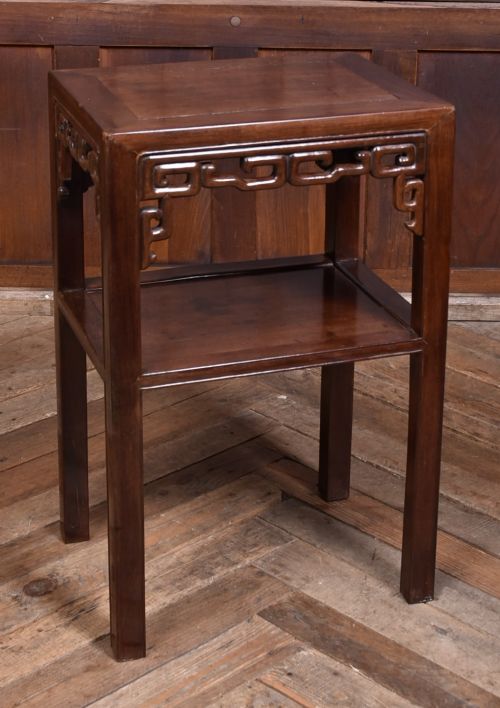
When you search for a Chinese timber plant stand, you encounter a focused range of elevated surfaces designed to showcase ceramics and greenery. The pieces on this page span the late Victorian and Edwardian eras alongside the nineteenth century, capturing a period of refined export craftsmanship.
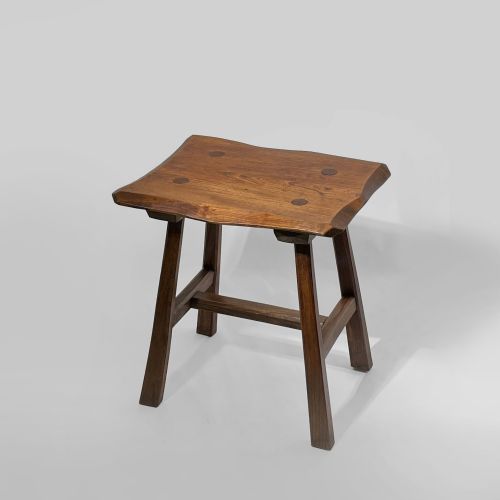
Makers produced these works in styles ranging from formal Qing dynasty designs to rustic vernacular elm pieces. This variety ensures you can find a support that suits both traditional interiors and simpler spaces.
How they were made
Carpenters utilised heavy hardwoods such as rosewood, hongmu, and huali alongside utilitarian elm for simpler vernacular items. These dense timbers provided the structural integrity required to support heavy stone inserts and large ceramic vessels without flexing.
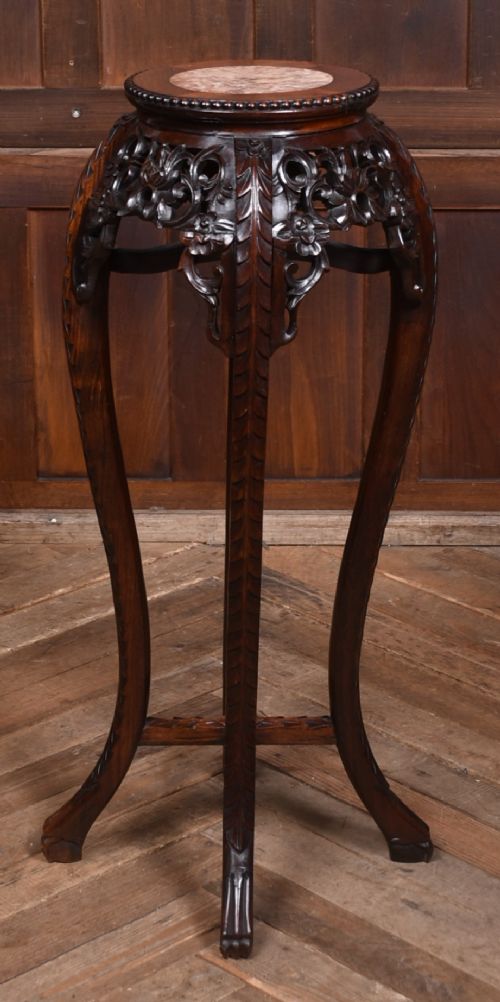
Many surfaces incorporate inset marble panels or intricate mother-of-pearl inlay to create textural contrast against the dark timber frame. Carved details often feature traditional motifs executed with deep relief work across aprons and legs.
What varies in quality
The density and selection of the timber dictate the baseline quality of each stand, with heavy rosewood and hongmu specimens demonstrating superior material weight. Grain selection and the crispness of carved details further separate standard production from exceptional examples.
The integrity of inset marble tops and the precision of mother-of-pearl inlay work indicate the level of care invested by the original maker. Well-fitted joints and stable tripod or four-leg configurations ensure the piece performs its function reliably.
The Chinese Timber Plant Stand Glossary
- Hongmu
- A dense tropical hardwood prized in Chinese furniture making for its deep colour and weight. It provides exceptional durability for load-bearing stands.
- Jardiniere
- A large ornamental pot or container for plants, which these tall stands were specifically engineered to elevate. They allow trailing foliage to cascade freely.
- Huali
- A fragrant and highly decorative Chinese hardwood belonging to the rosewood family. It displays striking grain patterns that catch the light.
- Mother of pearl
- The iridescent inner layer of mollusc shells used for inlay work. Craftsmen carved small pieces to create floral or geometric patterns in the timber surface.
Chinese Timber Plant Stand: Frequently Asked Questions
What is a Chinese timber plant stand used for?
These elevated surfaces were traditionally built to support heavy ceramic fishbowls, large vases, and potted plants within the home.
Today, they function equally well as bedside tables, lamp stands, or solo display pieces in corners that require vertical interest.
How do I date a nineteenth century stand?
Dating relies on examining the density of the wood, the depth of the hand-carved motifs, and the construction methods used in the frame.
Pieces from the late nineteenth century often combine traditional Qing dynasty carving styles with the sturdier proportions favoured by Western export markets.
Are marble top stands fragile?
The inset marble panels are surprisingly resilient and provide a cool, water-resistant surface that protects the surrounding timber from damp pots.
While the stone adds considerable weight to the overall piece, it remains stable within a properly constructed rebated wooden frame.
How do I care for antique rosewood furniture?
Maintain the finish by dusting with a soft cloth and avoiding placement near direct heat sources or strong sunlight that might dry the timber.
Occasional application of suitable wax nourishment helps preserve the natural sheen of dense hardwoods like hongmu and rosewood.