




Pair Chinese Stools
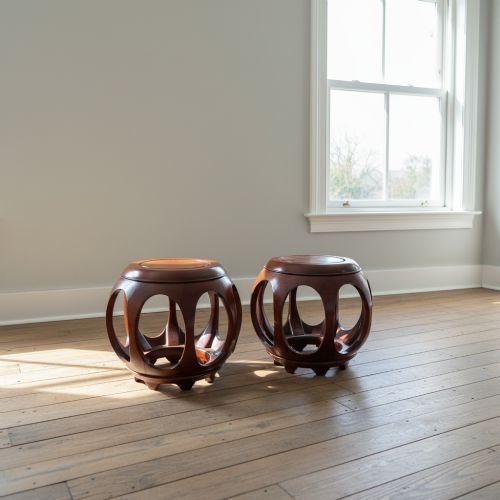
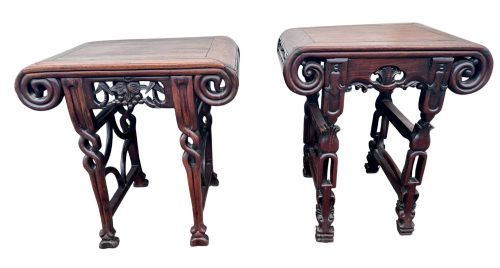
Pair Chinese stools bring sculptural form and rich timber to a room, functioning equally well as low tables or seats.
Pair Chinese Stools
When you search for pair chinese stools, you encounter diverse forms ranging from traditional barrel-shaped garden seats to low tables and plant stands. The nineteenth century yields the highest concentration of hardwood examples, alongside glazed porcelain and earthenware creations.
Makers utilised resilient timbers such as hongmu, huali and teak, shaping them into drum forms with pierced panels or inset marble tops. Alongside timber, vibrantly decorated porcelain garden seats featuring famillle rose and rose medallion palettes recur frequently.
Construction and materials
Joinery forms the backbone of these pieces, with traditional hardwood frames constructed using precise interlocking joints rather than metal fasteners. Carved details, openwork panels and turned frames demonstrate the high level of woodworking skill present in the workshops.
Ceramic equivalents undergo high-temperature firing before receiving detailed enamel painting, clobbered decoration or applied glazes. Inset elements like rouge marble tops or porcelain panels require exact tolerances to sit flush within the timber surrounds.
Some nineteenth-century garden seats feature pierced coin motifs intended to bring wealth and good fortune to the courtyard.
Judging the quality
Quality rests upon the crispness of the carving and the density of the chosen timber, with heavy, figured hardwoods commanding greater regard. The finesse of the pierced work and the stability of the joinery dictate the overall standard of the piece.
For ceramic examples, the vibrancy of the famille rose enamels and the integrity of the glaze determine the calibre. Well-matched pairs demonstrate consistent timber grain or exact symmetry in their decorative panels.
The Pair Chinese Stools Glossary
- Hongmu
- A dense tropical hardwood often translated as red wood, favoured by traditional cabinetmakers for its rich colour and heavy weight. It resists warping and takes a fine polish.
- Famille Rose
- A palette of opaque rose-pink enamel colours introduced to Chinese ceramics in the eighteenth century and continued through the nineteenth century. It allows for soft shading and intricate floral motifs.
- Cloisonne
- A metalwork technique where enamel paste is applied within compartments created by soldered wire before firing. It produces vibrant, multicoloured decorative surfaces.
- Rose Medallion
- A distinct style of porcelain decoration featuring partitioned panels filled with alternating scenes of figures, birds and flowers. The design is unified by rich green and pink enamel tones.
- Huali
- A fragrant, highly prized Chinese hardwood displaying distinctive grain patterns and warm hues. It provides both structural strength and decorative appeal.
Pair Chinese Stools: Frequently Asked Questions
How were pair chinese stools used historically?
These items served multiple purposes within traditional interiors, functioning as movable seating, plant stands, or side tables for scholarly items and decorative objects. Garden varieties were specifically designed for outdoor placement on ceramic bases or stone terraces.
Over time, many found their way into European drawing rooms where their compact size made them useful as occasional lamp tables or footrests.
Are these pieces suitable for modern living rooms?
Their sturdy construction and versatile heights make them ideal as side tables beside low sofas or as freestanding display stands for sculpture and lamps. Hardwood surfaces handle everyday use easily when treated with appropriate care for polished timber.
Ceramic garden seats also transition indoors as bold accent pieces or small bedside surfaces in contemporary spaces.
How do I distinguish nineteenth century pieces?
Nineteenth-century examples display traditional joinery methods, deep hand-carving in dense timbers like hongmu or huali, and natural wear patterns on the finish. Porcelain pieces from this era show characteristic famille rose or rose medallion hand-painting with slight variations between individual brushstrokes.
Examining the underside and interior reveals the tool marks and ageing consistent with nineteenth-century workshop practices.
What is the difference between a stool and a garden seat?
Stools generally feature flat wooden tops supported by legs or drum frames, designed primarily for indoor seating and display. Garden seats are typically barrel-shaped vessels made from heavy glazed porcelain or stone, originally intended for use in damp outdoor environments.
Both categories frequently overlap in marketplace descriptions due to their shared height and similar proportions.