

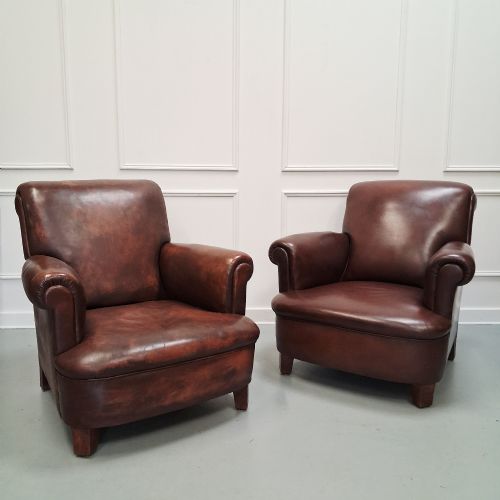
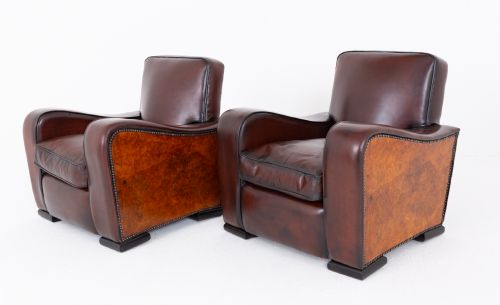
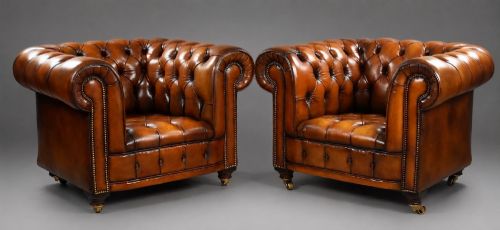
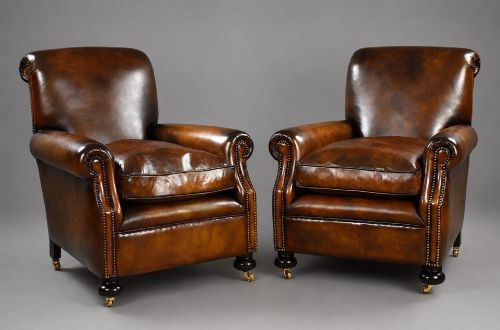
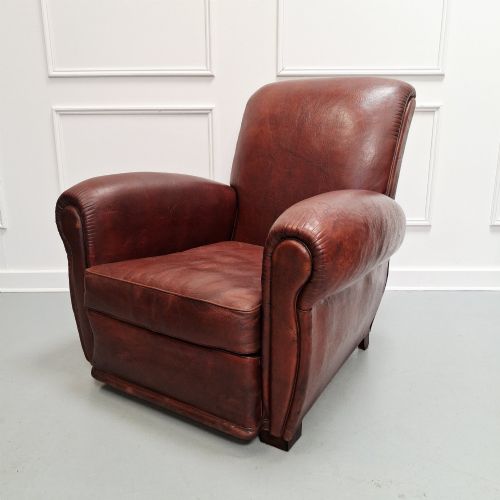

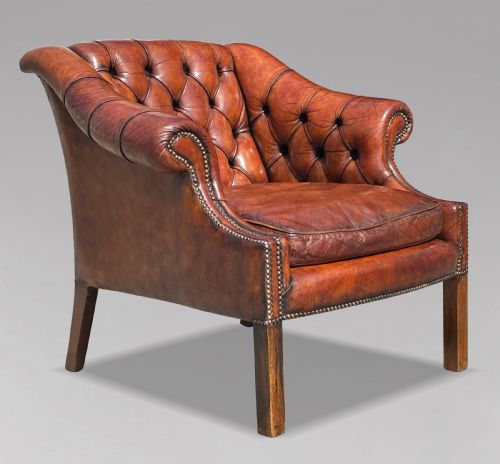


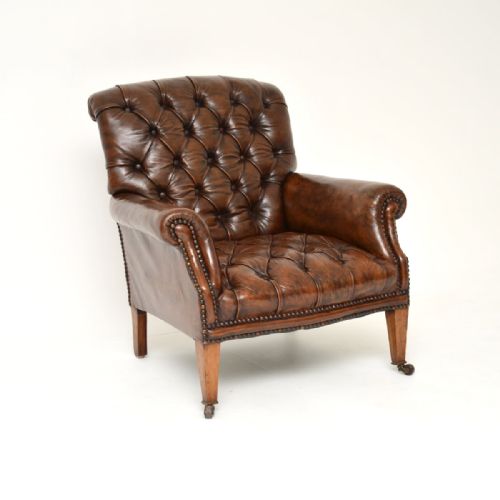

Chestnut Leather Chairs
Chestnut leather chairs bring rich tactile warmth and storied history into a room through deep hides and robust timber frames.
Chestnut Leather Chairs
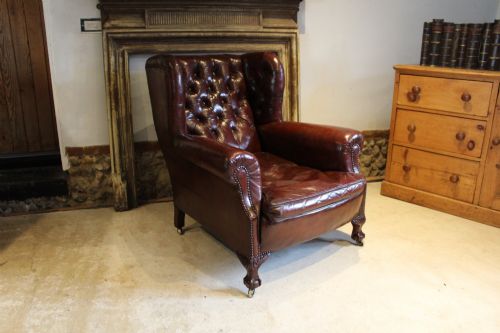
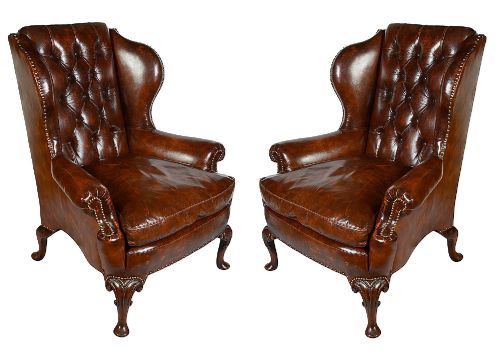
Chestnut leather chairs encompass comfortable library seating, formal armchairs, and functional desk chairs upholstered in rich brown hides. You will frequently encounter club armchairs, wingbacks, and button-backed easy chairs spanning the Victorian, Edwardian, and Art Deco periods.
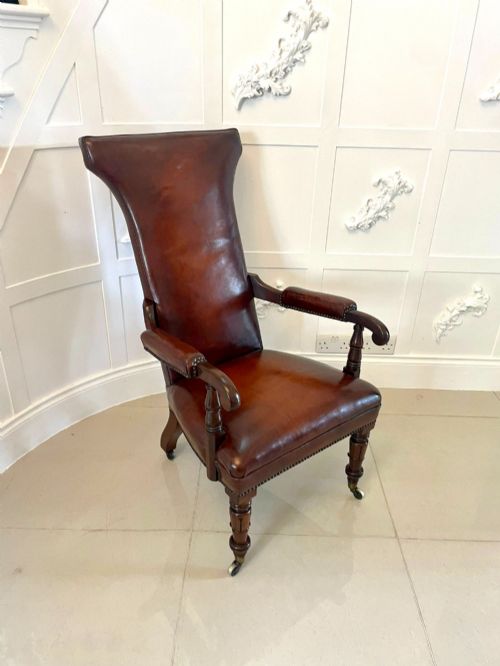
Forms include dedicated library seating, reclining chairs, and office desk chairs designed for utility and comfort. These pieces serve as focal points in studies, sitting rooms, and offices.
Materials and construction
Frames rely on traditional timbers such as mahogany, oak, rosewood, and burr walnut, joined to support heavy upholstery. Brass elements often appear as nailhead trim or mechanical fittings on reclining models.
Upholstery utilises durable leather hides paired with buttoning techniques to secure the padding within the chestnut tones. Carved woodwork on arms and legs demonstrates period craftsmanship across Victorian and Georgian examples.
Chestnut Leather Chairs Retail Price Guide 2026
Typical asking prices for chestnut leather chairs among the pieces listed under this phrase on Sellingantiques today, from the lower quarter to the upper quarter. They describe what is for sale here now, not the wider market.
Listings include timber frames made from oak, mahogany, rosewood, and burr walnut supporting chestnut leather upholstery.
Judging quality and craftsmanship
Quality rests in the depth and grain of the leather hide alongside the integrity of the underlying timber frame. Superior examples display harmonious proportions between the woodwork and the upholstered body.
Refined carving on mahogany or oak frames distinguishes finer library and desk chairs from simpler utilitarian seating. The patination of the chestnut leather reflects the age and history of the individual piece.
The Chestnut Leather Chairs Glossary
- Chesterfield
- A heavily upholstered style of chair or sofa characterised by deep buttoning and rolled arms. It provides substantial comfort and formal presence.
- Club chair
- A deep, low-seated armchair designed for relaxation, frequently upholstered in soft leather. Originating in French and English clubs, it prioritises bodily ease.
- Gainsborough armchair
- An eighteenth-century English armchair with an upholstered back and seat, open padded arms, and short cabriole or straight legs. It is typically used at a desk or in a library.
- Wingback
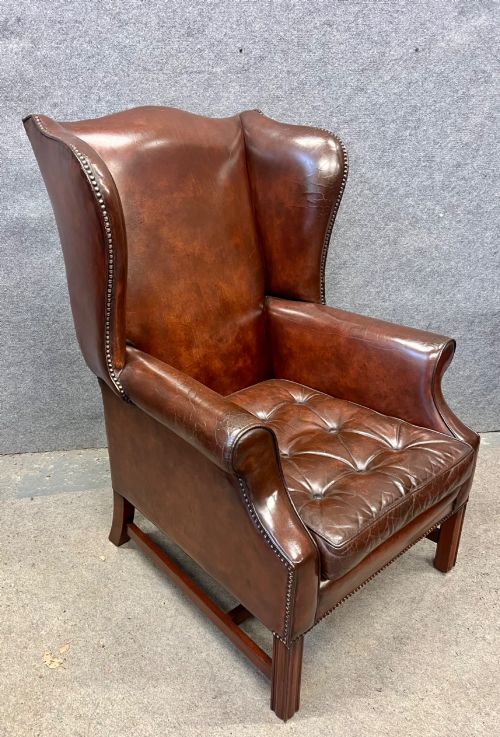
- An armchair with high panels attached to the back of the chair framing the head to block drafts. It traditionally stood near fireplaces in period homes.
- Patina
- The surface sheen and softening of colour developed on leather and wood through age and use. It indicates authenticity and prolonged handling.
Chestnut Leather Chairs: Frequently Asked Questions
How do I care for chestnut leather chairs?
Maintain the leather by applying suitable conditioning balms periodically to prevent the hide from drying out. Keep the timber frames dusted and protected from direct sunlight to preserve the finish.
Ensure the room humidity remains stable to protect both the organic leather and the underlying antique wood from warping or cracking.
Are these chairs suitable for daily use?
Most of these pieces were built for functional library, office, or domestic use using sturdy hardwoods like oak and mahogany. Their robust construction supports regular sitting when maintained properly.
Inspect the internal webbing and padding if you intend to use the chair heavily, as older materials may require occasional professional reinforcement.
What is the difference between club and wing chairs?
Club chairs offer low, deep seating with generous armrests designed purely for relaxed lounging. Wing chairs feature high backs and protective side panels originally intended to trap heat near a hearth.
Club chairs lean towards twentieth-century forms, while wing chairs have a lineage extending back through the Georgian and Victorian eras.
How can I tell the period of a leather chair?
Examine the timber species, leg styling, and hardware for clues characteristic of Victorian, Edwardian, or Georgian craftsmanship. Mahogany and rosewood frequently indicate nineteenth-century origins, while tortoiseshell accents or streamlined forms point towards the 1930s.
The stitching style, nailhead application, and frame construction methods also align with specific manufacturing decades.